Journey Around The Globe
ready for the next destination
Old town of Aachen, Germany
AACHEN, GERMANY: Aachen is one of the great small European cities that definitely deserves more visitors. The good part of it is that, though the city has the site first to be recognized as a UNESCO World Heritage in Germany, you don’t have to be lost in a crowd of hundreds of people to get there. I must say this place is more intimate and welcoming than other big German cities. Aachen was the place of coronation of the Kings of Germany back in old days. You can still find medieval architecture by your side when walking around in the old part of it. The city was heavily damaged during World War II (like medieval Church St. Foillan) and this was the first German city to be captured by the Allies.
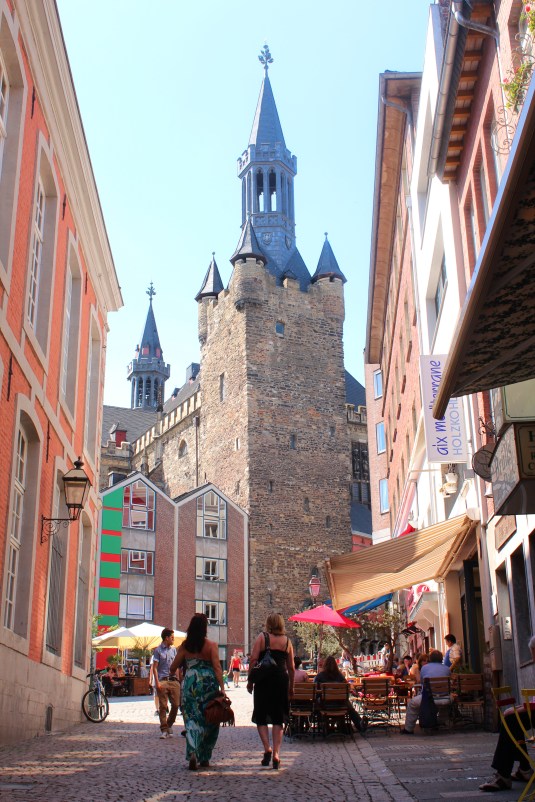
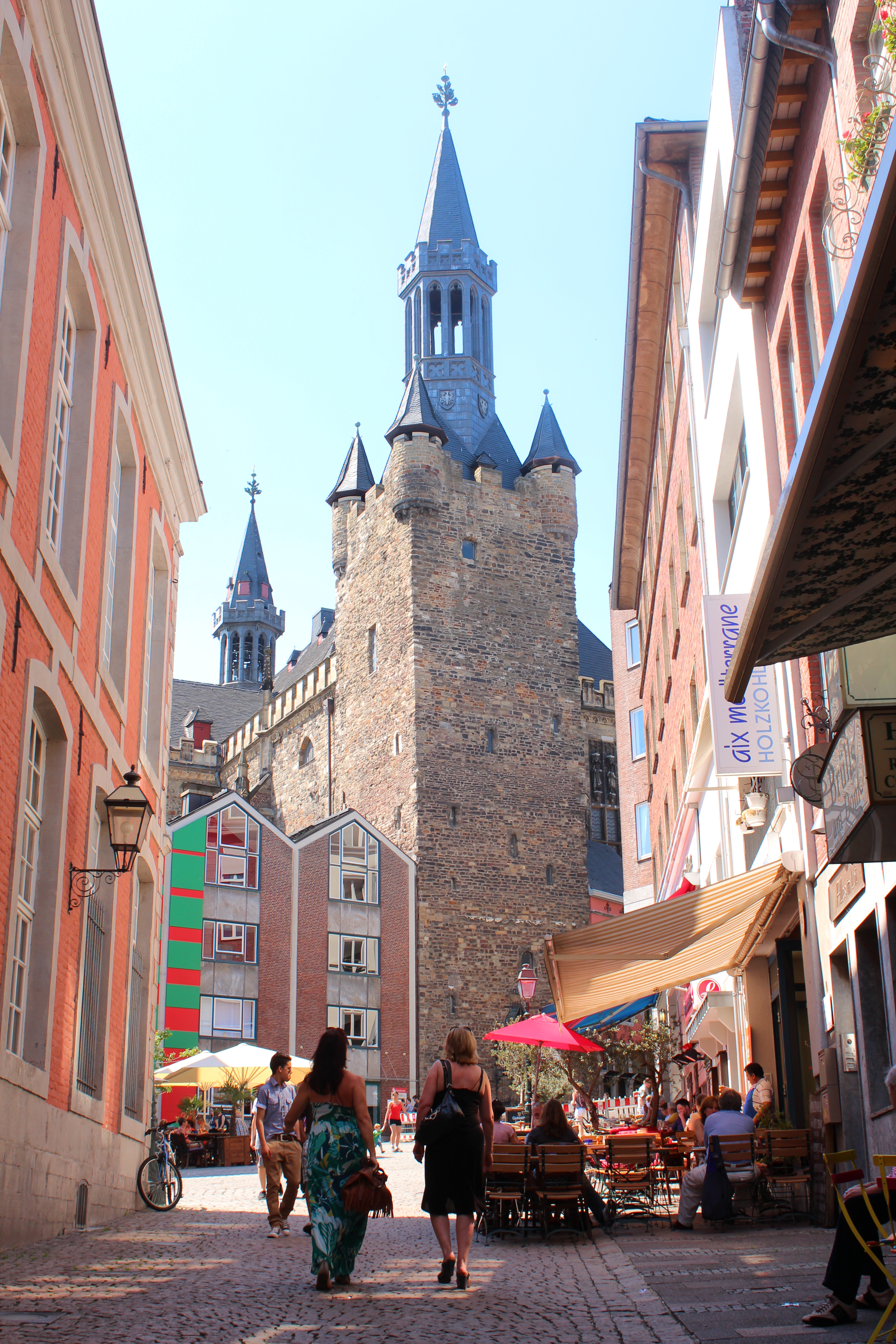
- Pedestrian street in old town of Aachen
TIME OF TRAVELLING: My parents were visiting us from the USA in end of May, 2012. They wanted to get some TASTE of Germany during their stay. Aachen being only an hour and half drive from Tervuren, Belgium, it was a perfect place to make a quick day trip. We enjoyed the hot sun after the long winter we had this year in Europe. Kids were also happy to run around in the cobbled streets of Aachen in their shorts and sleeveless t-shirts after a long time.
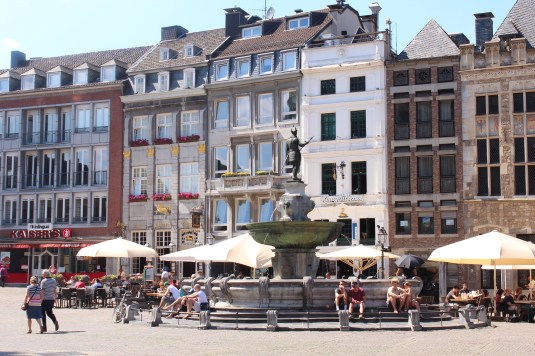
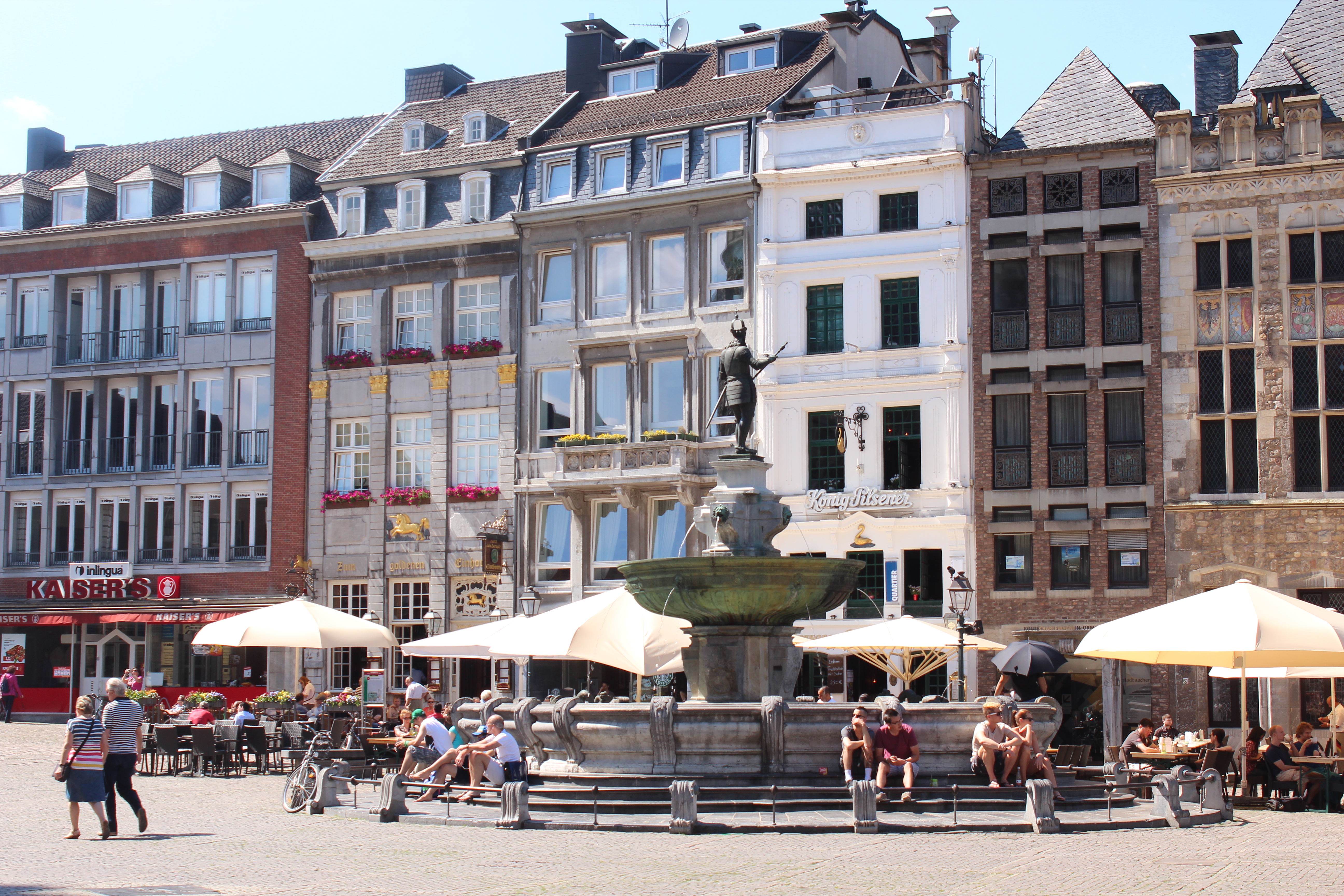
- The square in front of Aachen Town Hall
WHAT TO BUY AND EAT IN AACHEN: We went to Aachen on a Monday, which was a government holiday (White Monday in Europe or Memorial Day in the USA) here in Europe. We found every store closed, except for the cafes and some bakeries. We couldn’t buy any souvenirs, but treated ourselves with some German-style big dishes followed some pastries afterwards from local bakery shops. I can’t remember the name of the restaurant, but we had our lunch right by Aachen Cathedral, which not only had great food but also had awesome customer service.
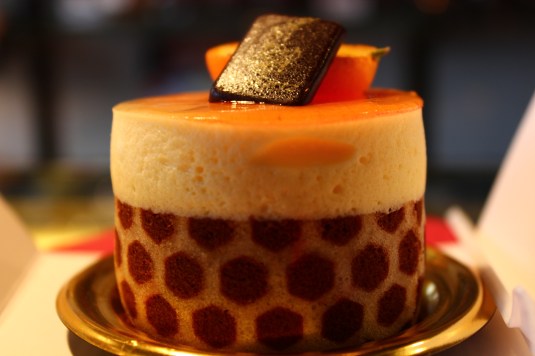
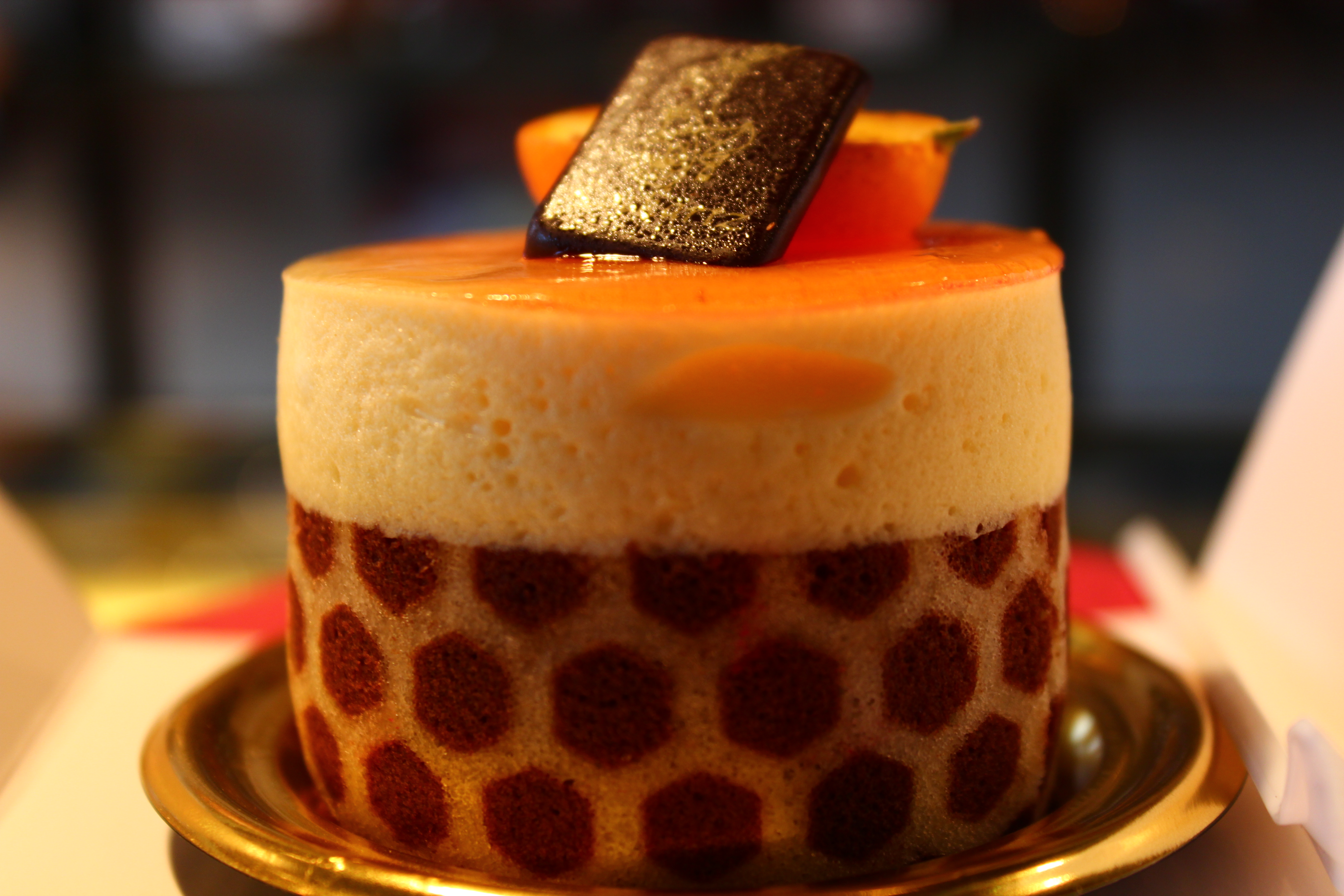
- My yummy treat after lunch
PLACES WE HAVE VISITED: We mostly stayed in the old town of Aachen for the whole day.
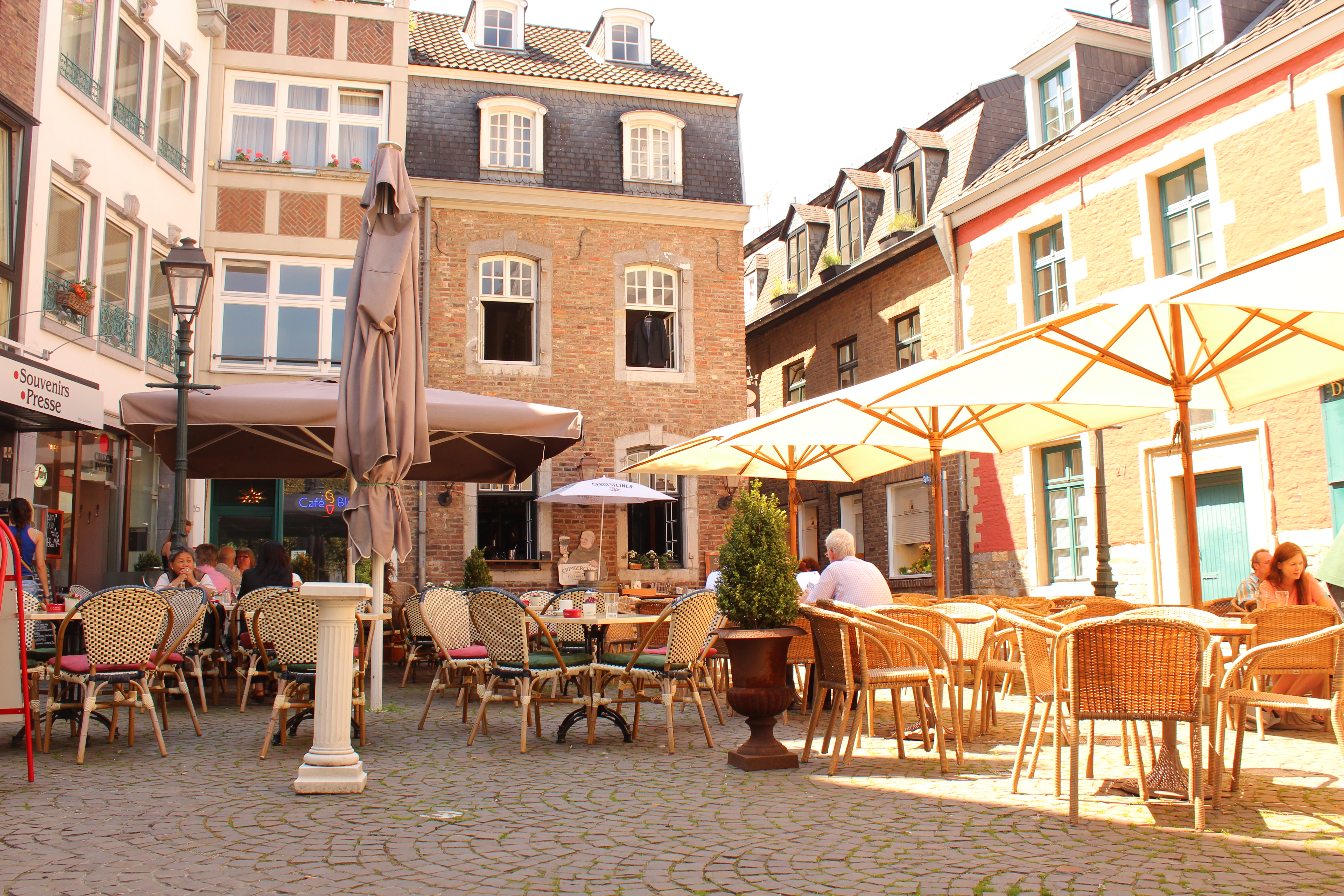
- Cafes and restaurants near Aachen Cathedral
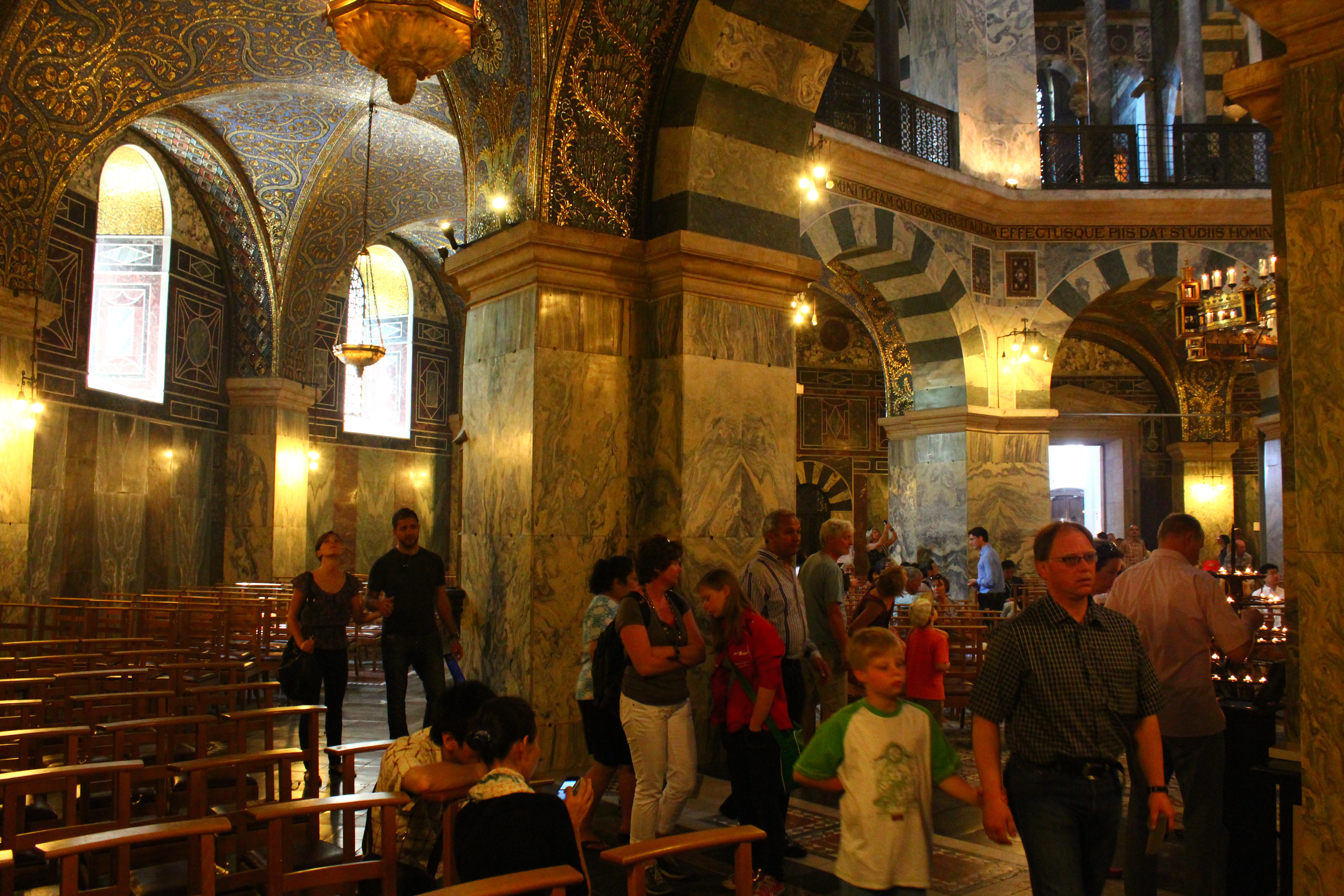
1) AACHEN CATHEDRAL: This is the OLDEST cathedral (dates back around 792 A.D.) in northern Europe, and beautifully situated in the heart of old town of Aachen. Due to its great significance for the history of both art and architecture, Aachen Cathedral was the FIRST German historical monument admitted to the UNESCO World Heritage list of cultural values in 1978. It’s gorgeous golden ceiling, marble wall, beautiful altar, mosaic floor will take you back in time of the Early Middle Ages.
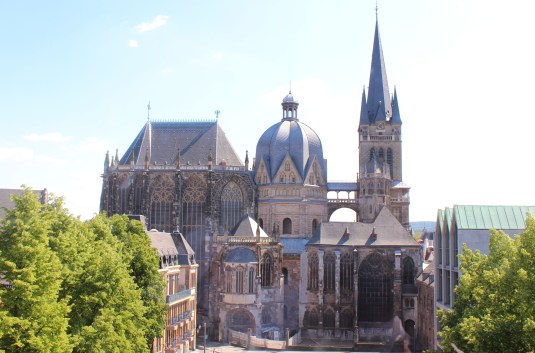
- View of Aachen Cathedral from the town hall
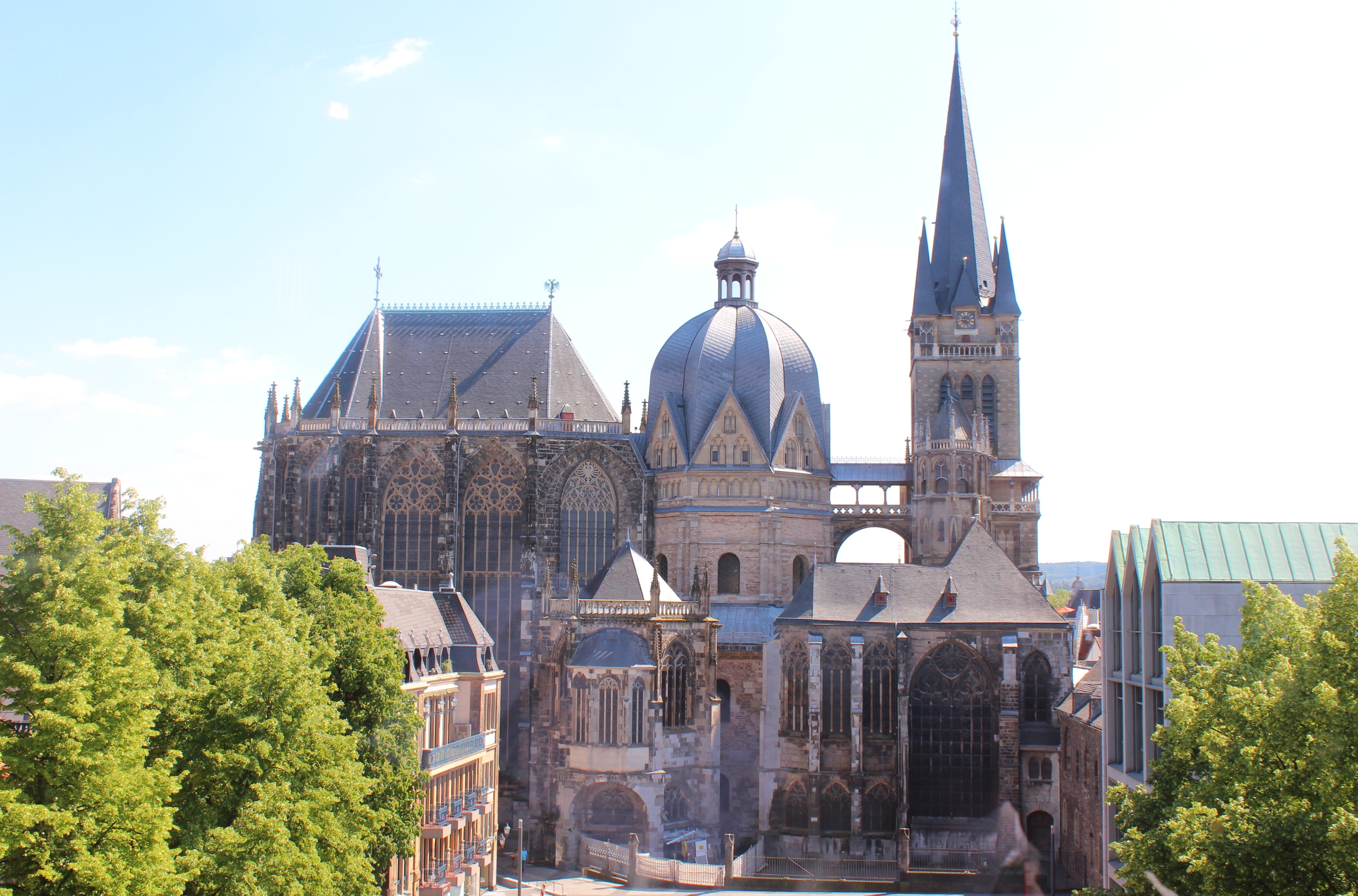
The cathedral is open from 10-6 everyday. There is no charge to enter the site but you have to PAY an euro to TAKE photographs inside the cathedral. That one euro is worth every bit of it, believe me. Despite of its size, this is has to be the number one place to visit in Aachen.
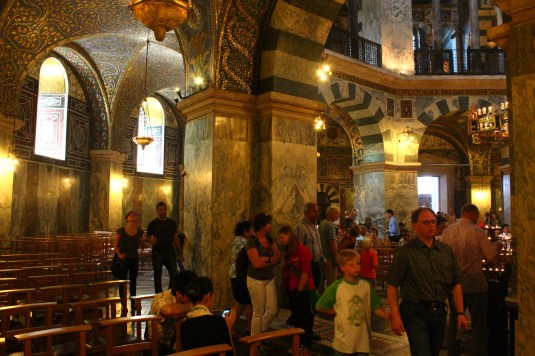
- Beautifully designed ceiling, marble pillars and stone walls of Aachen Cathedral
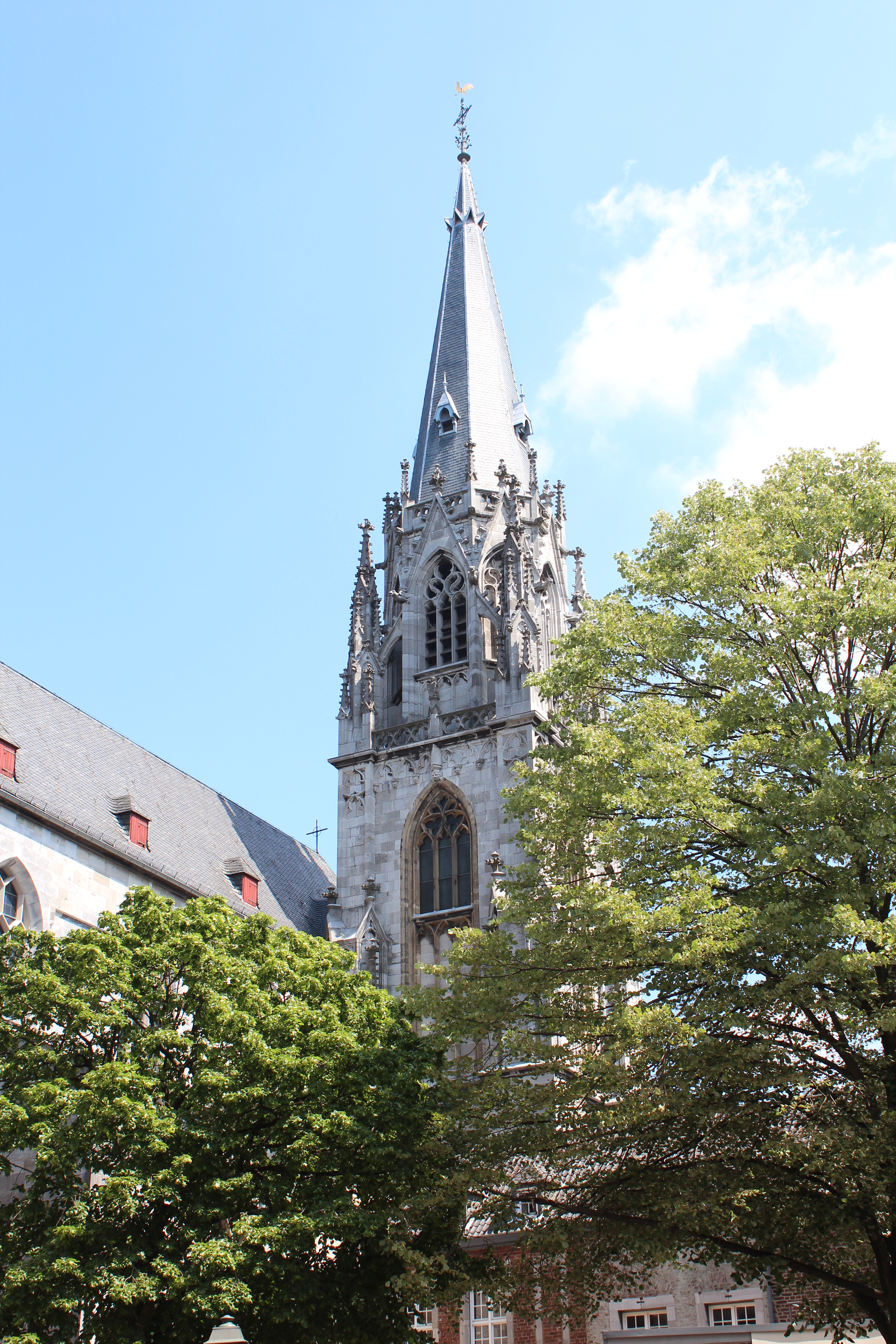
2) ST. FOILLAN CHURCH: This is an old church standing beside Aachen Cathedral in the pedestrian zone from the year of 1180. The church was almost completely DESTROYED in air raids during WWII in 1944. Anyone can locate this church by its tall neo-Gothic spire which boldly dominates Aachen’s sky.
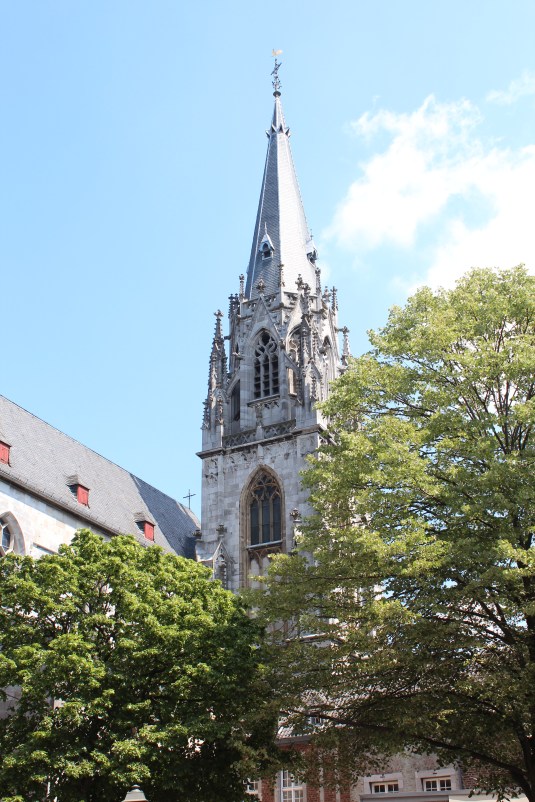
- Tall tower of St Foillan Church, which dominates the sky of old town Aachen
3) TOWN HALL/RATHAUS: In the place of today’s town hall there once stood the Palace of King Charlemagne of Aachen in the 8th century. King Charlemagne started building his favorite palace in Aachen from 789 on, and after his coronation in Rome in 800 it became his permanent seat of residence. The present town hall was built in the 14th century on the foundations of the former palace, and within some of its surviving outer walls. Later, this Rathaus went through numerous renovations and restorations transforming from Gothic Town Hall to a Baroque style, and finally to a neo-Gothic Town Hall in 1901. It’s 20 meters tower is preserved in its original Carolingian state. The building suffered heavy damage from bomb raids during WWII in 1944.
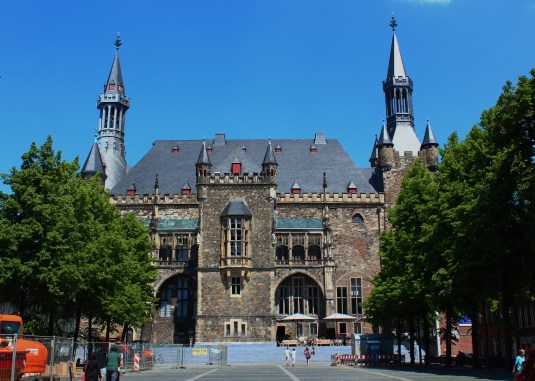
- Aachen Town Hall in the heart of old city
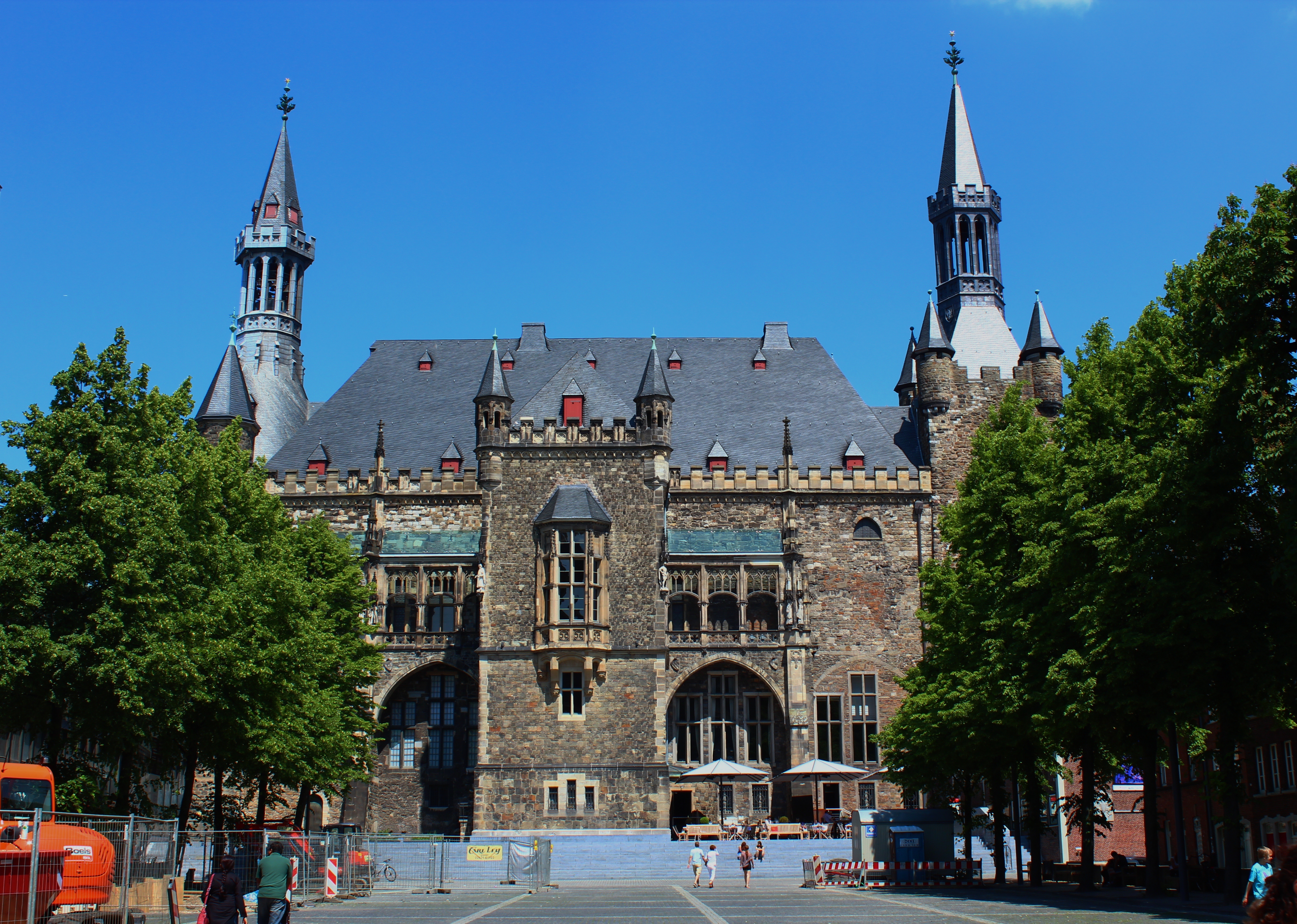
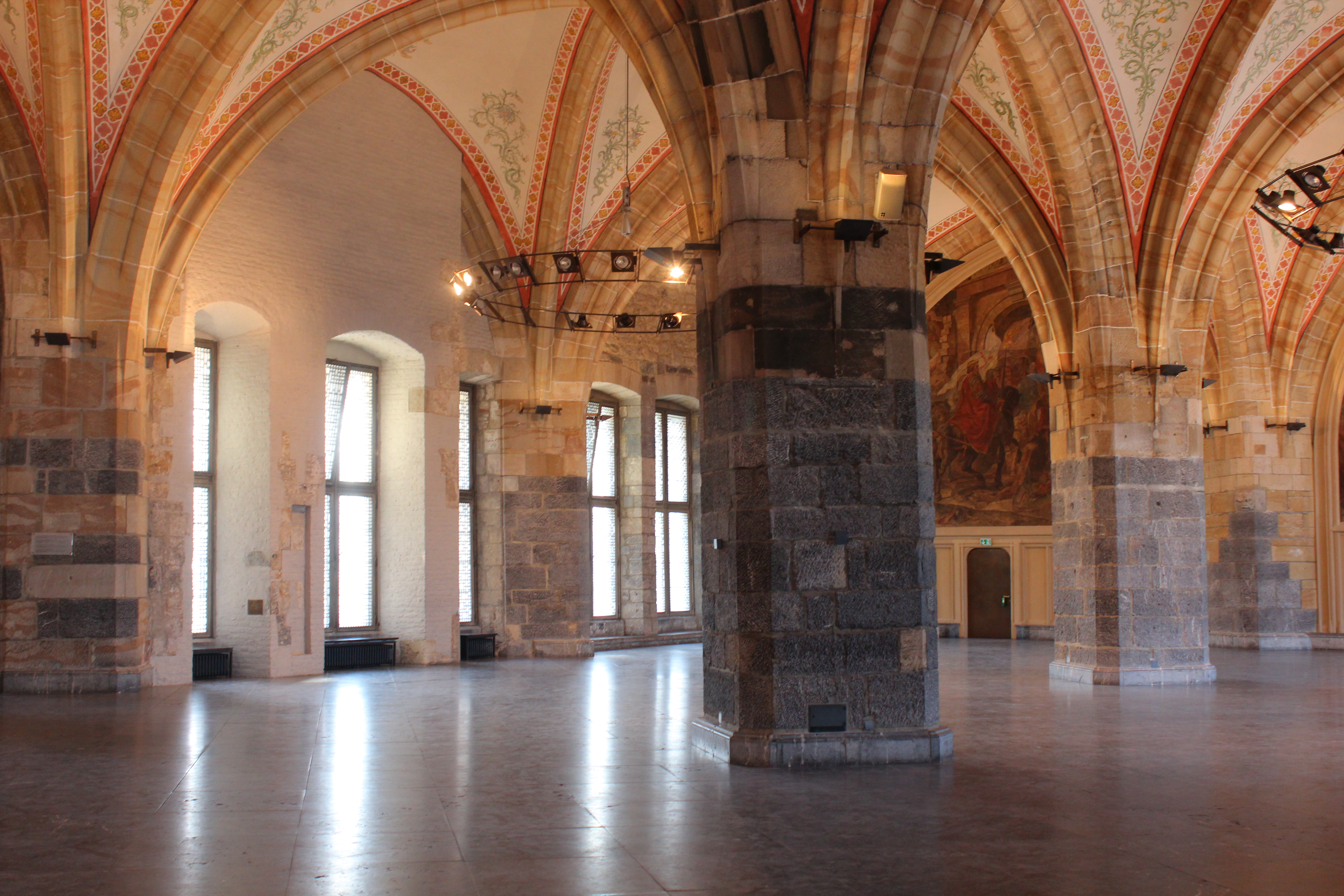
This beautiful and elegant town hall is open to the public everyday from 10-6. It’s only 10 euros for the whole family to go inside and an extra 1.50 euros for audio tour guide. Tourists can visit the beautifully decorated rooms with high ceilings, Assembly Hall of the City Council, marvelous looking Coronation Hall, and the Ark Staircase.
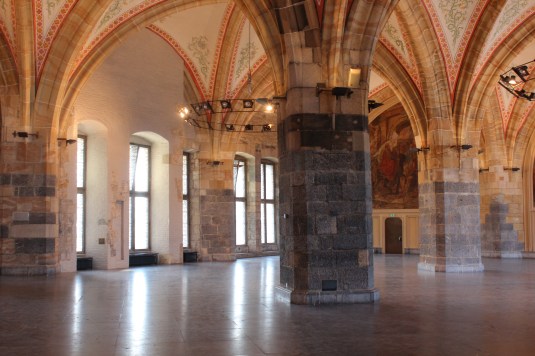
- Coronation Hall on the 3rd floor of Aachen Town Hall
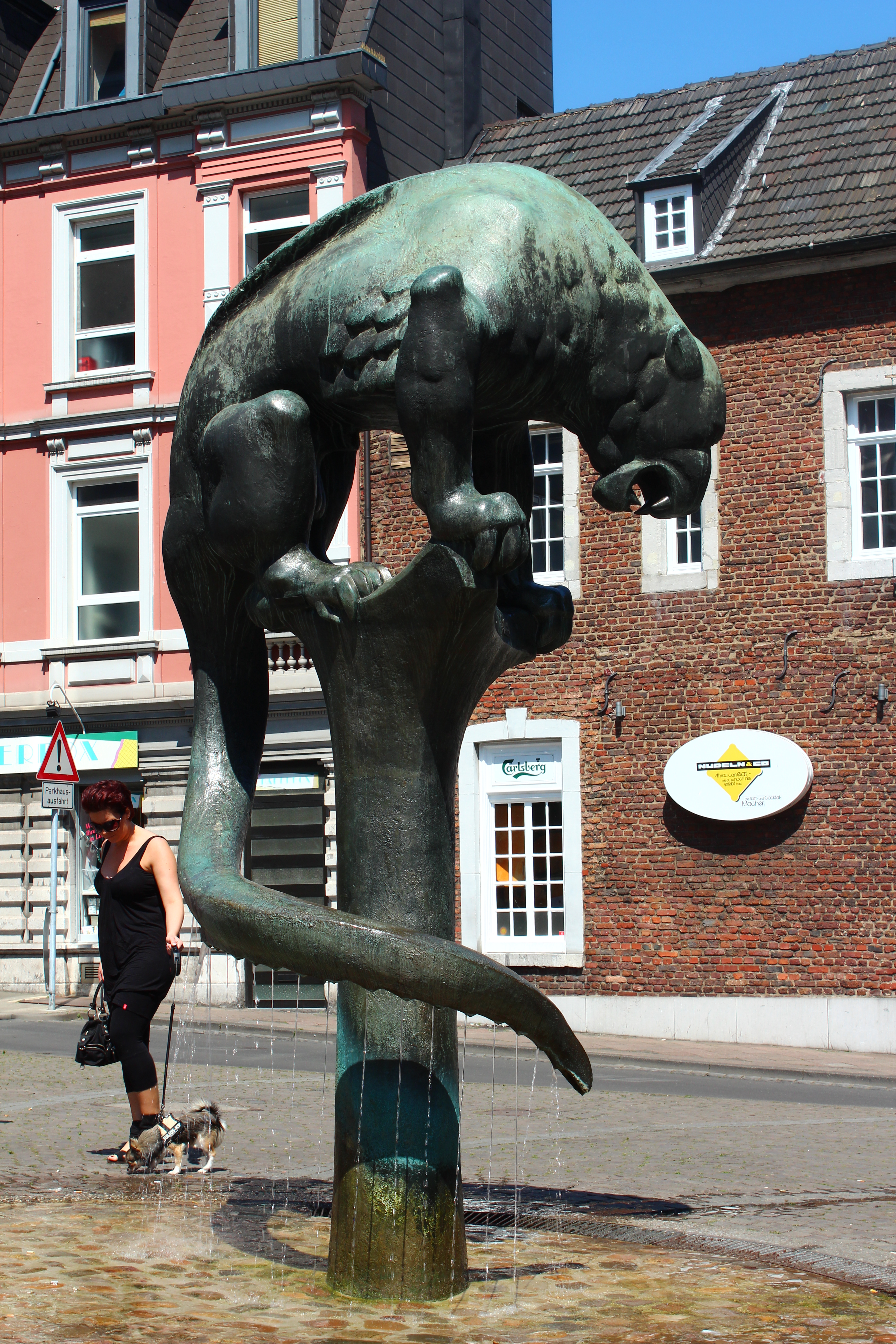
4) OLD TOWN AACHEN: The old part of this city gives you a medieval taste of its past. The lively squares, small cafes, and old buildings offer a relaxing yet charming atmosphere for the locals as well as the visitors. Aachen Cathedral, St. Foillan Church, Rathaus (Town Hall) are all located here within walking distance. Don’t forget to enjoy the artistic statues and sculptures while roaming around this old town.
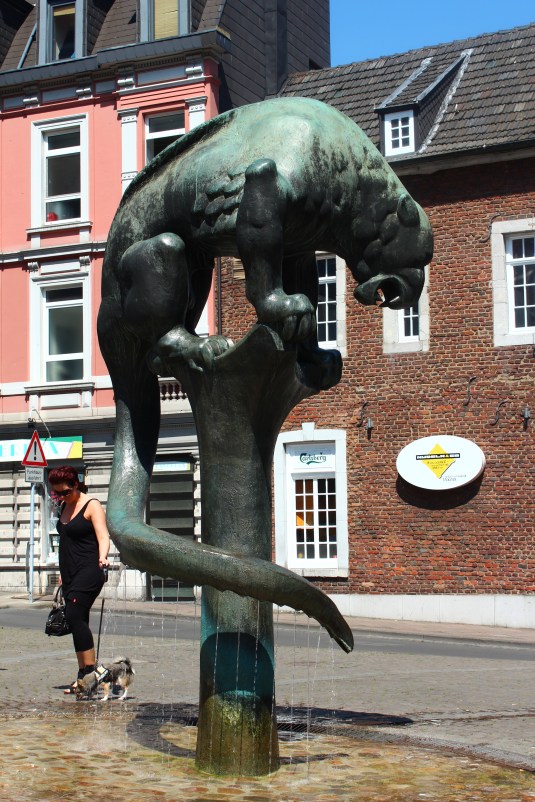
- A statue in old town of Aachen, Germany
Related articles
- A Day in Aachen (porterstakeduesseldorf.wordpress.com)
- Aachen on a rainy day (lilyblu.wordpress.com)
- Nazi war criminal Klaas Carel Faber dies in Germany (bayreuthgermany.wordpress.com)
- New World Order: Europe hammers out plan for new financial confederacy of Eurozone states (theextinctionprotocol.wordpress.com)
- Aachen Revisited: Culture, Cosmetics, and Toy Stores (beyondbeirut.wordpress.com)
Share this:

Capital of Diamond – Antwerp, Belgium
ANTWERP, BELGIUM (Dutch: Antwerpen):I think, Antwerp is mostly known for being the capital of diamonds. This is the most important financial center of the world’s diamond industry. But the city has more to it than just trading diamonds. Antwerp is one of the major destinations in Belgium in the region of Flanders, situated by the river Schelde. It has a major European port. The city has a historic old town in one side and other side, you will see the trendy shopping stores, international cuisines, designer shops…a perfect mix of past and present life.
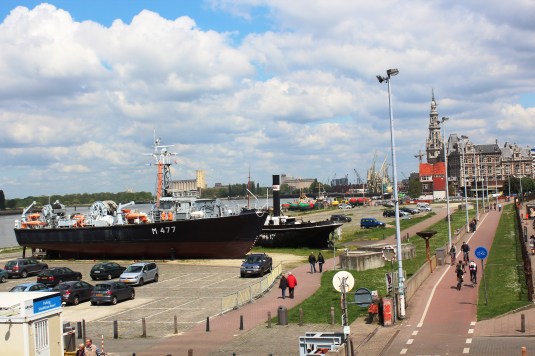
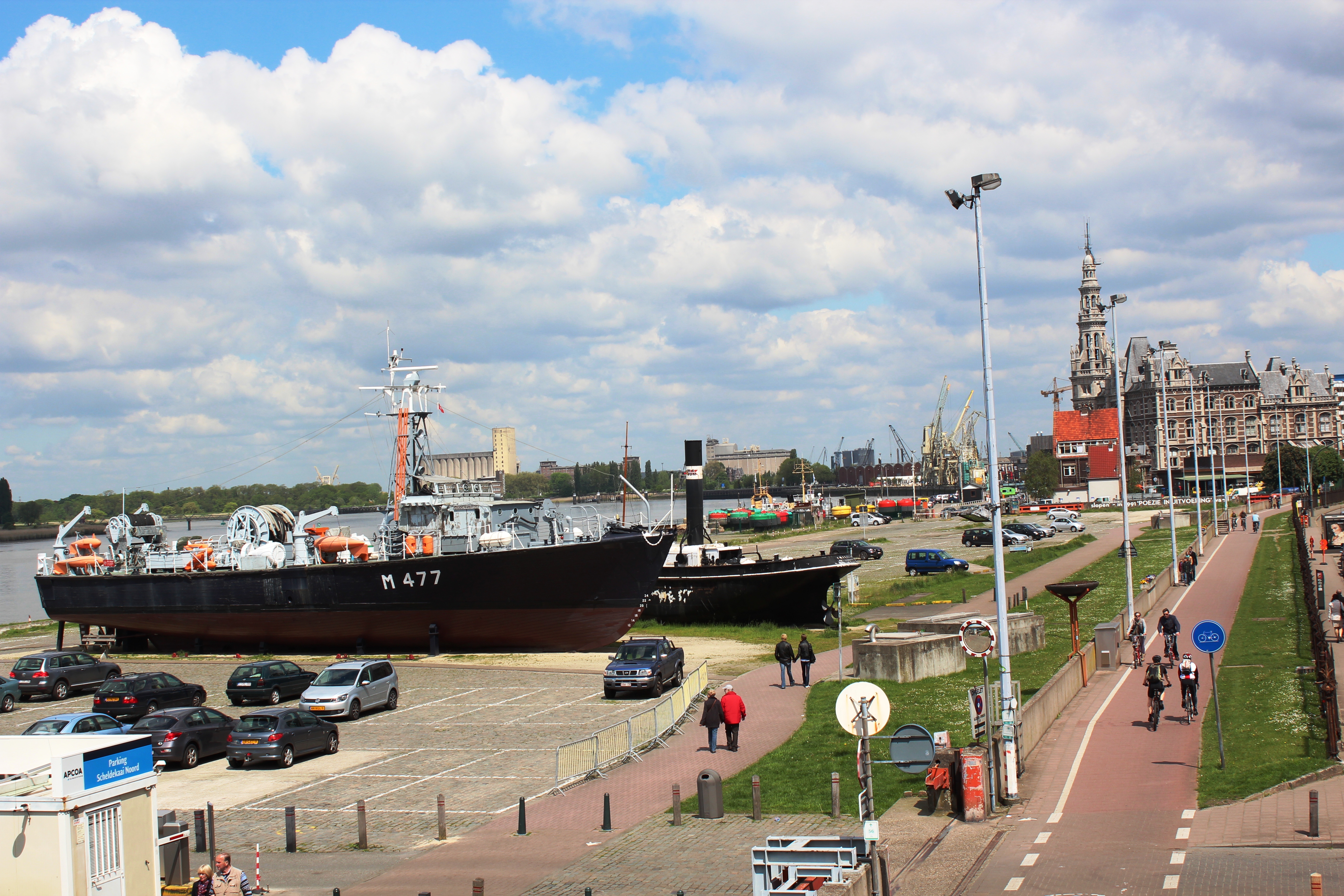
- View of parked boat by the river Schelde from the boardwalk
TIME OF TRAVELLING: Antwerp is about 45 minutes of drive from Tervuren, Belgium. We went there on a Sunday morning in Mary 2012 and stayed there until late afternoon, covering almost all the places we wanted to see. It wasn’t cold, but a bit chilly.
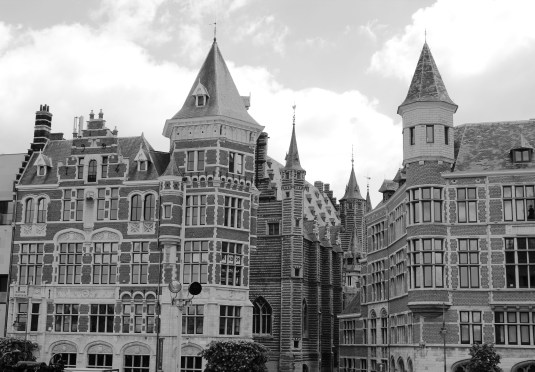
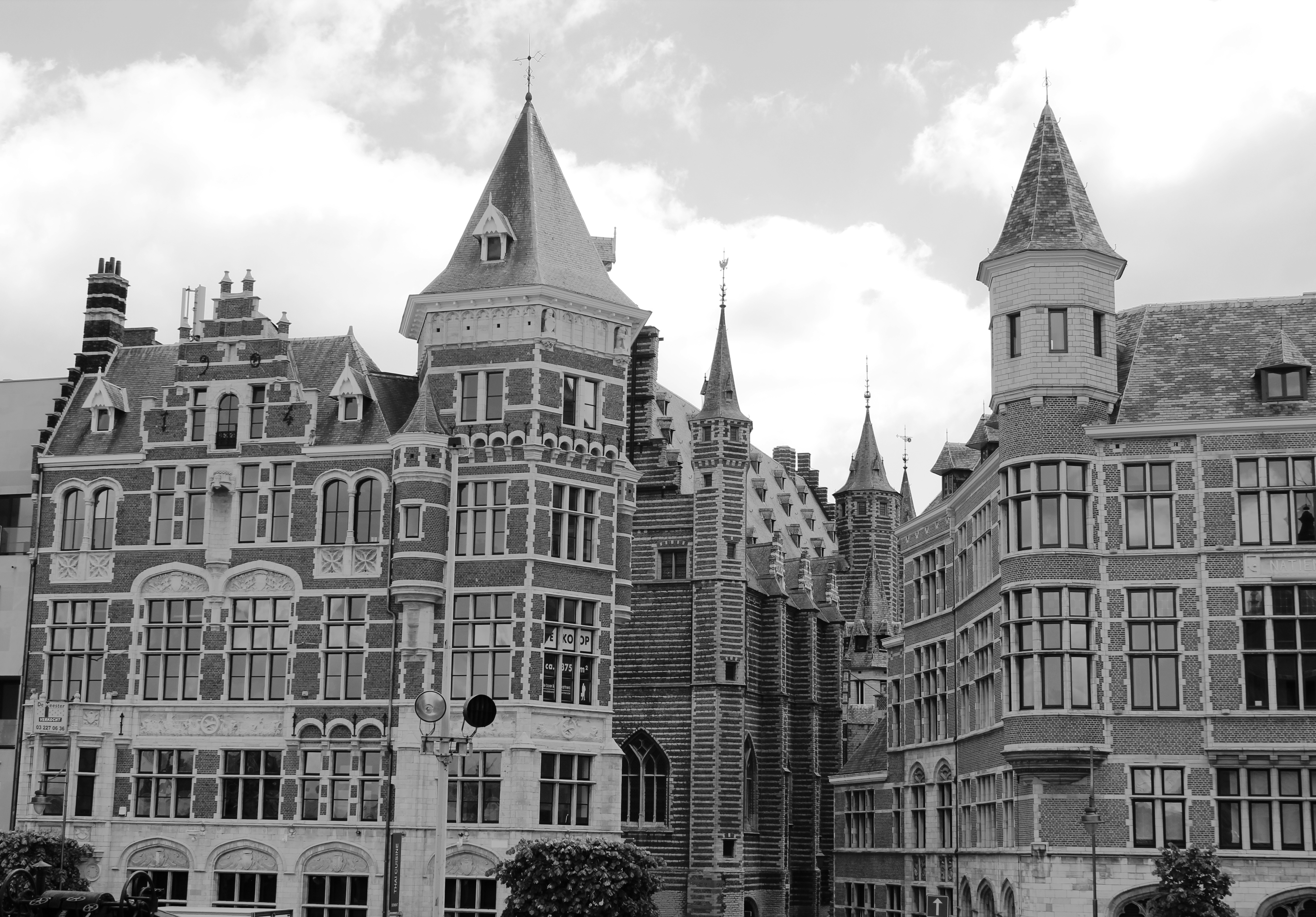
- Old buildings by the river Schelde
WHAT TO BUY AND EAT IN ANTWERP: Of course, you can buy diamonds as souvenir while in Antwerp, if you have lots of euros to spare. Other than that, there are some Belgian lace stores, ceramic stores, and regular souvenir stores selling key rings, t-shirts, post cards, and mugs in Grote Markt. Most of the shops are closed on Sundays, but the stores in Grote Markt are usually open every day.
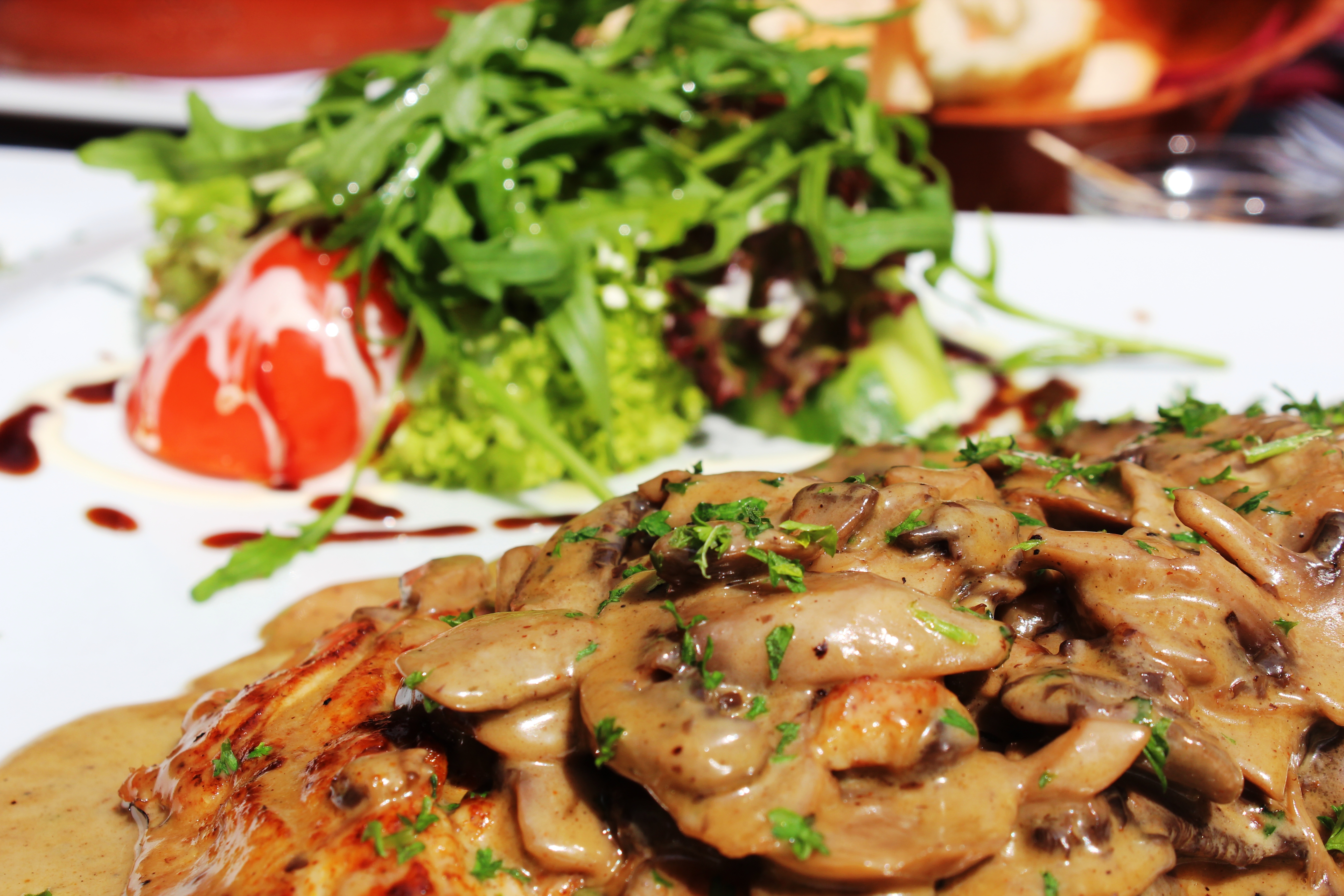
We had lunch in a restaurant in Groenplaats, if I can remember correctly, the name of the café was Cave (or something similar). I ordered chicken with mushroom, my friend ordered a Caesar’s salad with chicken, and my daughter ordered a trio plate containing cannelloni, lasagna, and ravioli. I must say all of them were out of this world, simply delicious.
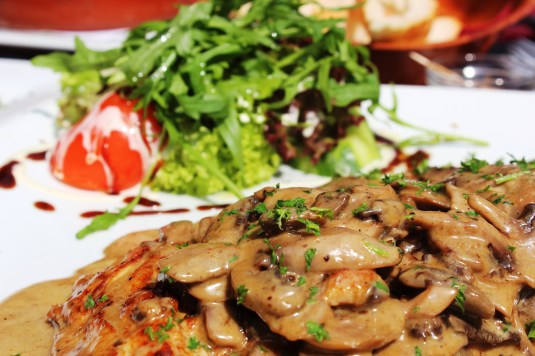
- My lunch in Antwerp, chicken with mushroom
PLACES WE VISITED: Antwerp has many things to offer to its visitors. We spent about little more than half a day to explore the city. May be another couple of hours would have been perfect to learn about other parts of the city. But fortunately, we can always go back.
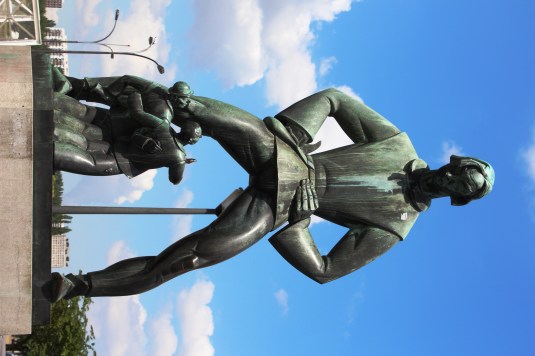
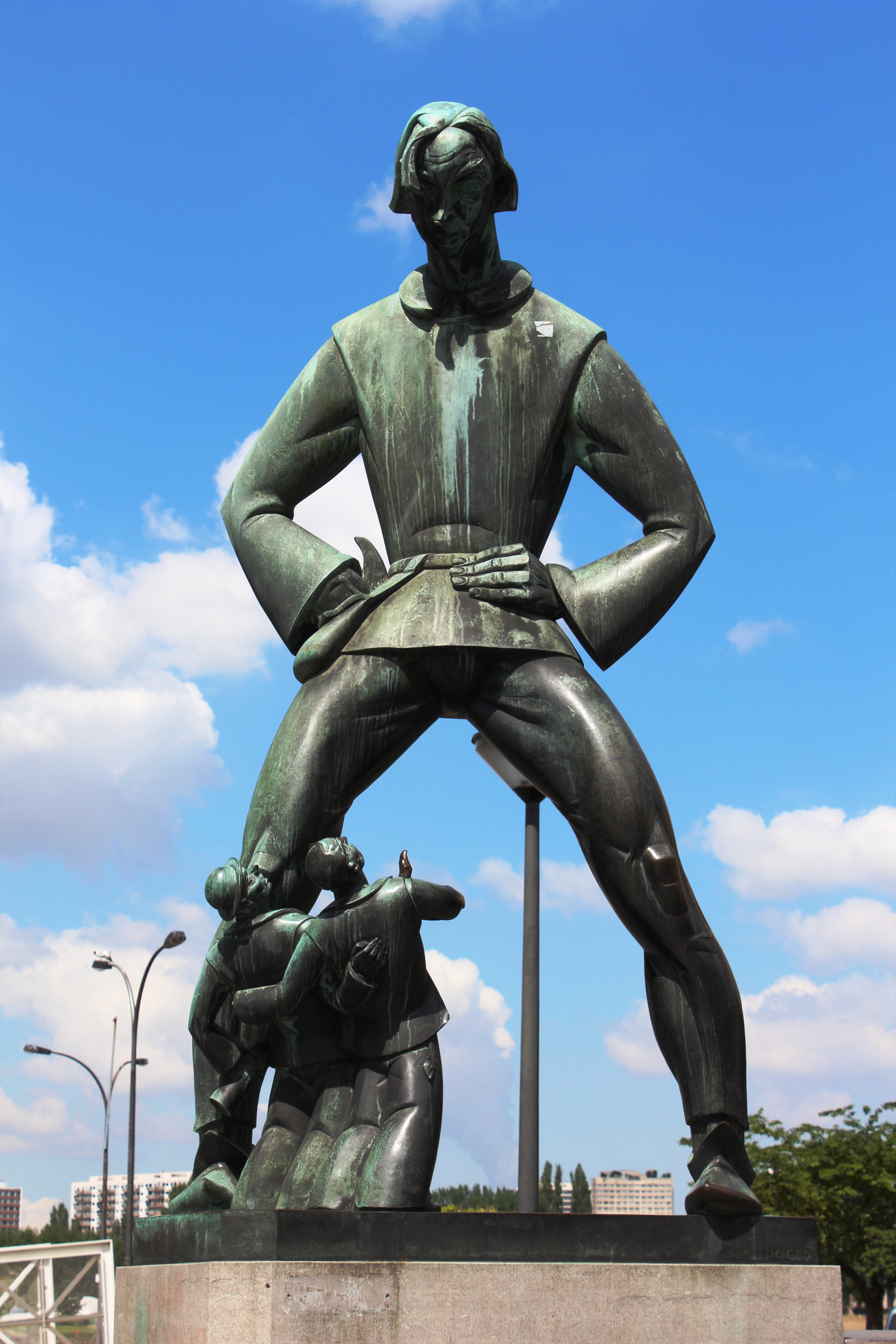
- Statue in front of Het Steen
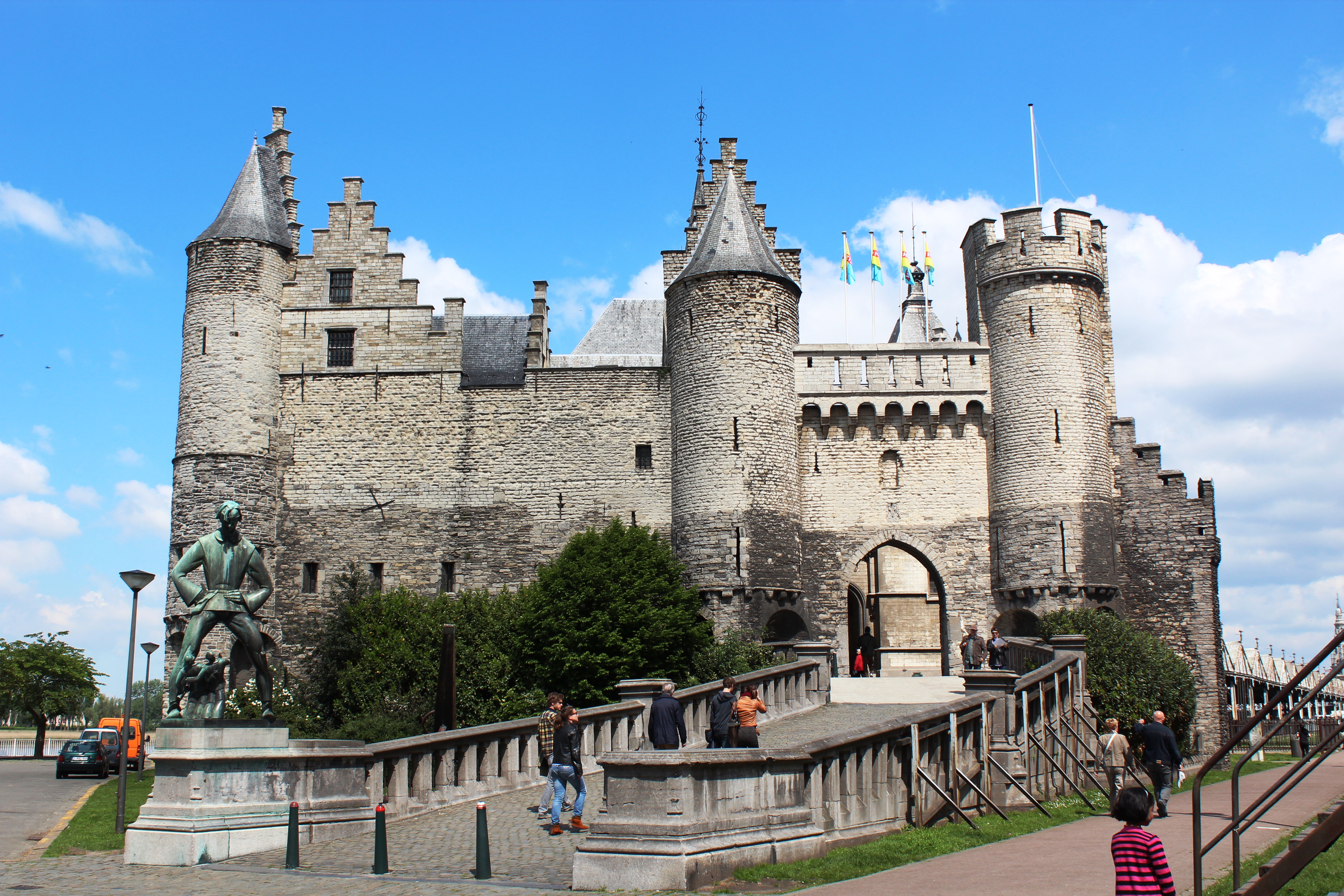
1) HET STEEN (The Stone): This is a rather small medieval castle by the bank of the river Schelde. You can go to the inner courtyard but not inside the castle. The stairs after the courtyard will take you to the starting point of the scenic boardwalk. Enjoy the beautiful river in one side and the old, medieval buildings on the other side. This is very close to Grote Markt and Vleeshuis.
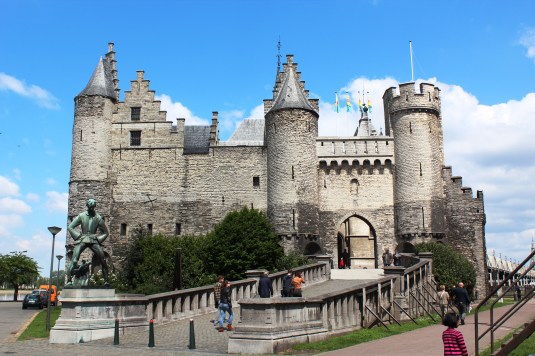
- Medieval Castle, Het Steen, in Antwerp
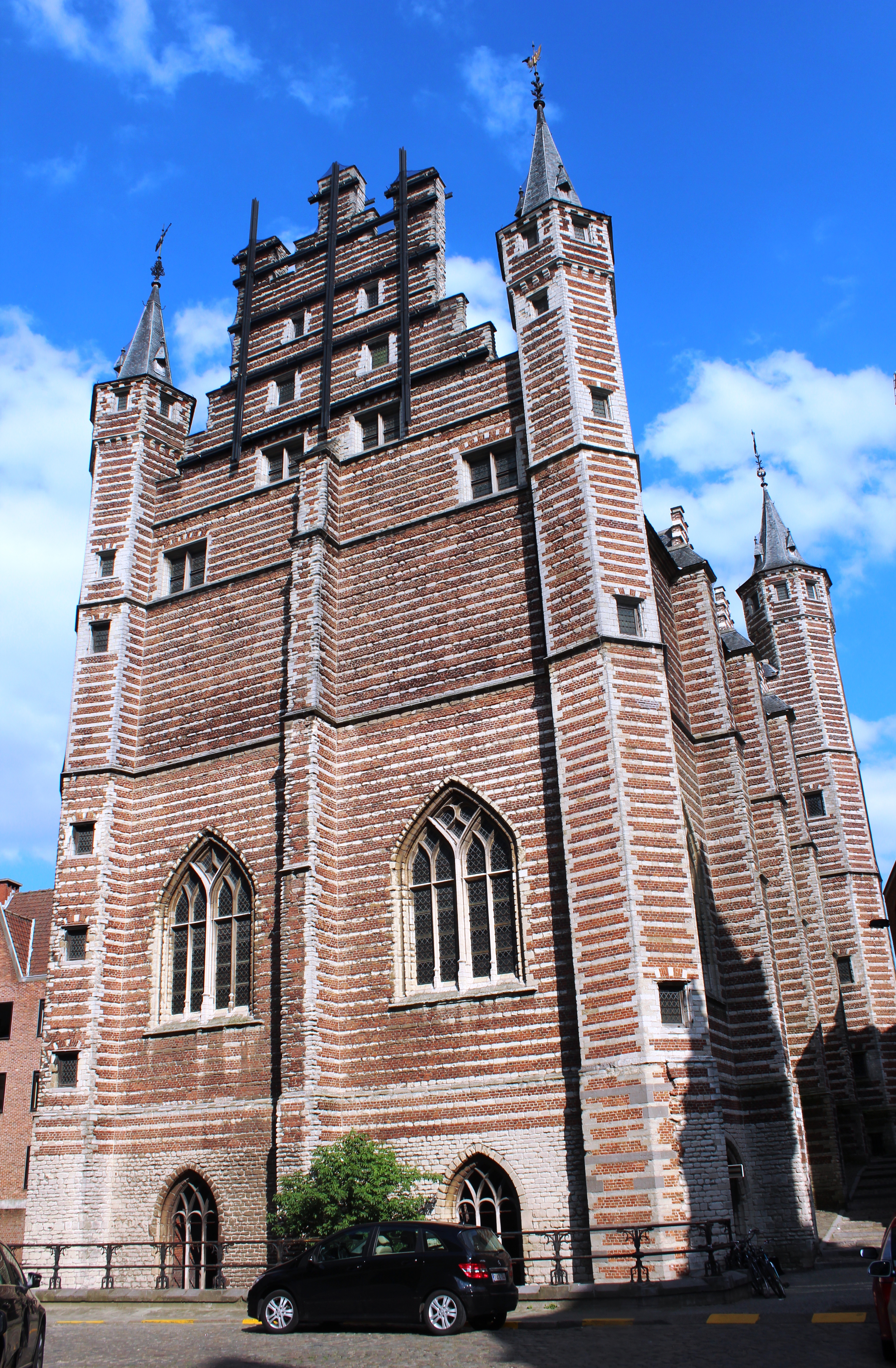
2) VLEESHUIS: This is the old meet house from around 1250. It is one of the oldest surviving buildings in Antwerp. The building is made to resemble stacks of bacon, switching between white stones and red bricks. This was the guild hall for the butchers and functioned as a meat market where butchers could sell their merchandise. Only 2-3 minutes of walk from Grote Markt and can been seen from Het Steen. Vleeshuis is open from Tuesday to Sunday from 10 a.m. to 5 p.m. We couldn’t go inside since it was already closed by then 😦
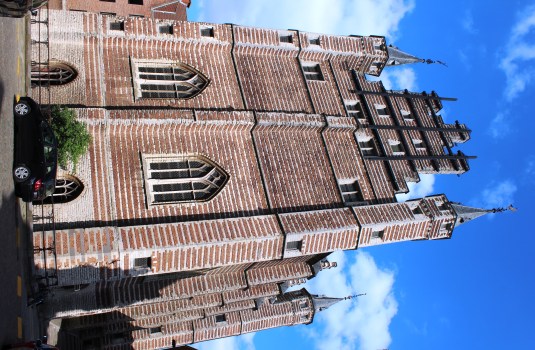
- Vleeshuis in Antwerp, Belgium
3) ST. PAULUSKERK (St. Paul’s Church): Although we couldn’t go inside the church because the church is open from 2-5 everyday (I think), we had to get as close as possible because of its bold gothic shrine that catches your eyes right from the boardwalk near Het Steen. This 16th century church has a very clam and quiet inner courtyard surrounded by very old church walls with a statue of Virgin Mary in one side. We enjoyed the charm of this church even if we couldn’t go in. The church is located right beside Sint-Paulusplaats, which is a nice little square with some shops and cafes. Everything was closed on Sunday except for the café/restaurants.

- Statue of Virgin Mary in the courtyard of St. Paul’s Church

4) GROENPLAATS: This is one of the major squares of Antwerp old town. Statue of the famous painter of Antwerp Petro Paulo Rubens dominates the square. Surrounding the statue are the cafes, shops, flower vendors, and hotels. It is a perfect place for lunch or to just sit down with a drink and watch people go by.
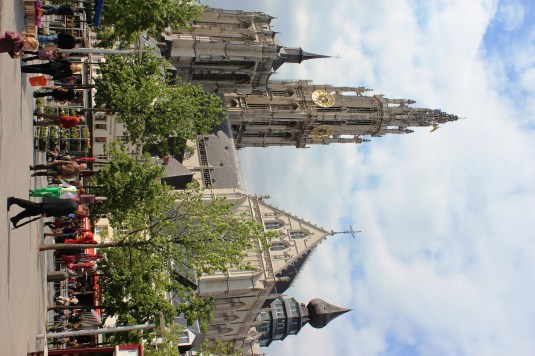
- Groenplaats with Cathedral of Our Lady in the back
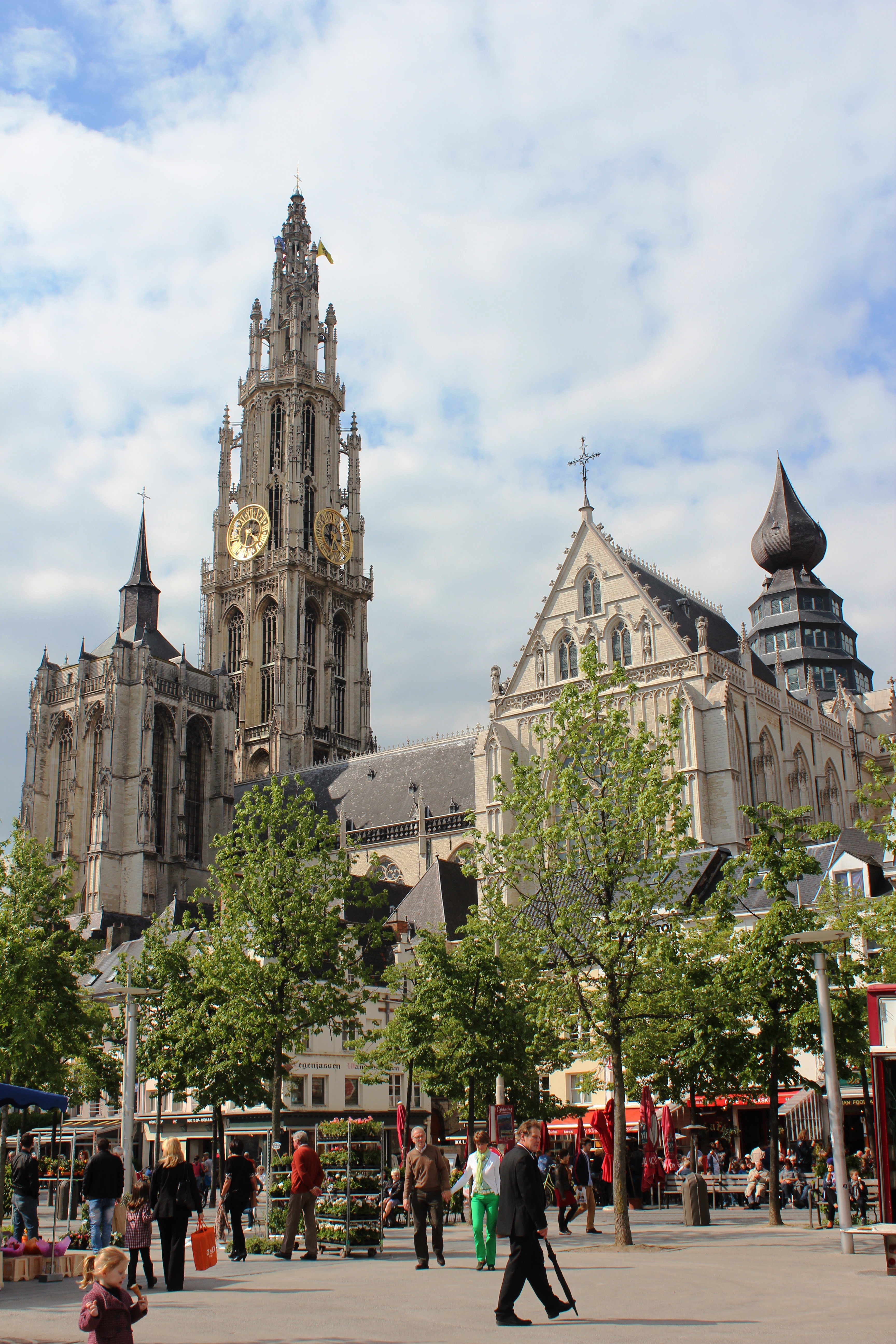
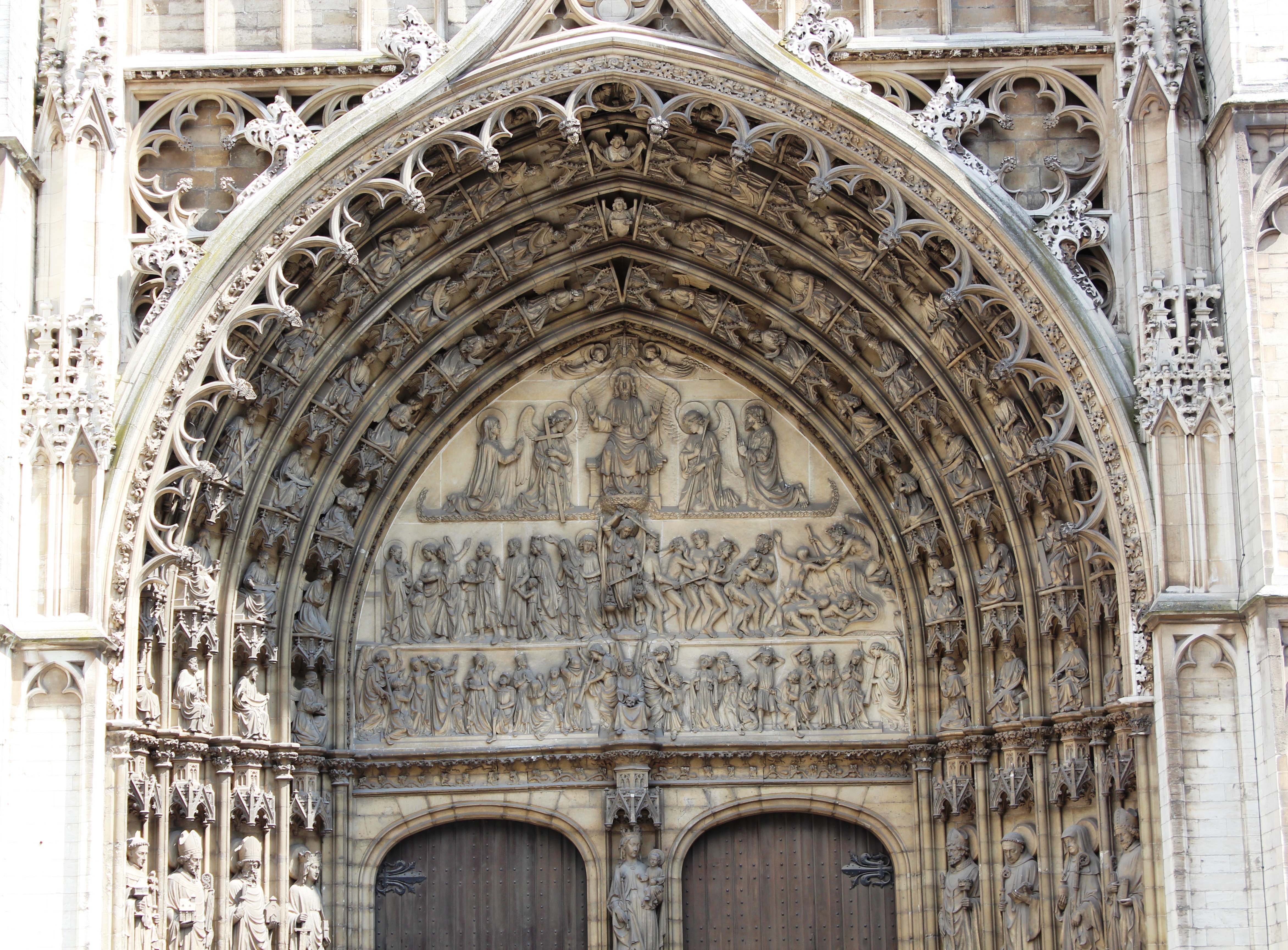
5) CATHEDRAL OF OUR LADY (Onze Lieve Vrouwekathedraal): This is one of the most impressive and largest Gothic cathedral in Northern Europe. You can see its 400 ft. tall tower from almost any part of the old town. The cathedral is standing there since 1351 and features some of Ruben’s most famous paintings. It is a UNESCO World Heritage Site. There is a 5 euros fee to enter the cathedral, but we didn’t pay anything because there was a mass service starting in 10 minutes. We saw some of Ruben’s paintings from distance and they looked gorgeous. Also we couldn’t see the altar because it was going thru restoration.
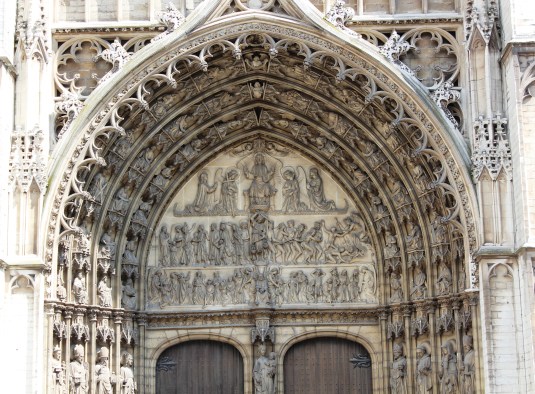
- Grand entrance to the Cathedral of Our Lady
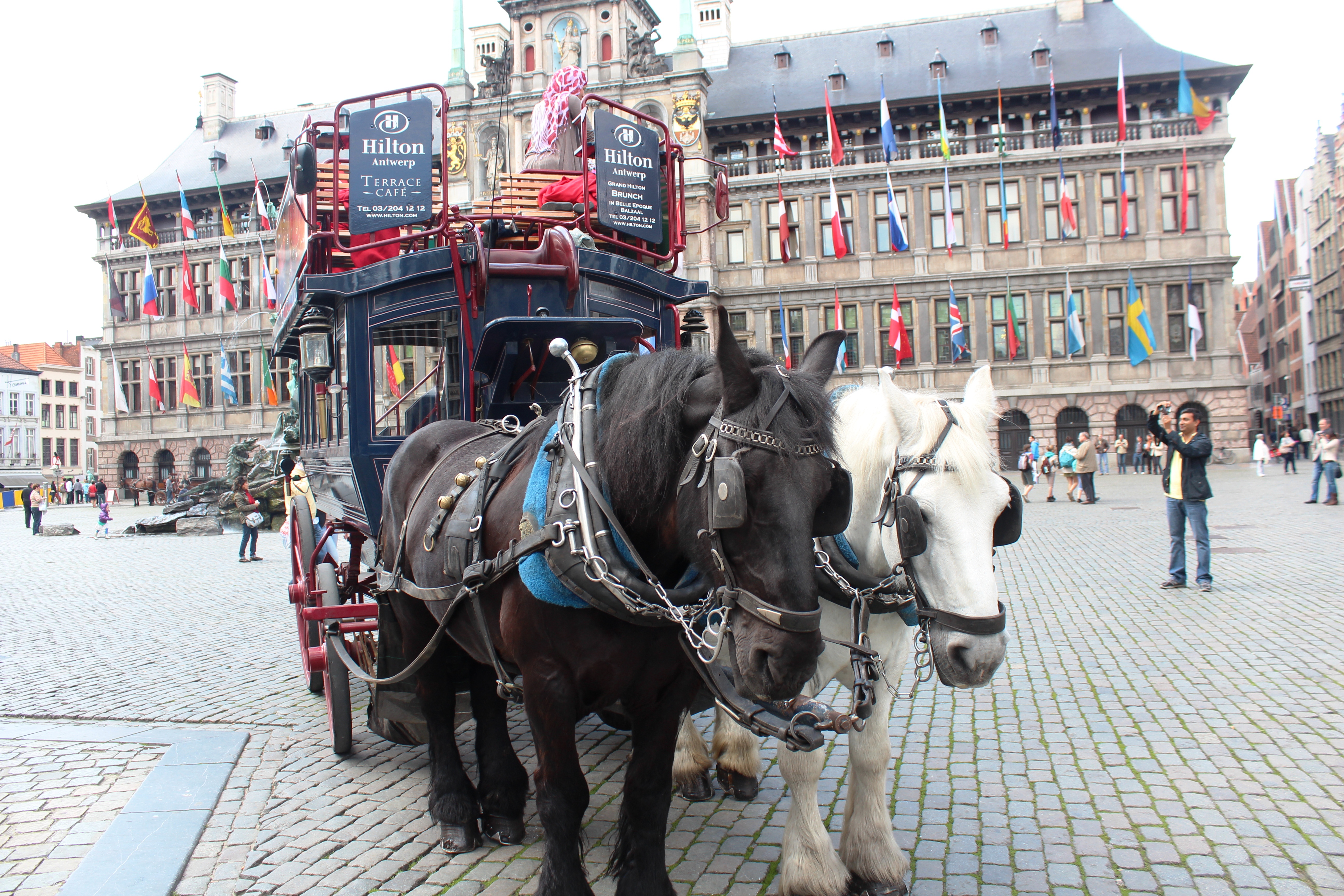
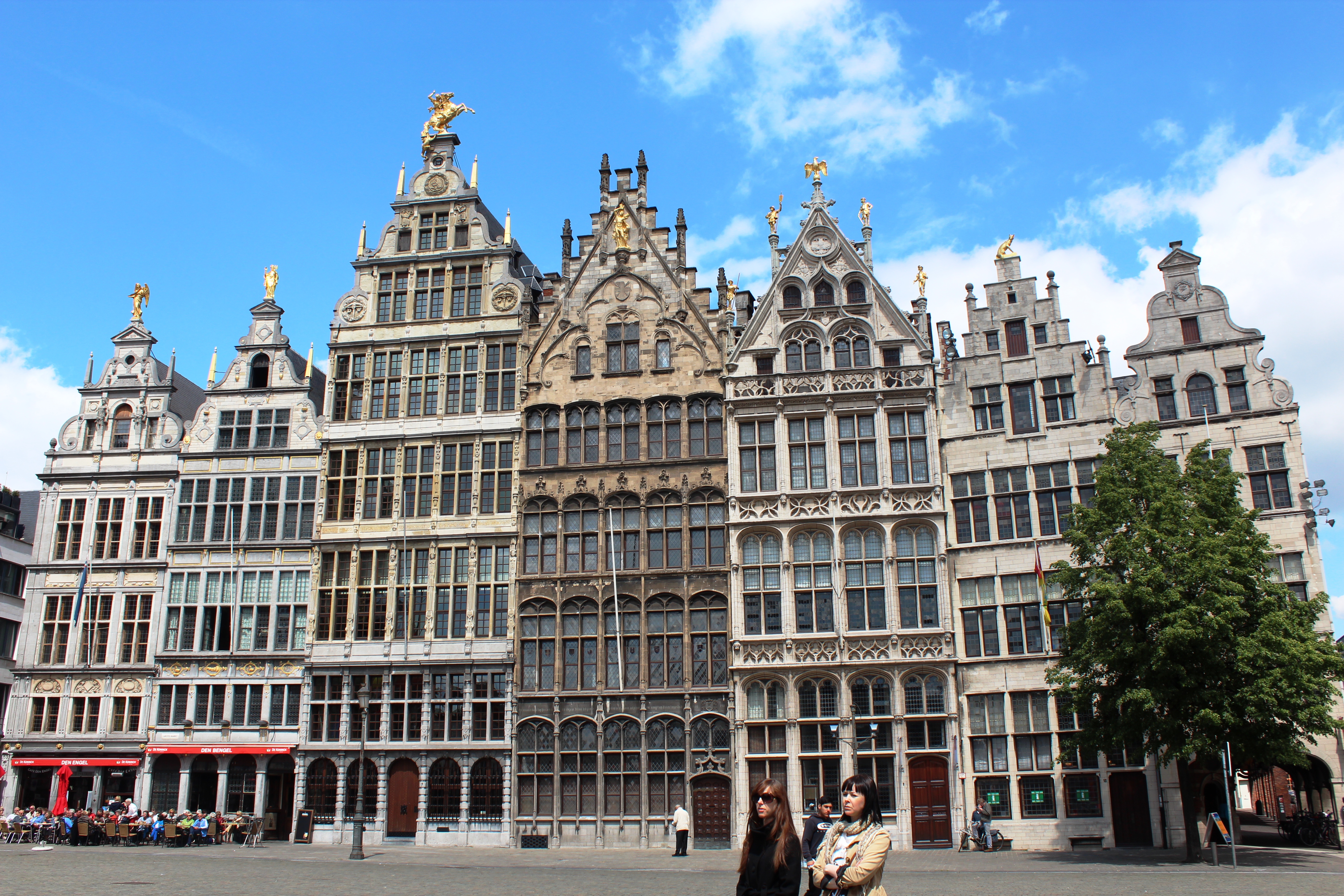
6) CITY HALL & OLD MARKET (Stadhuis & Grote Markt): This is another UNESCO World Heritage Site of Antwerp. This may not be as big as the “Grand Place” of Brussels, but definitely as beautiful. This is the heart of the old city and like any other Flemish historical town, it is also surrounded by the typical medieval guild houses. The tower of Our Lady Cathedral in the background completes the magnificent view of this market place. We took a double-decker horse-carriage ride from Grote Markt. It was 6 euros per person (including toddlers) for a wonderful 40 minutes ride through the old town. It runs beginning of every hour (last ride of the day starts at 6pm) and you can buy the tickets right there.
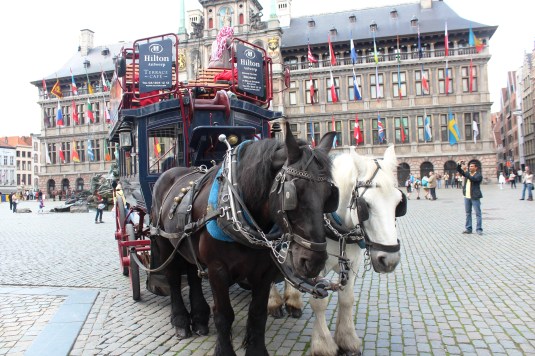
- Our double-decker horse carriage in Grote Markt
In the middle of the square stands the Brabo fountain from 1887. Brabo was a mythical Roman soldier who killed a giant, called Druon Antigoon. Brabo removed its hand after killing and threw it in the river Schelde. The story goes saying that this would have created the name Brabant.
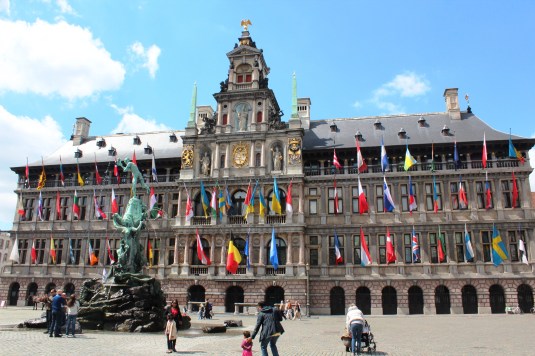
- Antwerp old City Hall with the statue of Brabo in the front
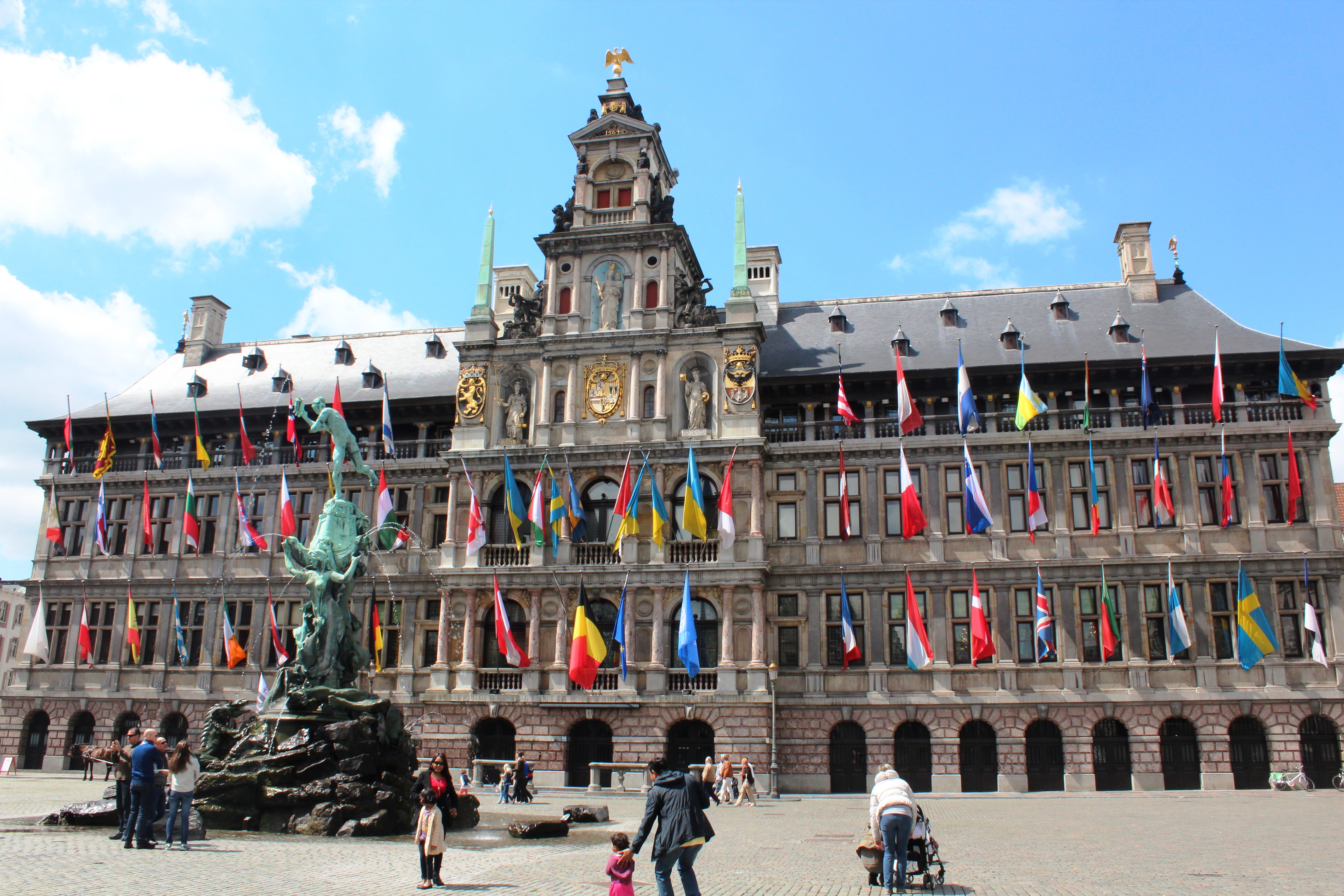
The Gothic and early Renaissance style city hall was built in the 16th century. The façade is richly decorated with statues, ornaments, and coat of arms. Usually the main facade of the city hall is decorated with 87 flags adding multi-colors to the square by showing off flags from different countries and regions. The central flags on the bottom row represent Antwerp, Flanders, Belgium, Europe and the United Nations. The other flags represent countries that are member of the European Union and nations that have a consulate in Antwerp.
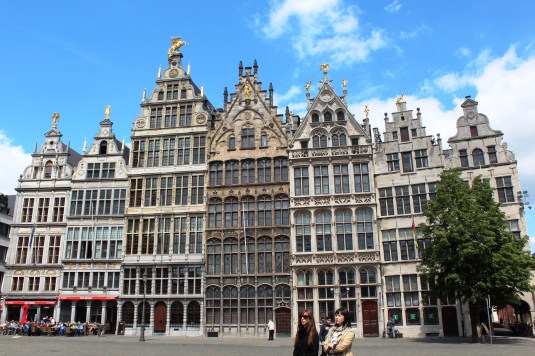
- The guild houses in Grote Markt of Antwerp
Related articles
- A Two-Minute Tour Of Antwerp (schwingeninswitzerland.wordpress.com)
- Let’s put Belgium on the map: International Scratch Day 2012 @ Antwerp (fatherinastrangeland.wordpress.com)
- Police now investigating fired Antwerp graders (gemmanews.wordpress.com)
- Traveling in Europe: Antwerp Part II (colleenanderson.wordpress.com)
- 10 Fun Facts About Belgium (journeyaroundtheglobe.com)
Share this:

Brussels revisited in Black & White
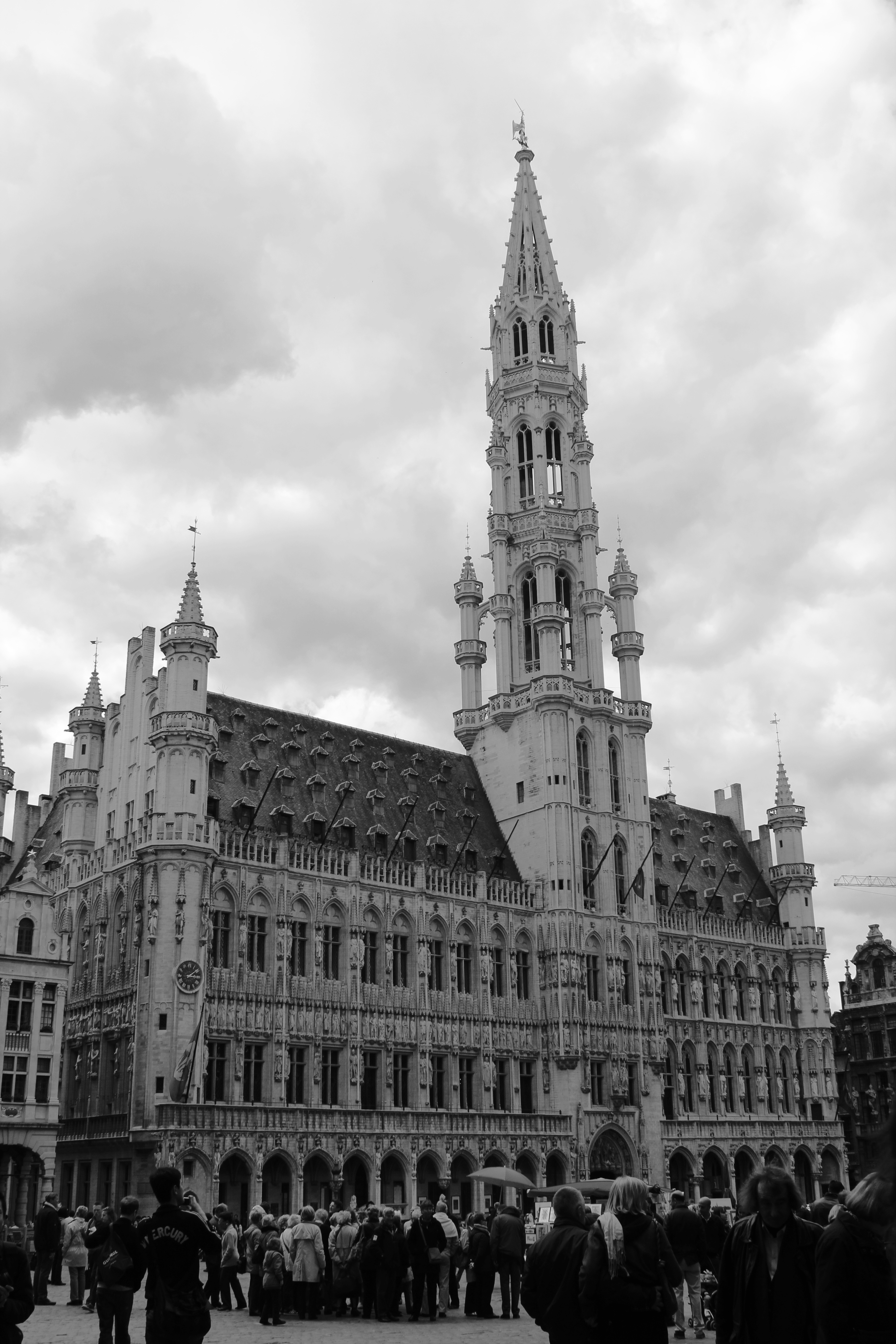
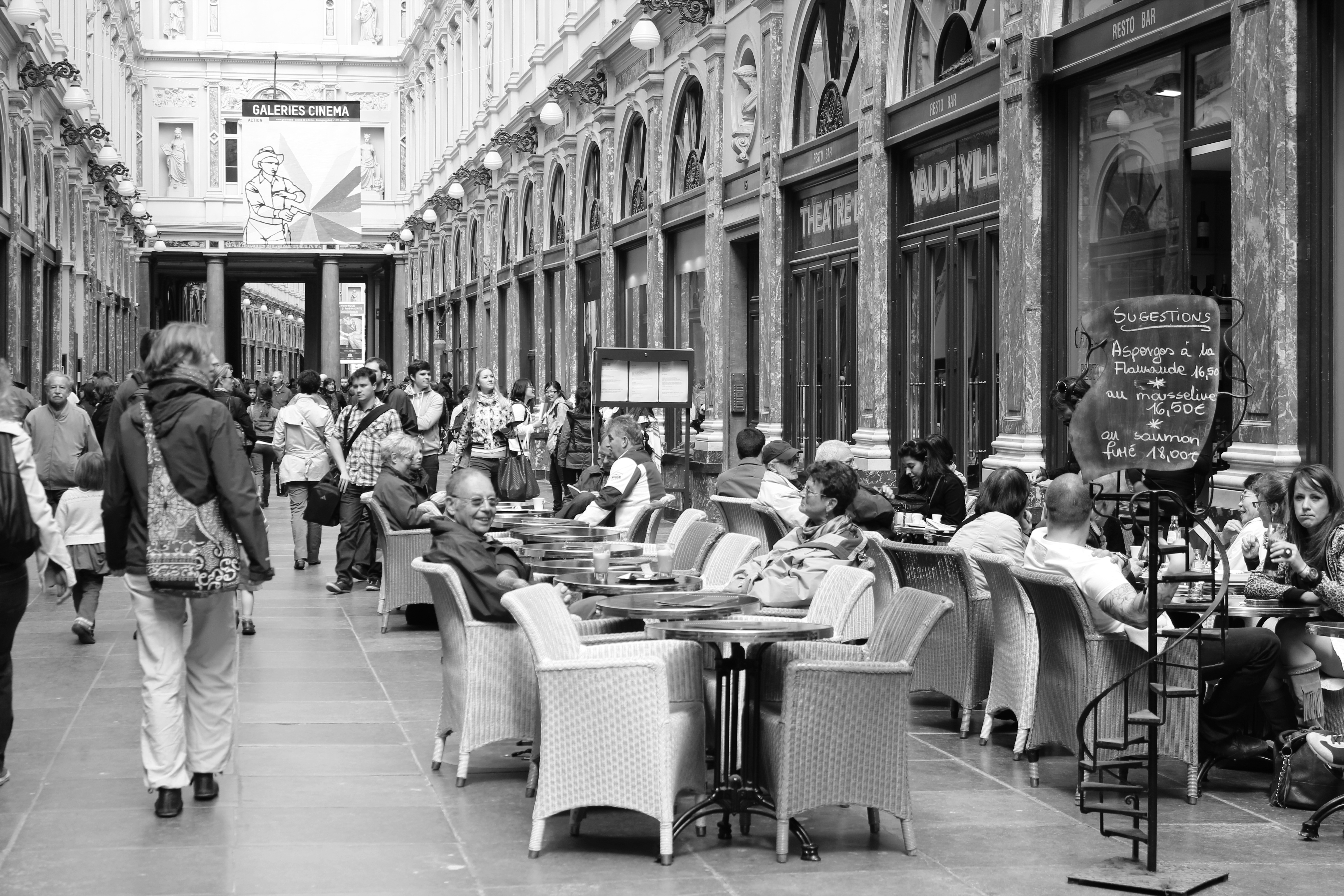
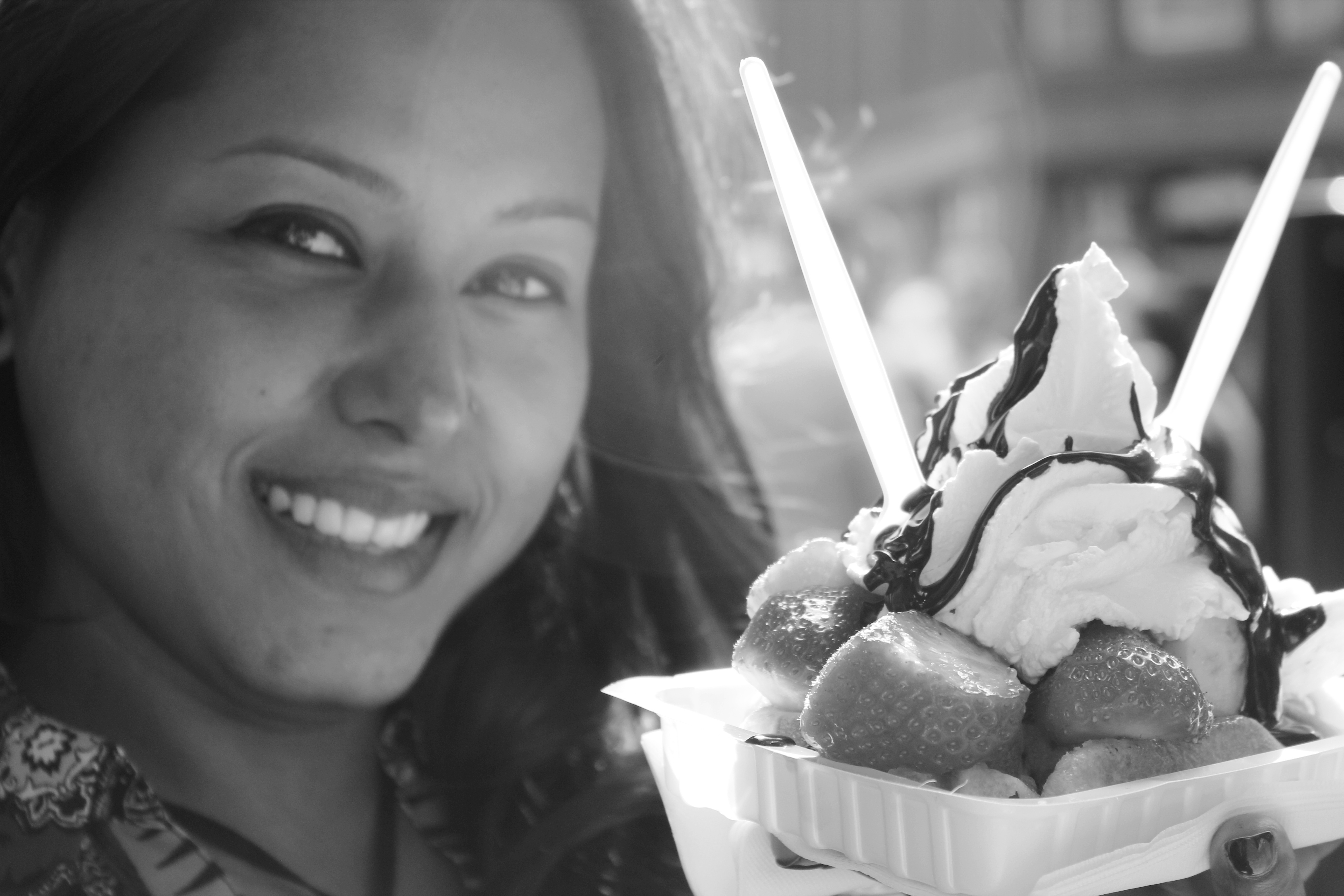
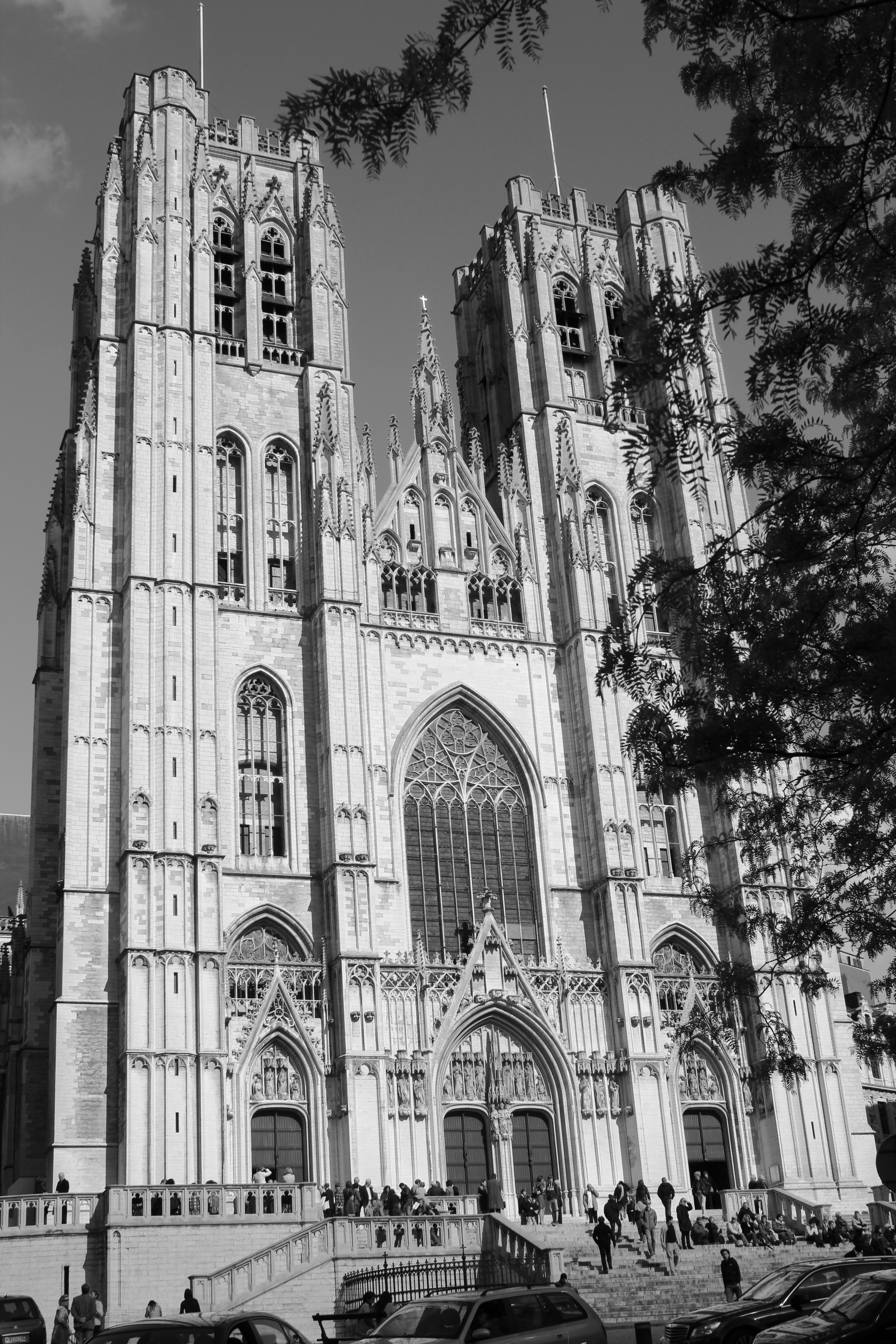
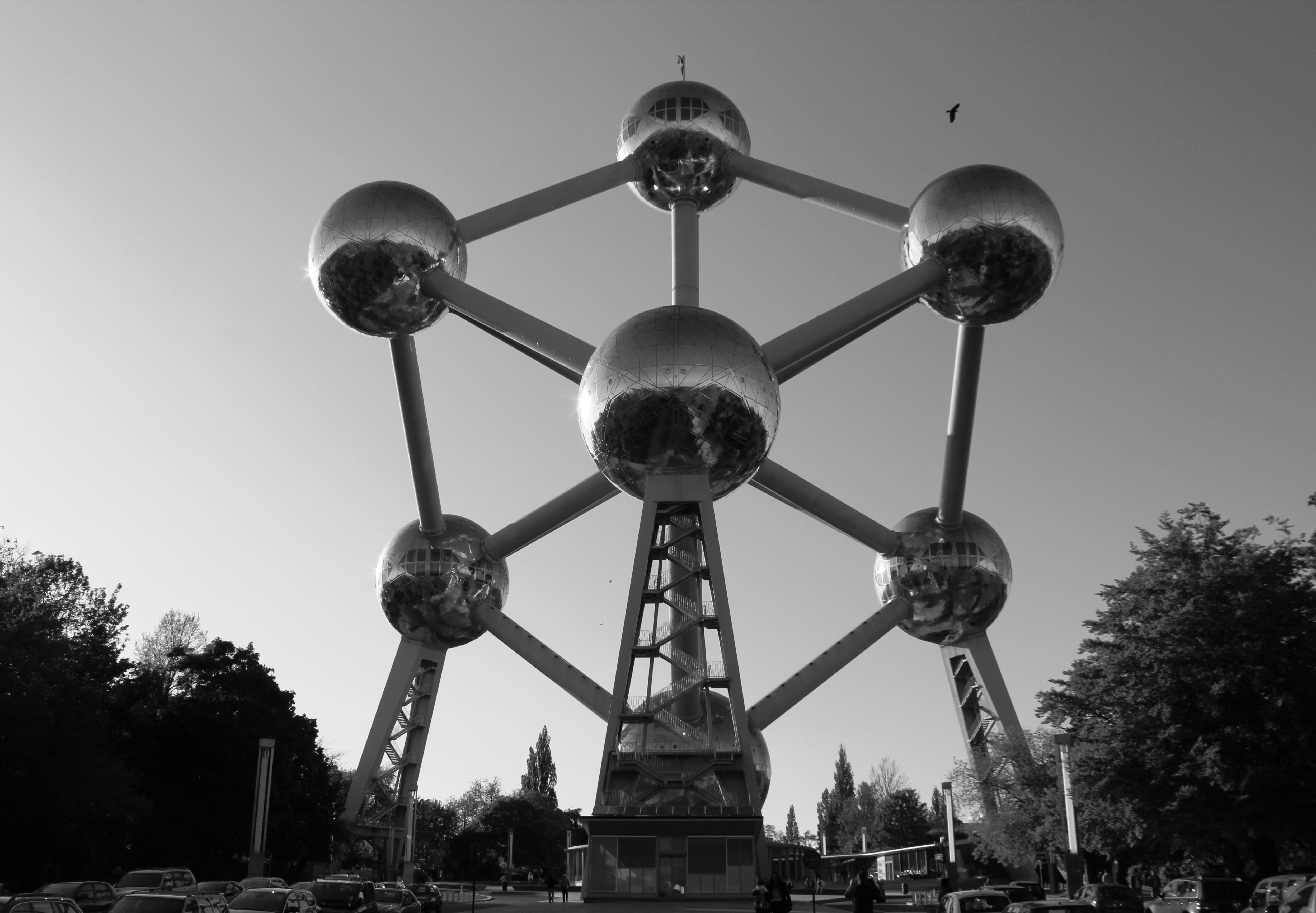
Everytime I go to Brussels city center, it feels like I am going there for the first time. I look at those guild houses in Grand Place like I have never seen those before. Whenever we have guests from U.S.A or other places, I get so excited that I can go visit Brussels one more time. This time my dearest friend Farida and her husband from The States were with us. It was like the old days in Portland, Oregon to hang out all together, but this time it was in Europe…in Brussels.
Share this:

Easter Break Trip 2012 – 5th destination: Zagreb, Croatia
ZAGREB, CROATIA: Zagreb may not attract as many tourists as Dubrovnik in Croatia, but as the capital and the biggest city of Republic of Croatia, it has very well-preserved medieval old city architecture and cobbled streets, which are not only charming, but also gives you tastes of both old and new world. Zagreb is situated on many slopes. It is someway a walkable city, if you are ready to climb up and down the small hills. The surrounding villages and countryside of Zagreb are beautiful and historical as well, which we couldn’t explore this time. But we sure did enjoy the drive before entering the main city of Zagreb.
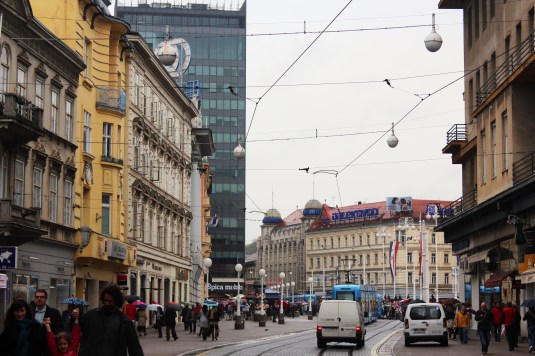
- The streets of Zagreb near old town
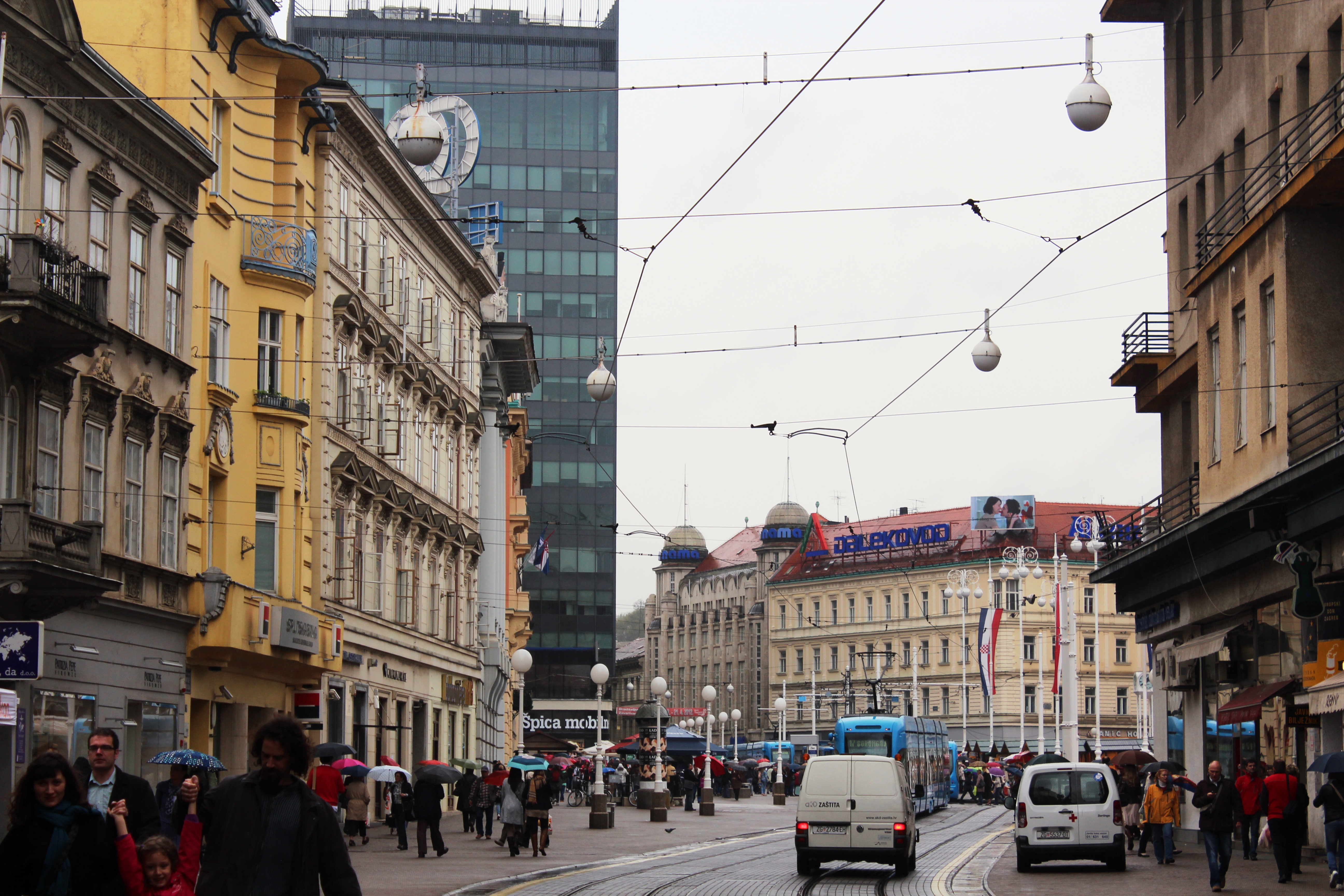
Old Zagreb consisted of 2 cities: The Upper Town (Gornji grad) and the Lower Town (Donji grad). Most of the restaurants and tourists sites are located in these 2 towns.
TIME OF TRAVELLING: We took a long road trip during the Easter break of 2012, around first week of April. Zagreb was our 5TH stop amongst 6 other cities. It took us about 3 hours (~ 215 miles) by car to reach here from Budapest, Hungary. Weather was not in our favor here. We got rain the night we reached there. Next morning it started with little drizzle, which turned to heavy rain by the afternoon and it continued for rest of the day.
OUR HOTEL: We stayed in International Hotel in Zagreb. It is situated about 10-15 of walk to King Tomislav Square. Breakfast wasn’t free here but free Wi-Fi allowed us to update our status on Facebook every now and then 🙂
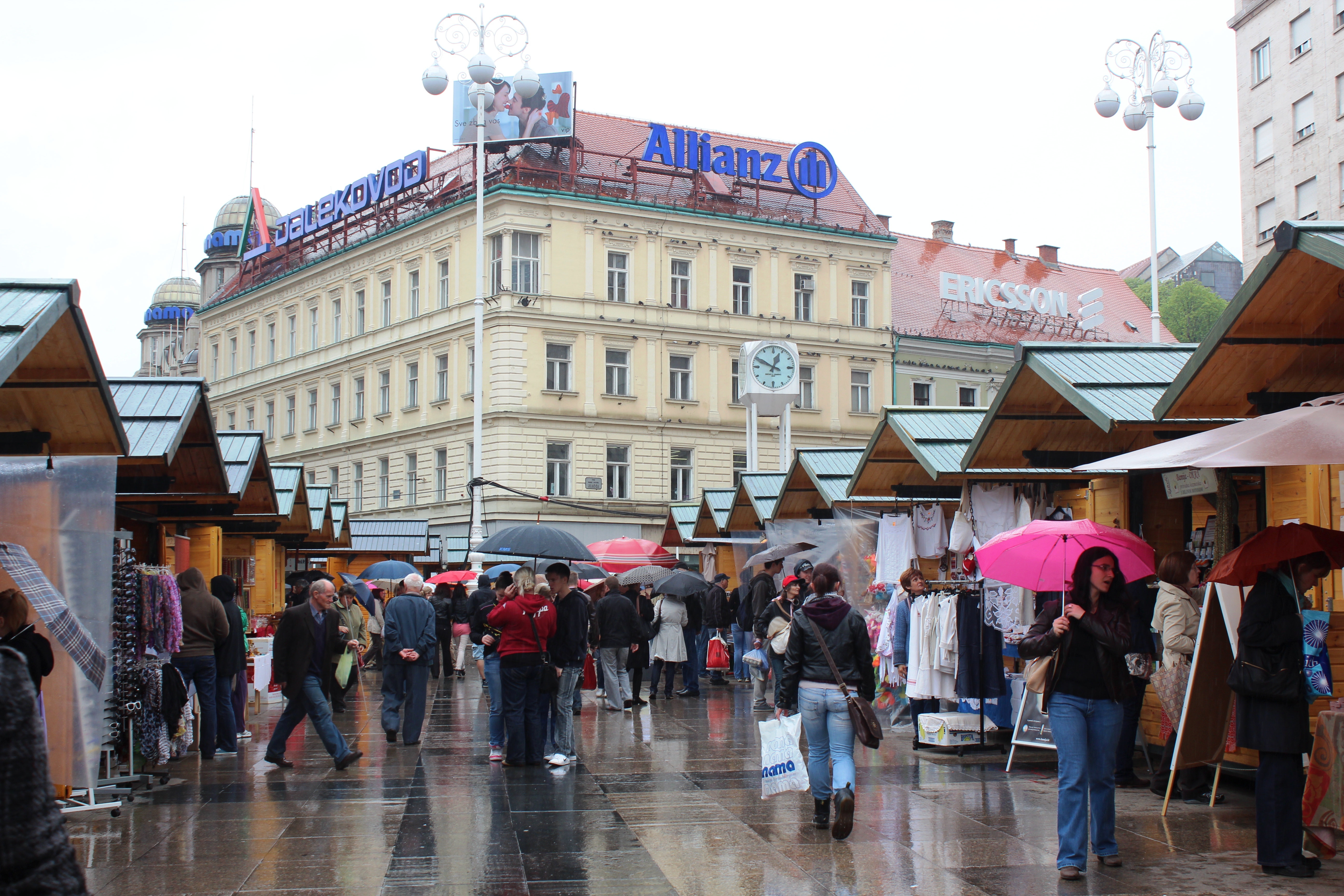
WHAT TO BUY AND EAT IN ZAGREB: There are a few open markets in the old city center near Kaptol and Dolac. You sure will find unique goodies here to take back home. Many souvenir shops sell these same items but be careful of their high prices. It was kind of hard to find souvenir shops other parts of the town other than the old city center. Kaptol and Dolac are the best places for souvenir hunting.
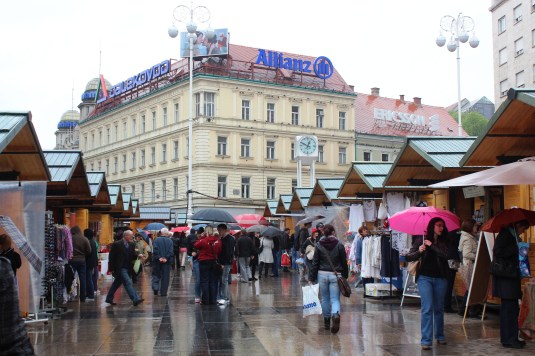
- Open market in Ban Jelacic Square
We didn’t try any Croatian dish this time. We had dinner in our hotel lounge, we asked the waitress about trying out some traditional Croatian food, and she couldn’t give us any specific dish. Next day, kids wanted to eat pizza and pasta for lunch… so that’s what we had. But the restaurant we sat in was a nice one on the middle of a street along with other restaurants right beside Dolac Market.
PLACES WE VISITED: Most of the tourist attractions of Zagreb are within walking distance and you can cover all of them in about few hours. We took a “City Center Sightseeing Route on Foot” from our hotel, which not only showed us what to see after what, but also gave us a brief history of each of the spot, which I thought was incredible.
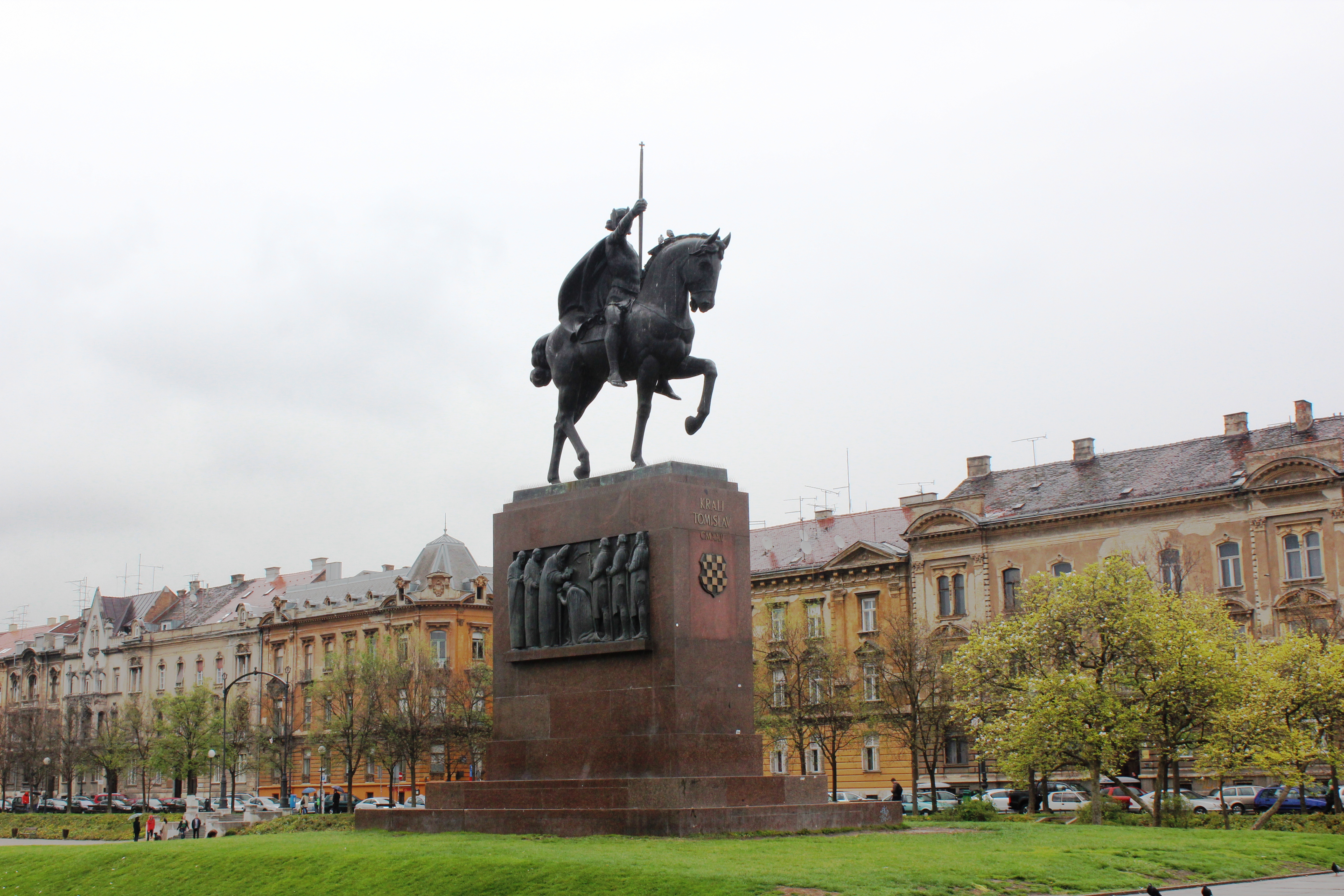
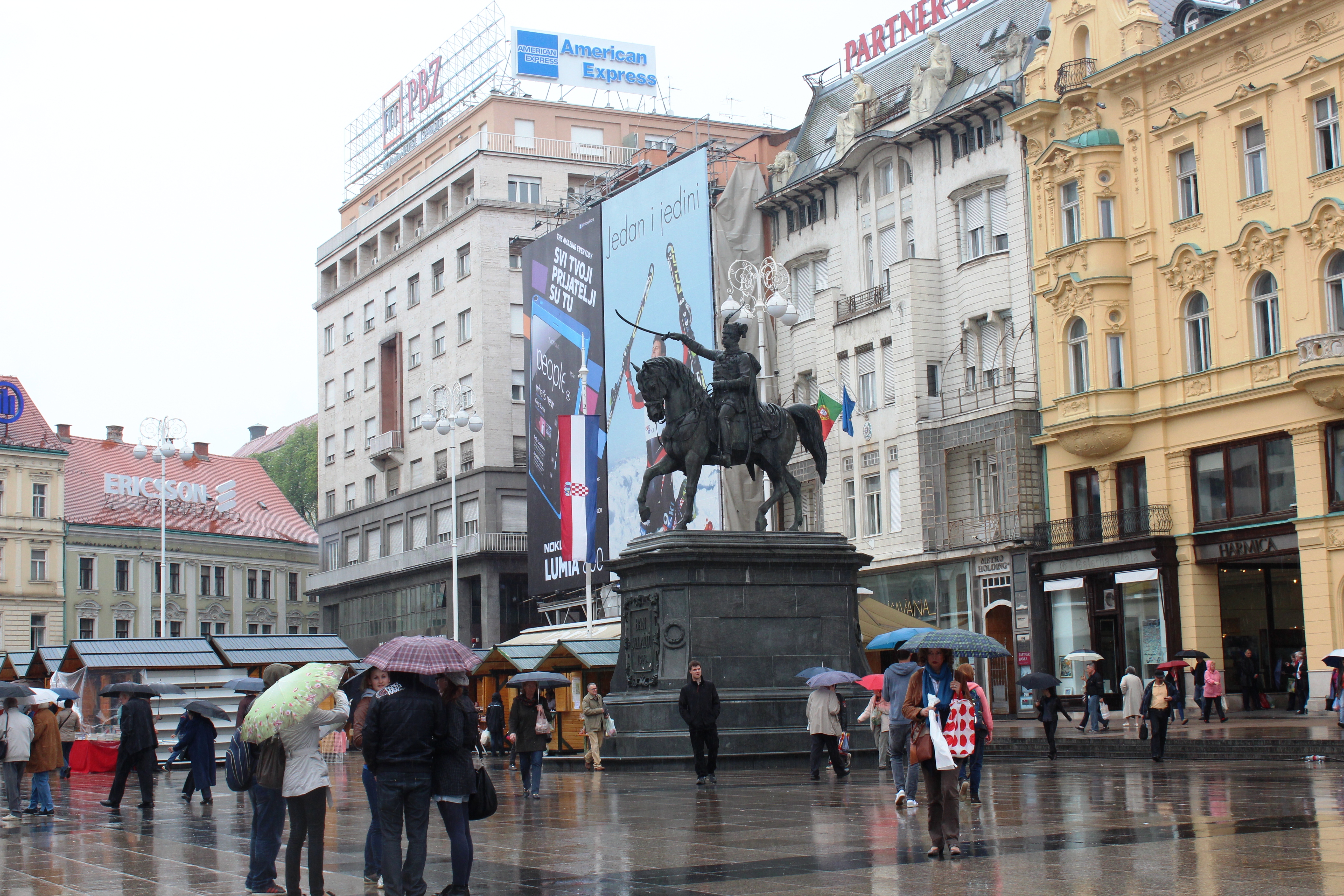
1) KING TOMISLAV SQUARE:A monument dedicated to Tomislav, Croatia’s first king, dominates the square carrying his name. He was crowned as king in the year 925. Despite dying mysteriously 3 years later, his status as founder of the Croatian state has never been in doubt. The statue of Tomislav on horseback was completed in 1938 but the outbreak of WWII prevented the statue from being installed in its current location until 1947. This big square is located right opposite of the main train station.
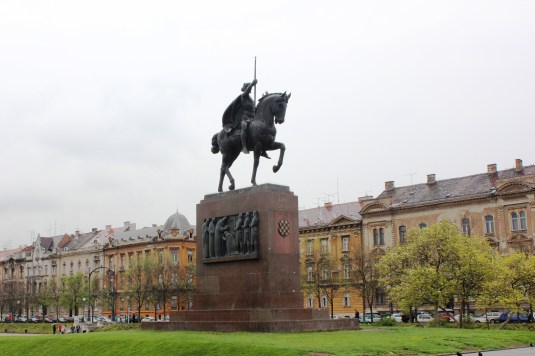
- Statue of King Tomislav in King Tomislav Square
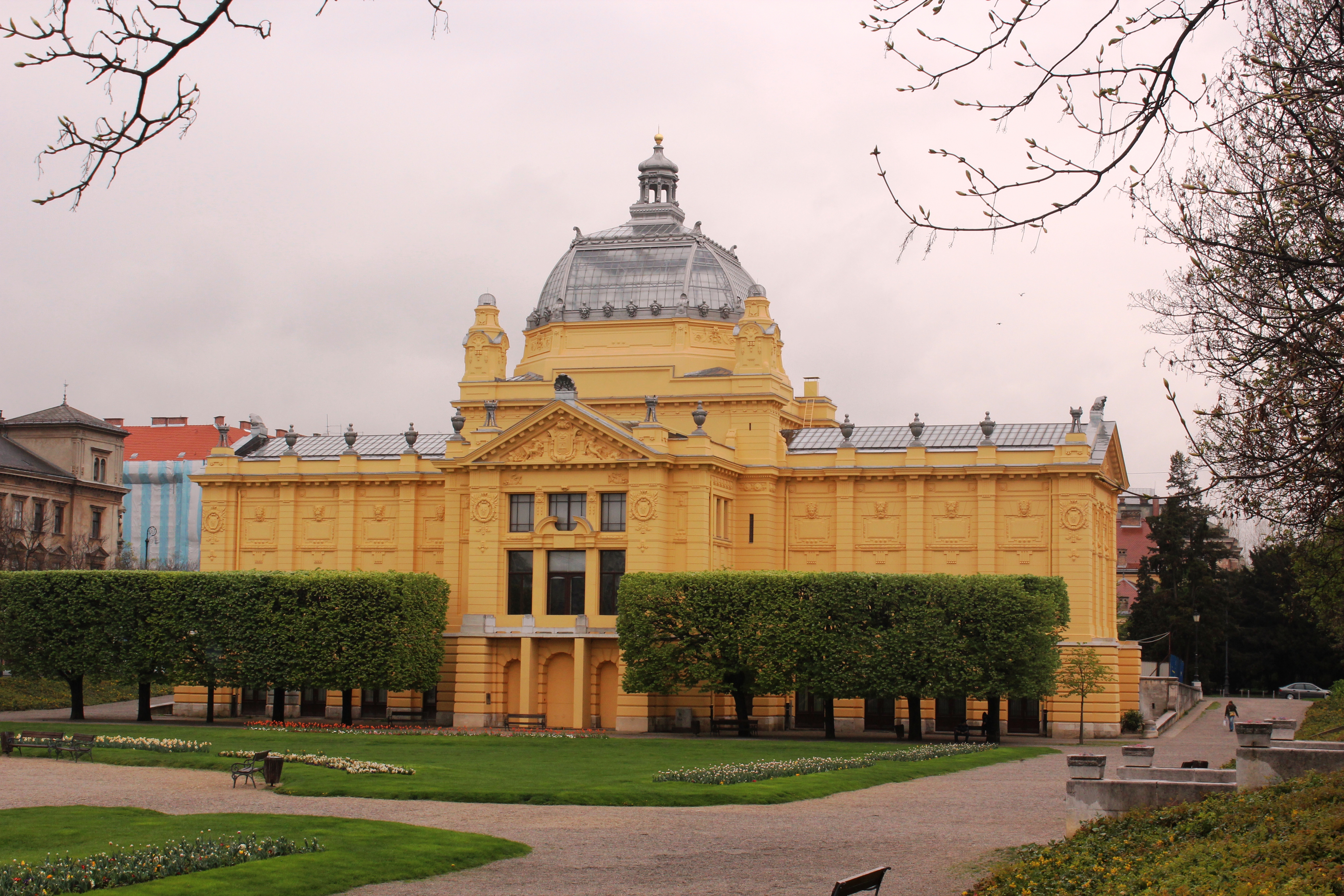
At the northern end of King Tomislav’s square The Art Pavilion is located (the big yellow building). The ceremonial opening took place in 1898 accompanied by a grand exhibition of contemporary artists. This is Zagreb’s first dedicated space for art shows, and has been an important venue for high-profile exhibitions ever since.
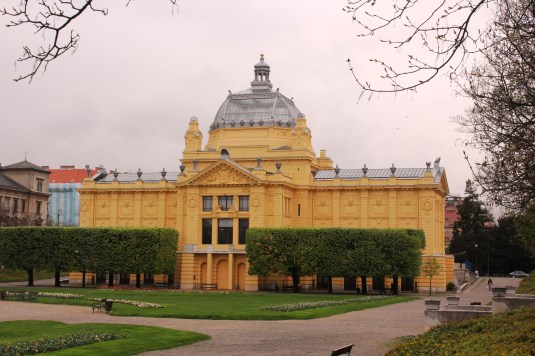
- The Art Pavilion of Zagreb, Croatia at the northern end of King Tomislav Square
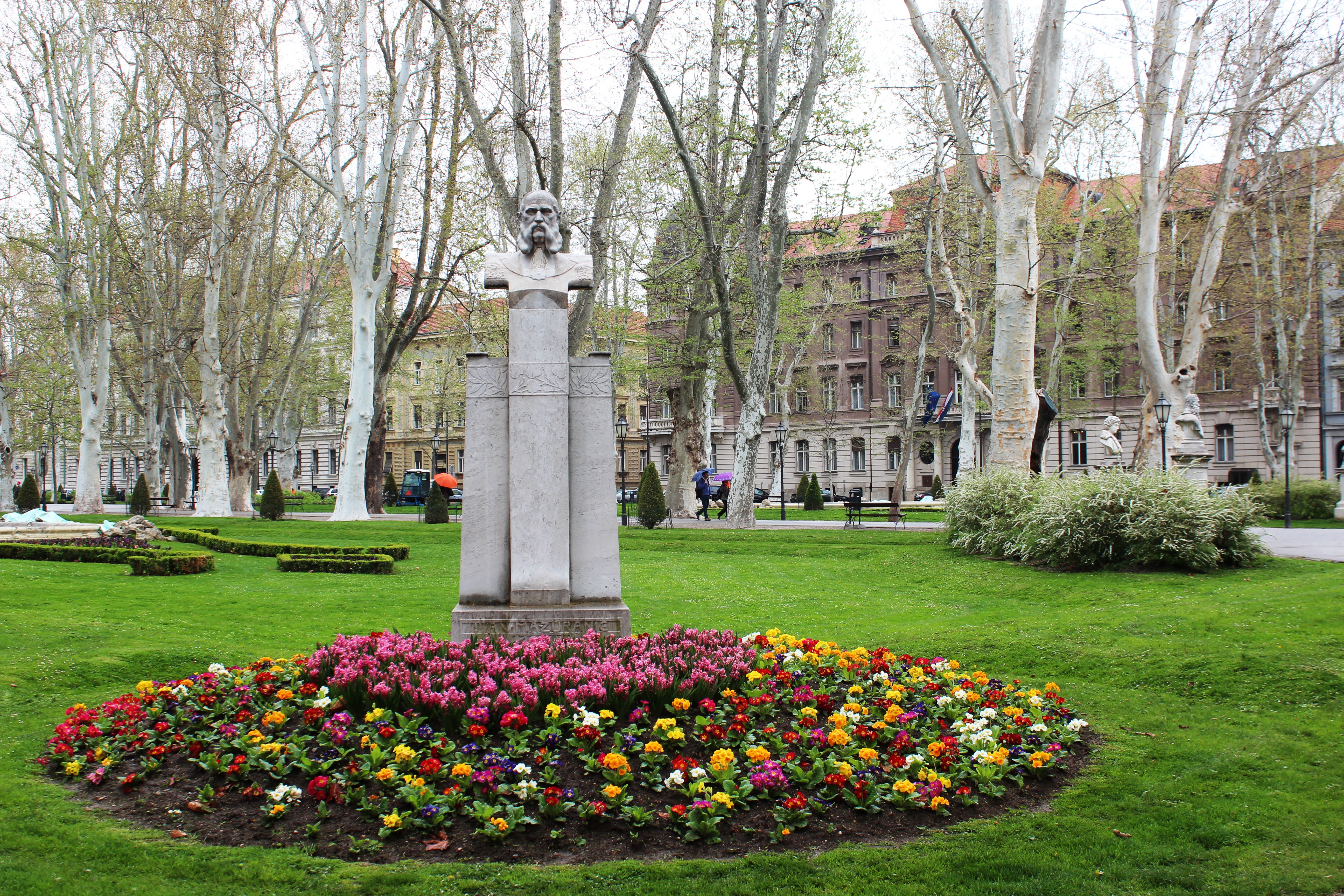
2) ZRINJEVAC: This is one of the green squares of the city and the best loved of them all. in the late 19th century this was a meadow where cattle market took place. Now it is an elegant promenade with imported trees, wrought iron handstand, fountains, and busts of notable figures. It was a bit quiet when we went there, but the large green space with nicely decorated flowers and statues make this square a well worth to visit it.
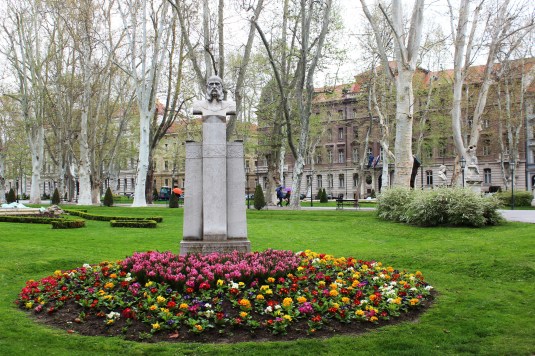
- Zrinjevac Square
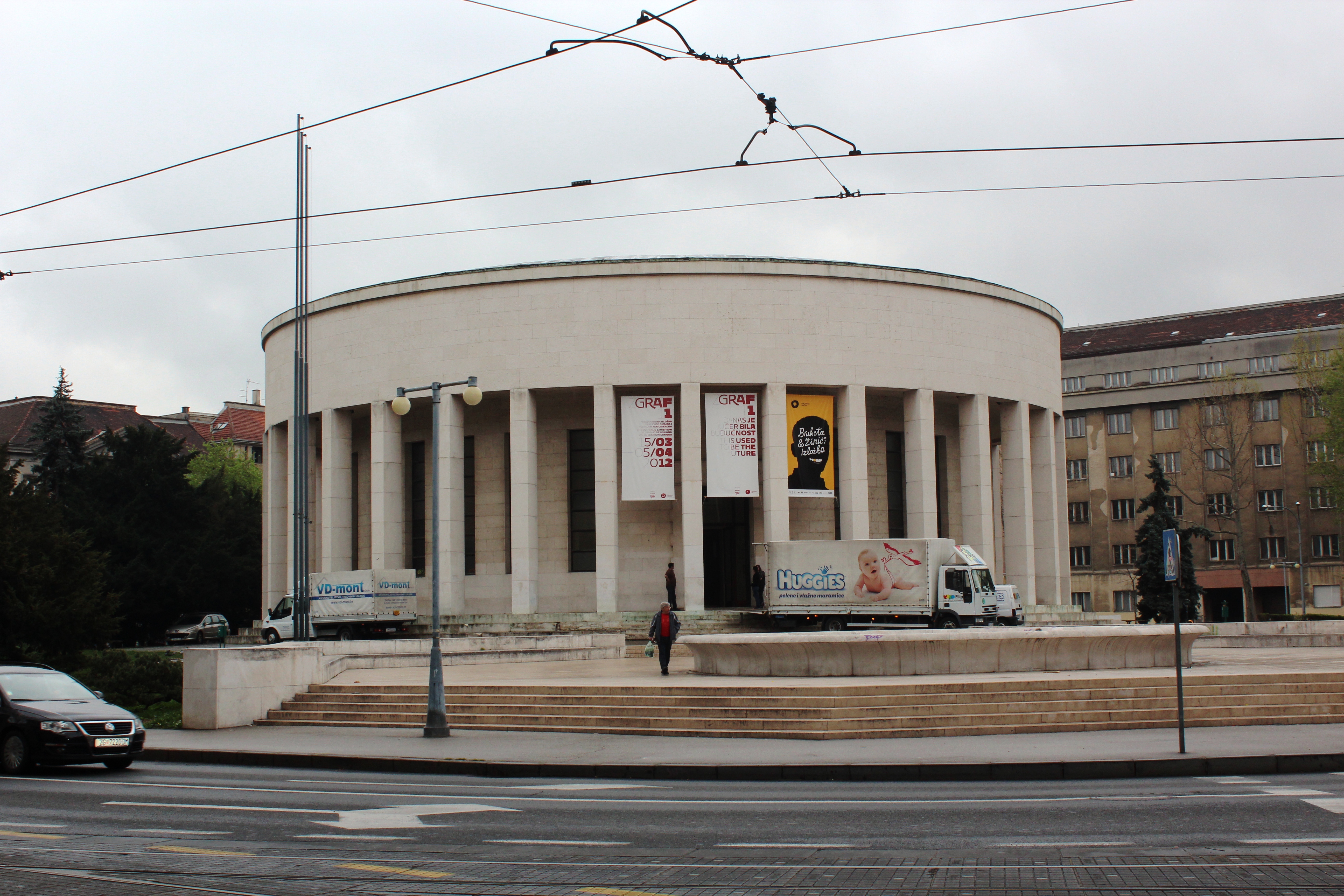
3) THE EX-MOSQUE: This circular building is the headquarter of the Croatian’s Artist’s Association, located in “Victims of Fascism Square” (Trg zrtava fasizma). It was originally used as an exhibition pavilion before being turned into a mosque during WWII – complete with the additional minarets. After the war the minarets were dismantled and the building returned to its original function, although it is still referred to fondly as “The Mosque” by the locals.
- The ex-mosque in Victims of Fascism Square
4) COUNT JOSIP JELACIC SQUARE: Central focus of modern Zagreb is Ban Jelacic Square (Trg bana Jelacica). Situated just below the hillside settlements of Kaptol and Gradec, it has served as the city’s commercial heart ever since 1641. Most of the buildings around the square date from the 19th century. This was Zagreb’s main marketplace. Now it is the center of Zagreb’s social life and the most popular meeting points for the locals. There is a big open market at one side of the statue of Josip Jelacic where you can find hand-crafted local trinkets at a modest price.
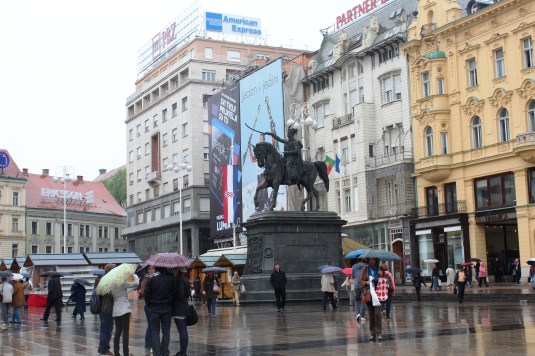
- Ban Jelacic Square
5) KAPTOL: Today’s Zagreb was created of 2 medieval villages (Kaptol and Gradec) which were developed during centuries in two adjacent hills/neighbors. At the present, they make Zagreb’s Upper Town and the City Center. Kaptol is the hill where the Zagreb Cathedral of Assumption stands.
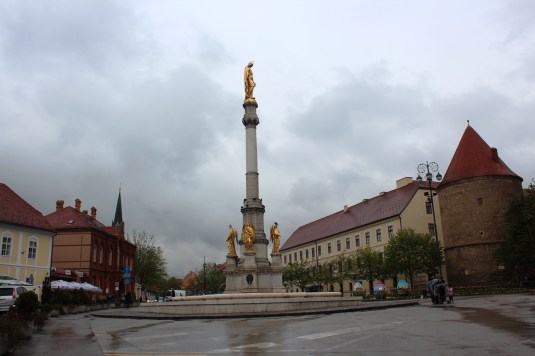
- Kaptol
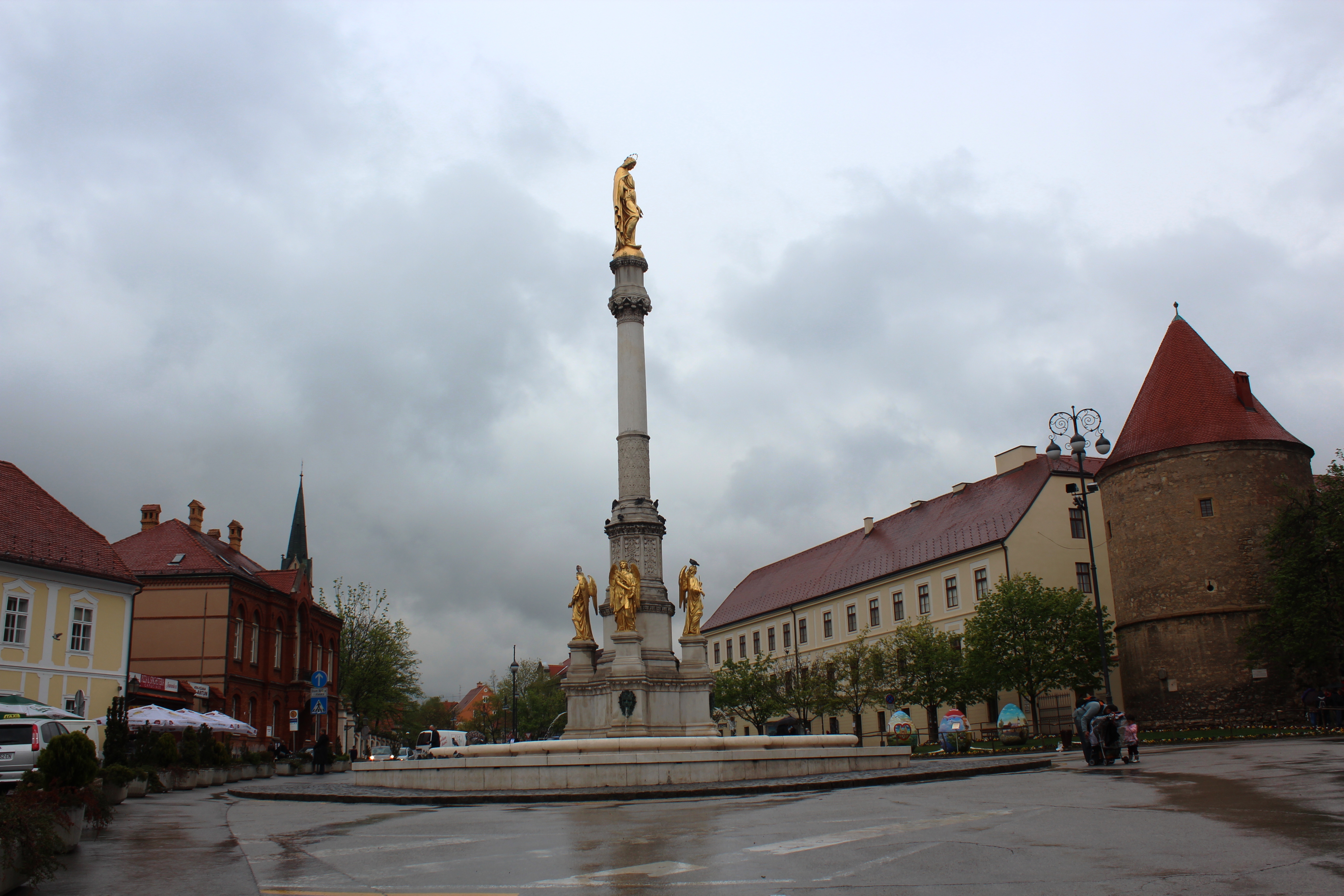
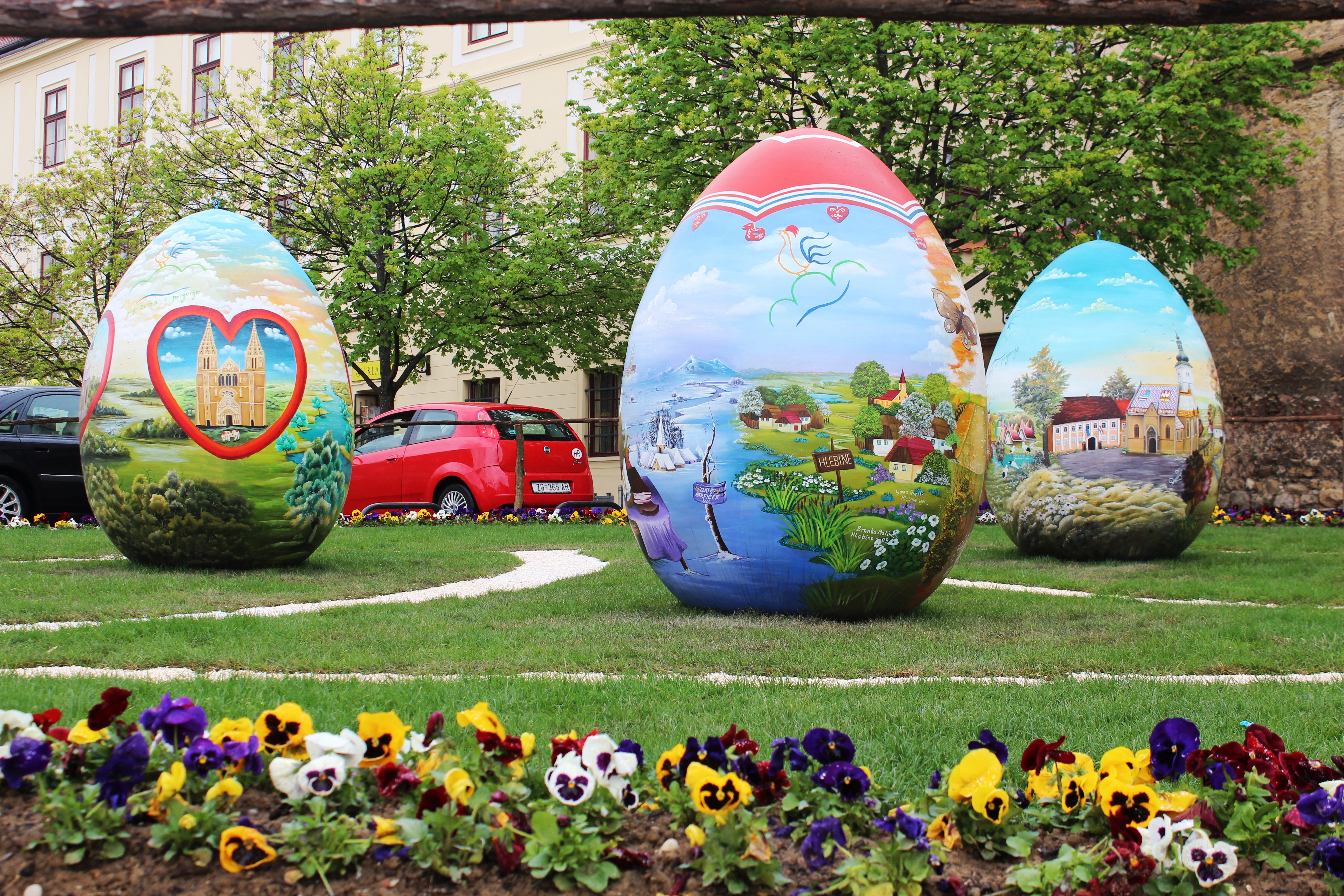
Kaptol is only few steps away from Dolac Market and also very close to Count Josip Jelacic Square. There are a very few cafes and souvenir shops here. It was nicely decorated with Easter eggs featuring traditional Naïve art in front of the cathedral.
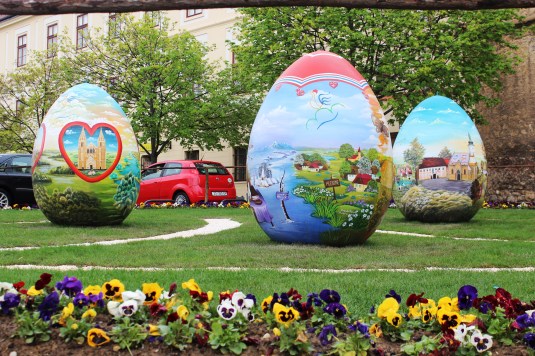
- Easter decoration painted by local Croatian Naive artists
6) CATHEDRAL of THE ASSUMPTION of the BLESSED MARY or ZAGREB CATHEDRAL: This cathedral is one of Zagreb’s defining symbols that brings glamour and elegance to the city. It is the most famous building in Zagreb, and the tallest building in Croatia. Although it is largely Neo-Gothic structure, the cathedral was founded in 1093 A.D. This is a must-see in Zagreb. The present church organ is from 1987 and the Baroque pulpit is from 1698.
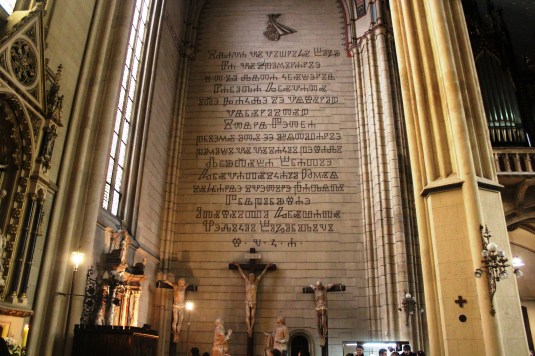
- Inside Zagreb Cathedral of Assumption
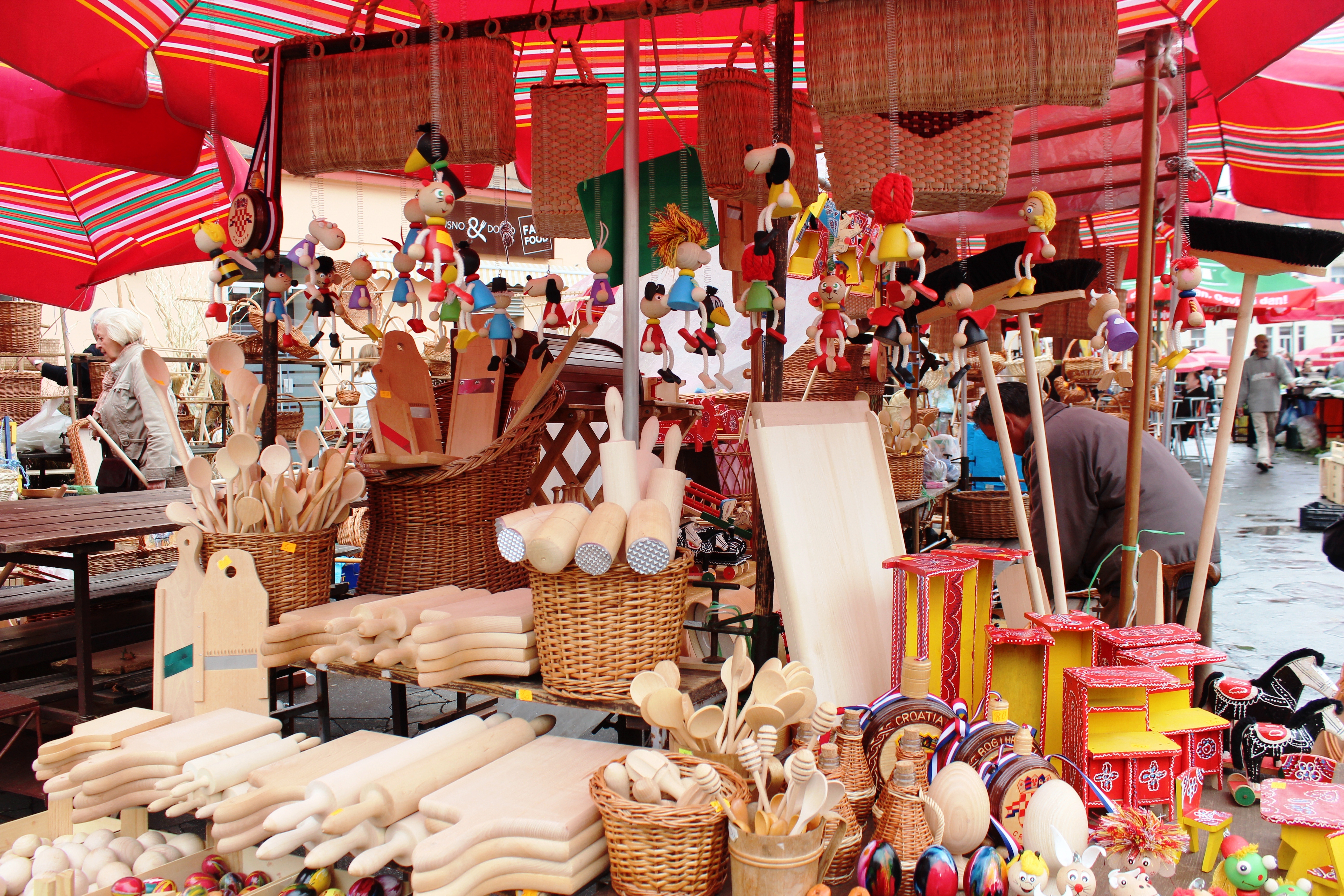
7) DOLAC MARKET: This has to be Zagreb’s one of the most attractive features. It’s only a few steps from the cathedral. This bustling place is affectionately known as “the belly of Zagreb”, due to the mouth-watering array of irresistible food stuffs brought here from all part of Croatia. The market dates from the early 20th century, when the city authorities decided to tear down all the houses on Dolac to make room for a modern marketplace. It is the most visited and the best known farmer’s market in Zagreb. You will find traditional open market with stalls selling trinkets, fresh produce, and souvenirs at much lower price than any other places in the city. And if you are hungry, don’t go too far to look for food, you will find tons surrounding this area.
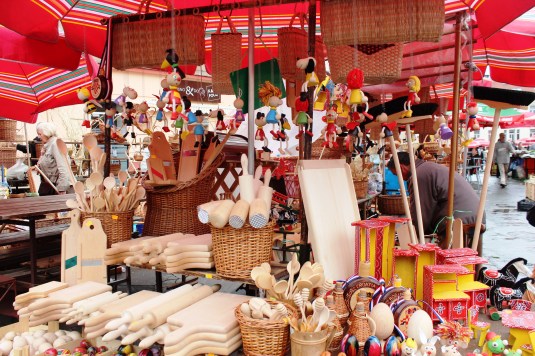
- Colorful trinkets in Dolac Market
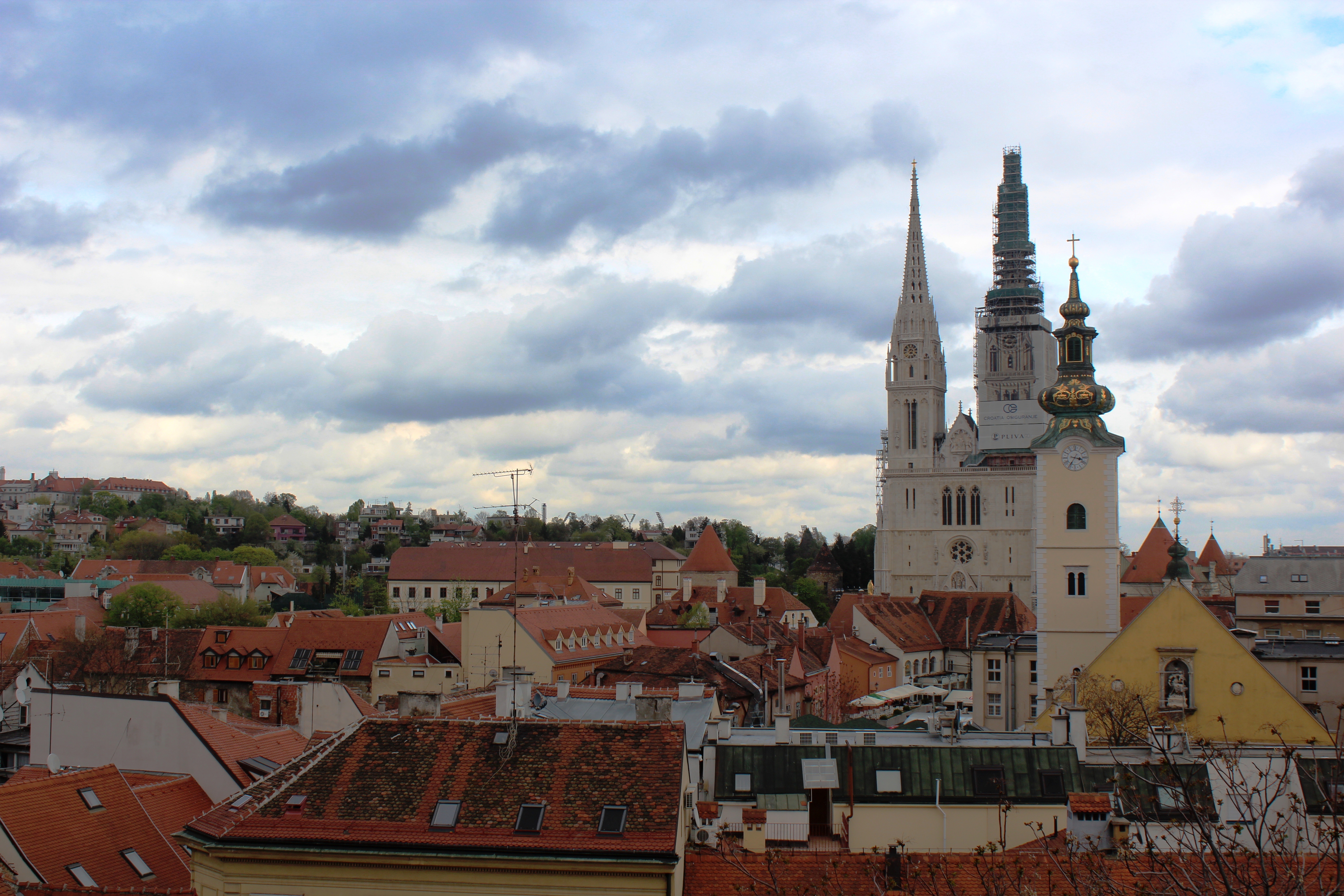
8) GRADEC – UPPER TOWN: Gradec is the hillside across Kaptol. The popular Zagreb blue funicular will take you straight there. A single funicular ride costs 6 kuna per person and 6 or below rides free. Although Upper Town may not be the center point of all hustling and bustling and may look like a ghost town when walking around some streets, it has some historical spots and some of the important governmental buildings of the city. Behind St. Catherine’s church there is a beautiful view from Gradec towards Kaptol, the cathedral, Dolac market, and the main square. It was wonderful walking down the hill back to the lower part of the city, instead of taking funicular again.
- View of the Lower Town and Cathedra of Assumption from Gradec
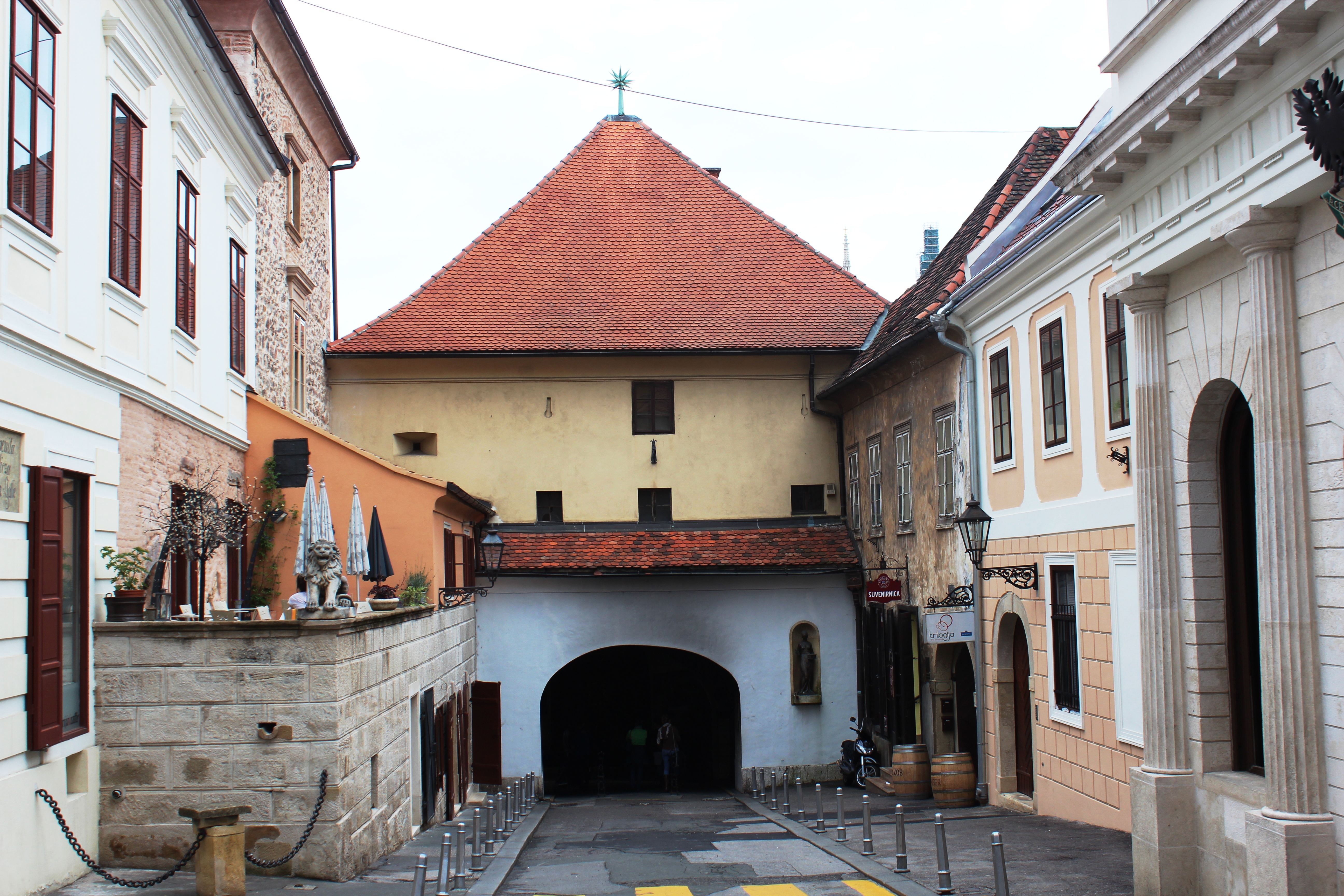
9) THE STONE GATE: Built in the Middle Ages, it is the only old town gate that has remained intact. Under the arch of the gateway is a chapel dedicated to the Virgin Mary. It holds a painting of the Virgin that was miraculously saved from a devastating fire in the year 1731, and the chapel has been a place of pilgrimage ever since. Please be silent and respect the worshippers if you are just passing through the Gate.
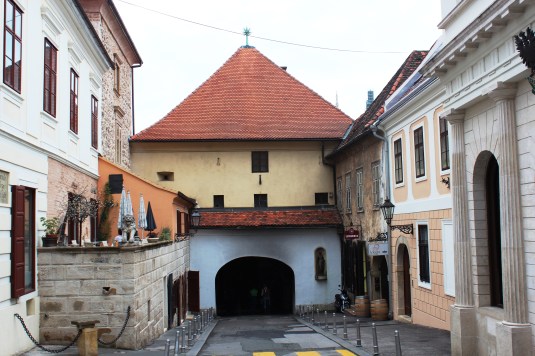
- The Stone Gate in the Upper Town/Gradec
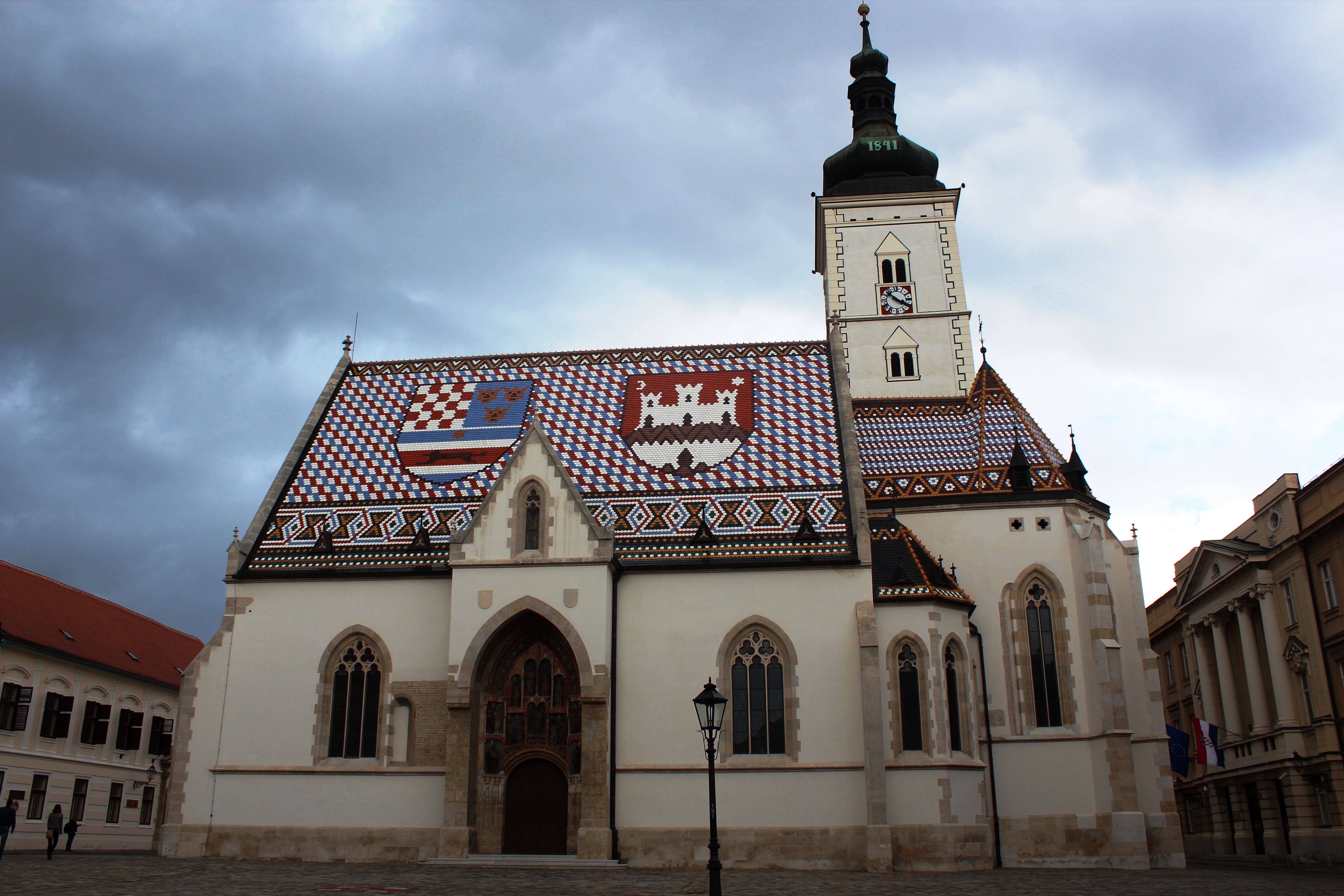
10) ST. MARK’S SQUARE: It is the heart of Upper Town, having formerly served as the main market square of the settlement of Gradec. Dominating the square is the 13thcentury Church of St. Mark, a Romanesque church which still retains much of its original shape. The Croatian Sabor or Parliament is also located in this square, right of the church (if you are facing the entrance of the church). The Parliament has held its sessions at this location ever since 1737. It was here the members voted to severe political ties from the Austro-Hungarian Empire in 1918 and from Yugoslavia in 1991.
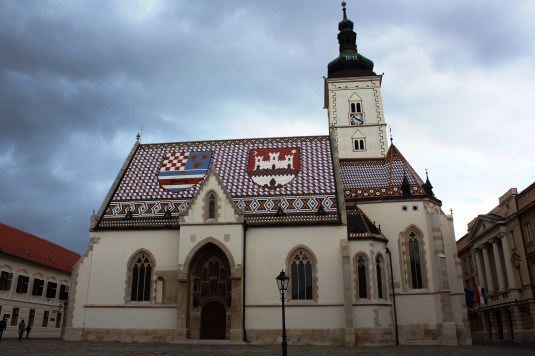
- St. Mark Church in St. Mark Square in Gradec
11) MUSEUM of BROKEN RELATIONSHIPS (MUZEJ PREKINUTIH VEZA): One thing that I really regret for not doing in Zagreb is going to this museum. This is located in the Upper Town Gradec. It’s permanent display is an opportunity to experience a unique emotional journey through dozens of love leftovers collected from all around the world. It won Kenneth Hudson Award 2011 for the most innovative museum in Europe. It would have been interesting going through people’s personal items which reflect their emotions and feelings towards love and relationships.
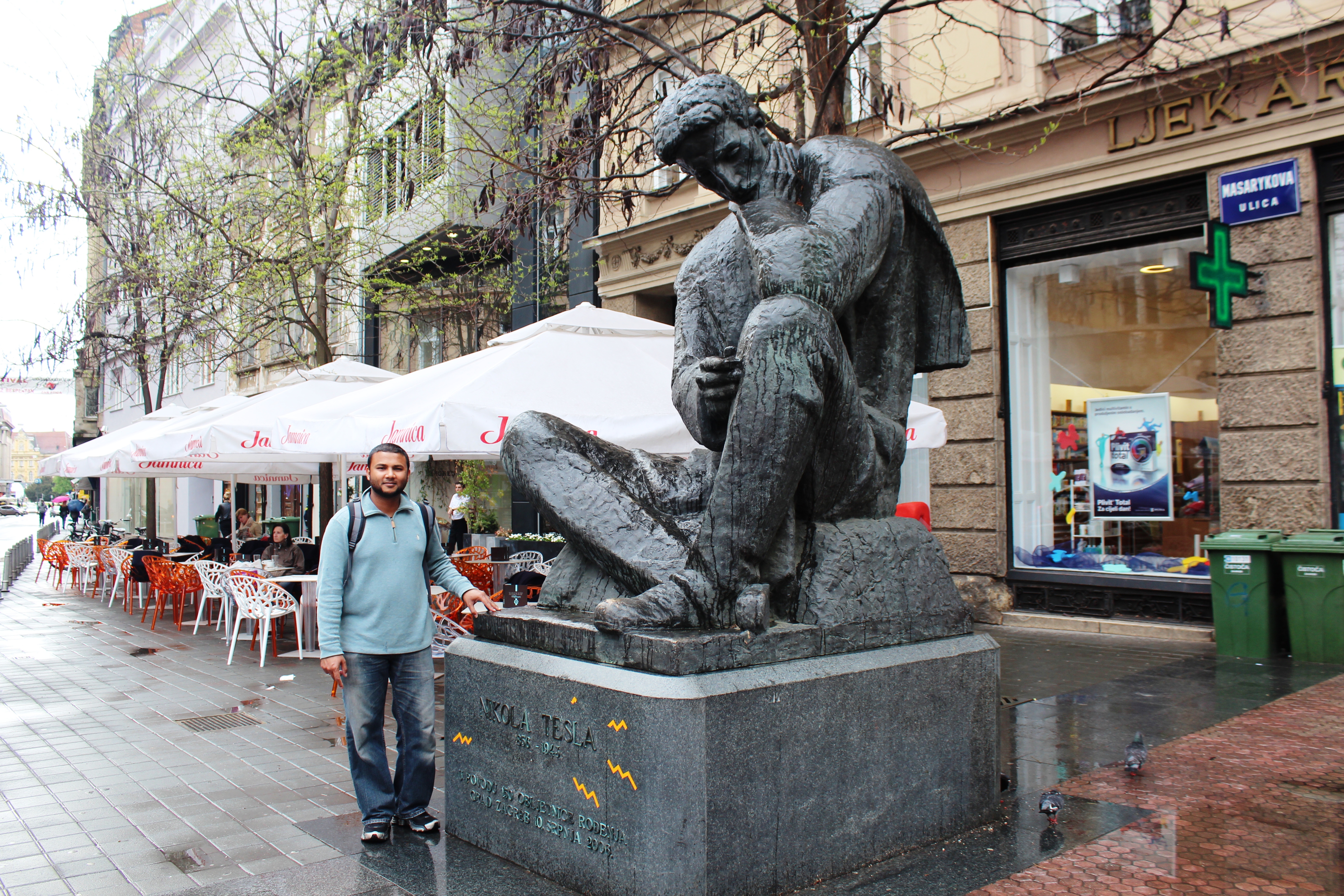
12) NIKOLA TESLA: Statue is by the intersection of Masarykova and Teslina that was placed there on the 150th anniversary of the birth of this exceptional scientist and innovator. Nikola Tesla was born and raised in Croatia and after finishing his education in Europe Tesla sought his fortune in the USA, where he was instrumental in the development and introduction of alternating current, x-rays, remote control devices, and radio waves. Thanks to Tesla’s vision we can use the internet and mobile phones today.
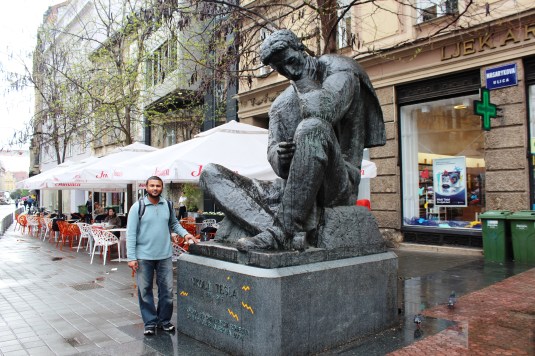
- My hubby with the Statue of Nikola Tesla
Related articles
- Croatia Part 1 (poisedtoseek.wordpress.com)
- And Then I Went Hiking (iuoverseas.wordpress.com)
Related articles
- And Then I Went Hiking (iuoverseas.wordpress.com)
- Croatian police ban far-right parties’ rally (dokmz.wordpress.com)
Share this:

Half a day in Vaduz, Liechtenstein, surrounded by the Alps
VADUZ, LIECHTENSTEIN: Liechtenstein, officially known as Principality of Liechtenstein, is the 3rd smallest country in Europe and 7th smallest in the world sharing its borders with Switzerland and Austria. It is the only country laying entirely in Alps. It’s capital Vaduz is a cozy, little town that gives magnificent views of the mountains and Rhine valley in almost every direction you look.
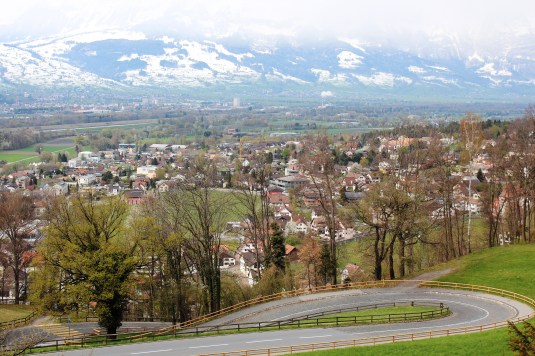
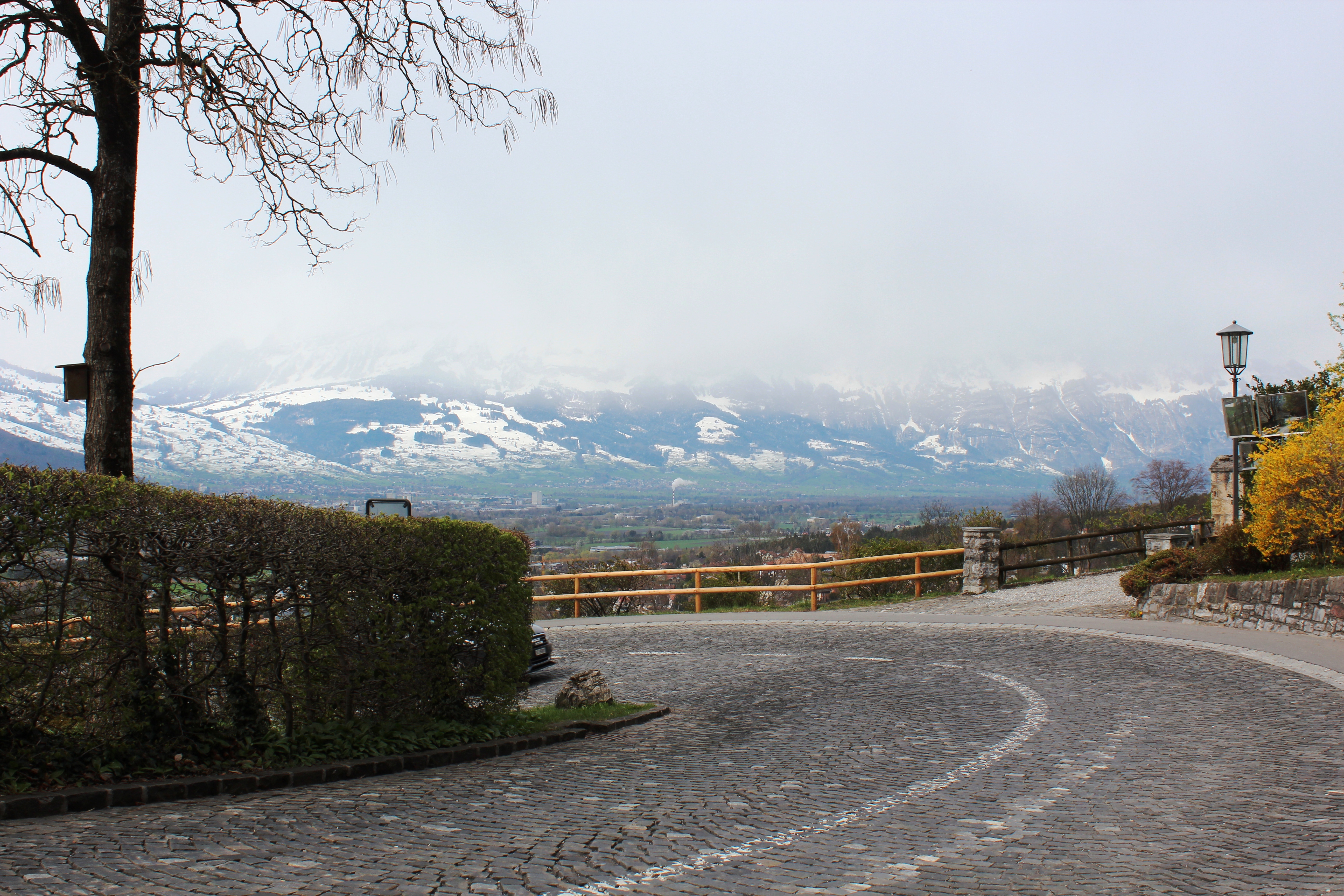
- Magnificent view of the Alps, Rhine valley from top of the hill near Vaduz Castle
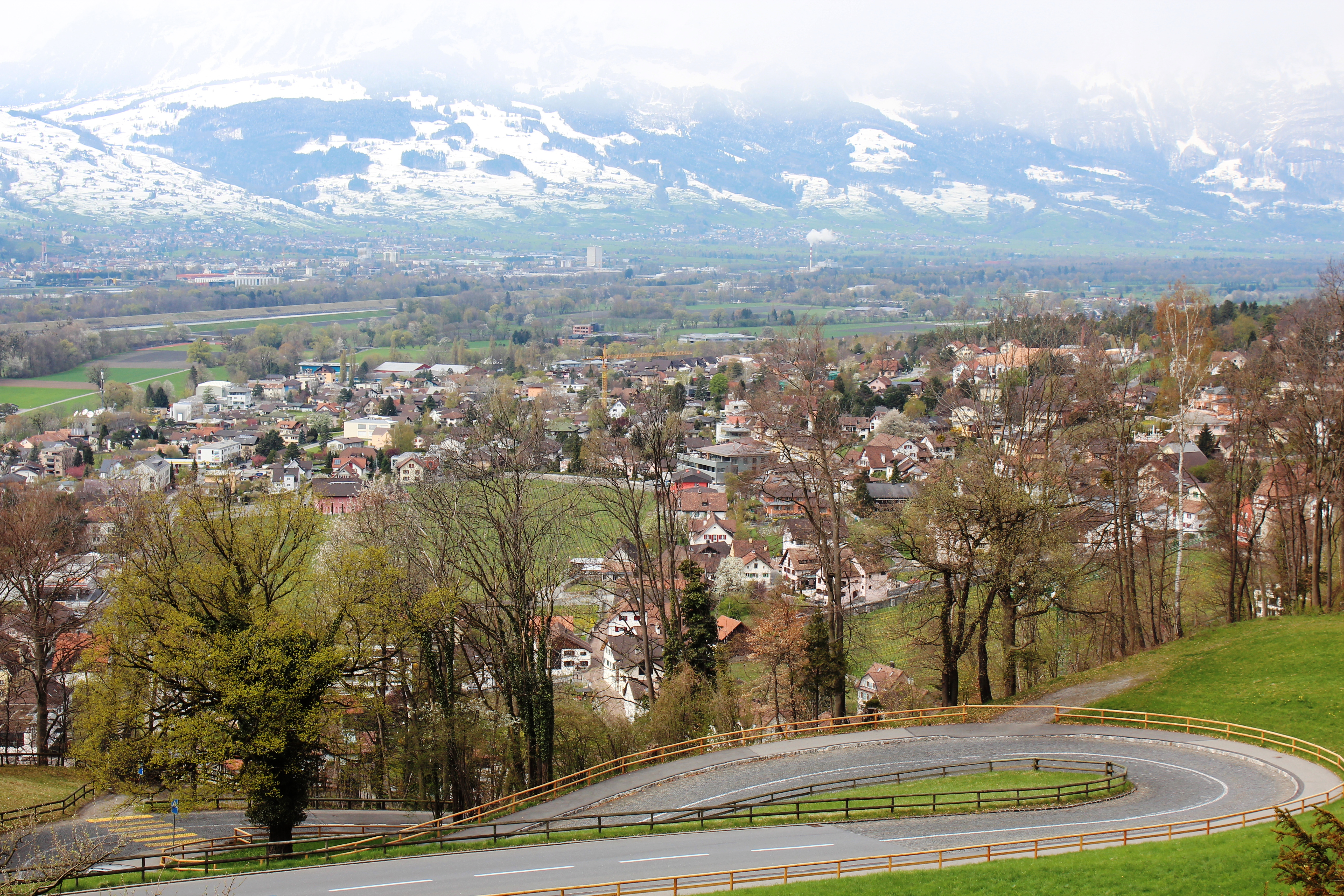
This is a very neat and clean city with many helpful friendly locals. Tourist can spend days in this tucked away city of Vaduz exploring the mountains and the nearby villages. It’s amazing how a country this small has so much to offer to its guests and locals.
;
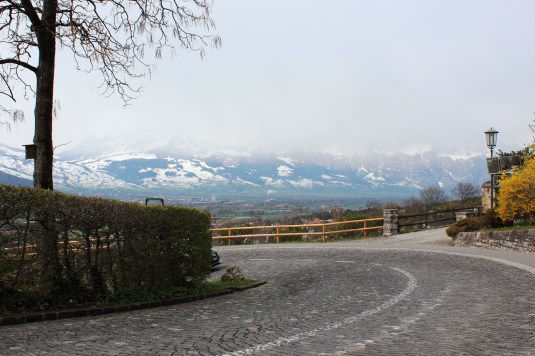
- Driving on the mountain towards Vaduz Castle
TIME OF TRAVELLING: We took a long road trip during the Easter break of 2012, around first week of April. This was our last stop amongst 6 other cities. It took us about 6 hours (~ 370 miles) by car to reach here from Ljubljana, Slovenia. Since Vaduz is surrounded by the Alps, summer comes here late. It was still a bit chilly around that time. We had to wear jackets and hats during our visit.
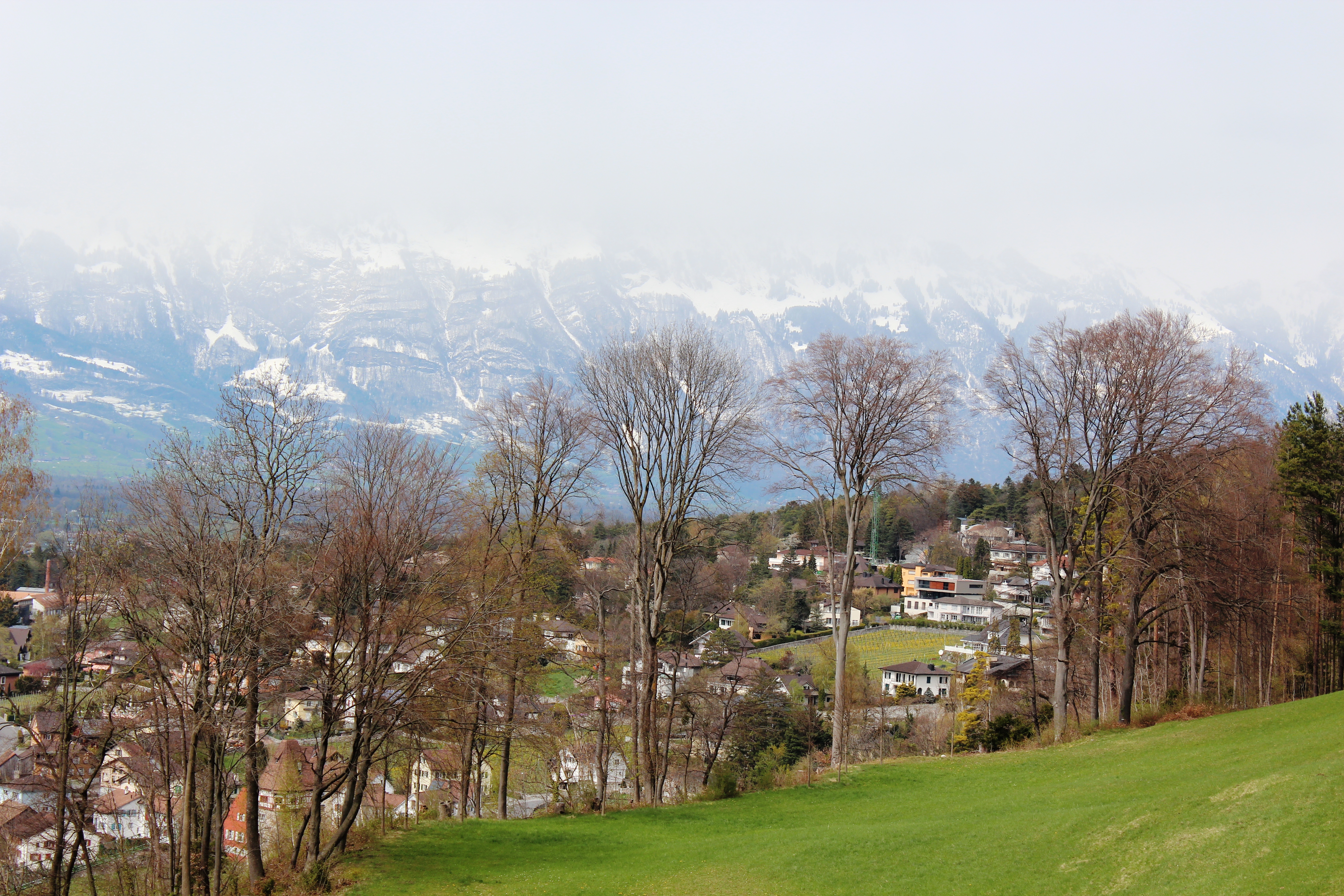
- Beauty everywhere
OUR HOTEL: Vaduz is an expensive city. Hotels here can be very pricey too. We stayed in Dornbirn, Austria, about 22 miles away from Vaduz. Our hotel was Harry’s Home Dornbirn. It was literally walking distance from the city center of Dornbirn. Our room had a kitchen with stove, microwave, and a small refrigerator and it was nicely decorated with very modern and contemporary art works and furniture. I felt like I am living in an IKEA world. Breakfast and Wi-Fi weren’t included but we received great customer service from the front desk people.
WHAT TO BUY AND EAT IN VADUZ: One of the best thing you can buy from Vaduz is cuckoo clock. They come in different types and price ranges. The cheapest one we saw was around 125 euros. You can get battery operated or the traditional winding clocks. These clocks are hand-made in Black Forest region of Germany. Other than that Swiss knives, watches are very popular here, since Switzerland is just around the corner. There is a big souvenir shop on Stadtle (the city center/pedestrian street).
Again, since Switzerland is right there, you shouldn’t miss the opportunity of eating lots and lots of silky Swiss chocolates. You will find them almost at every souvenir shops.
PLACES WE VISITED: Although Vaduz is a very tiny city in a tiny country of Liechtenstein, you can spend hours to enjoy the breathtaking views of Alps and its surrounding small villages. We spent only few hours there, but the scenic views of this small town are unforgettable.
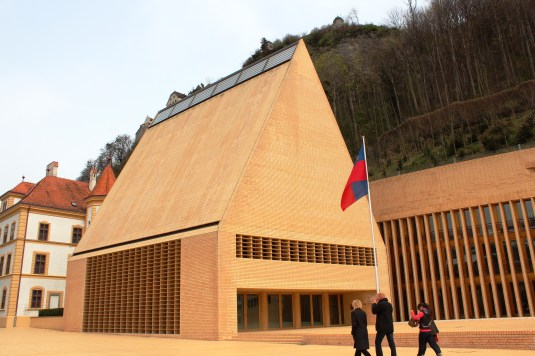
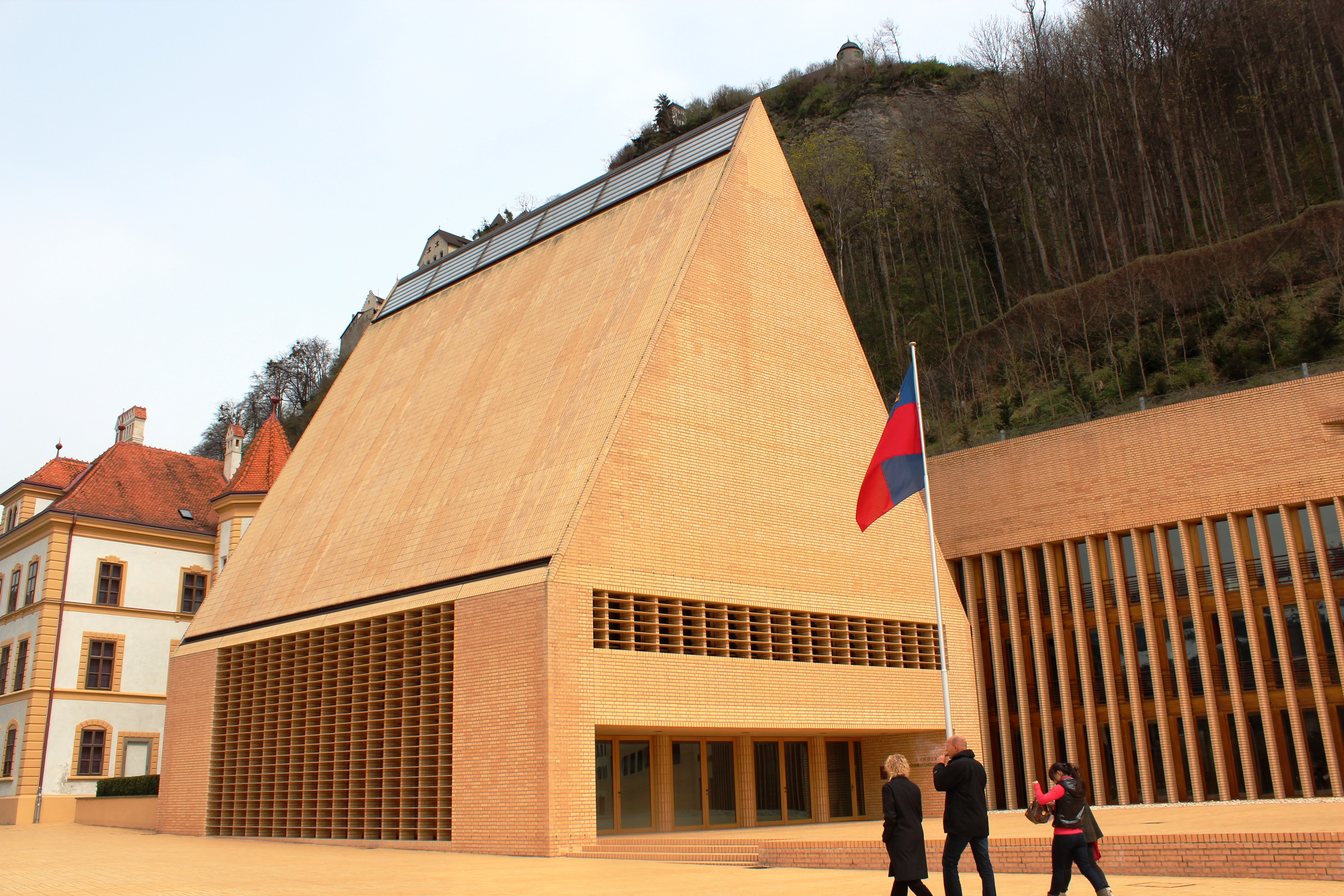
- Liechtenstein Parliament on Stadtle
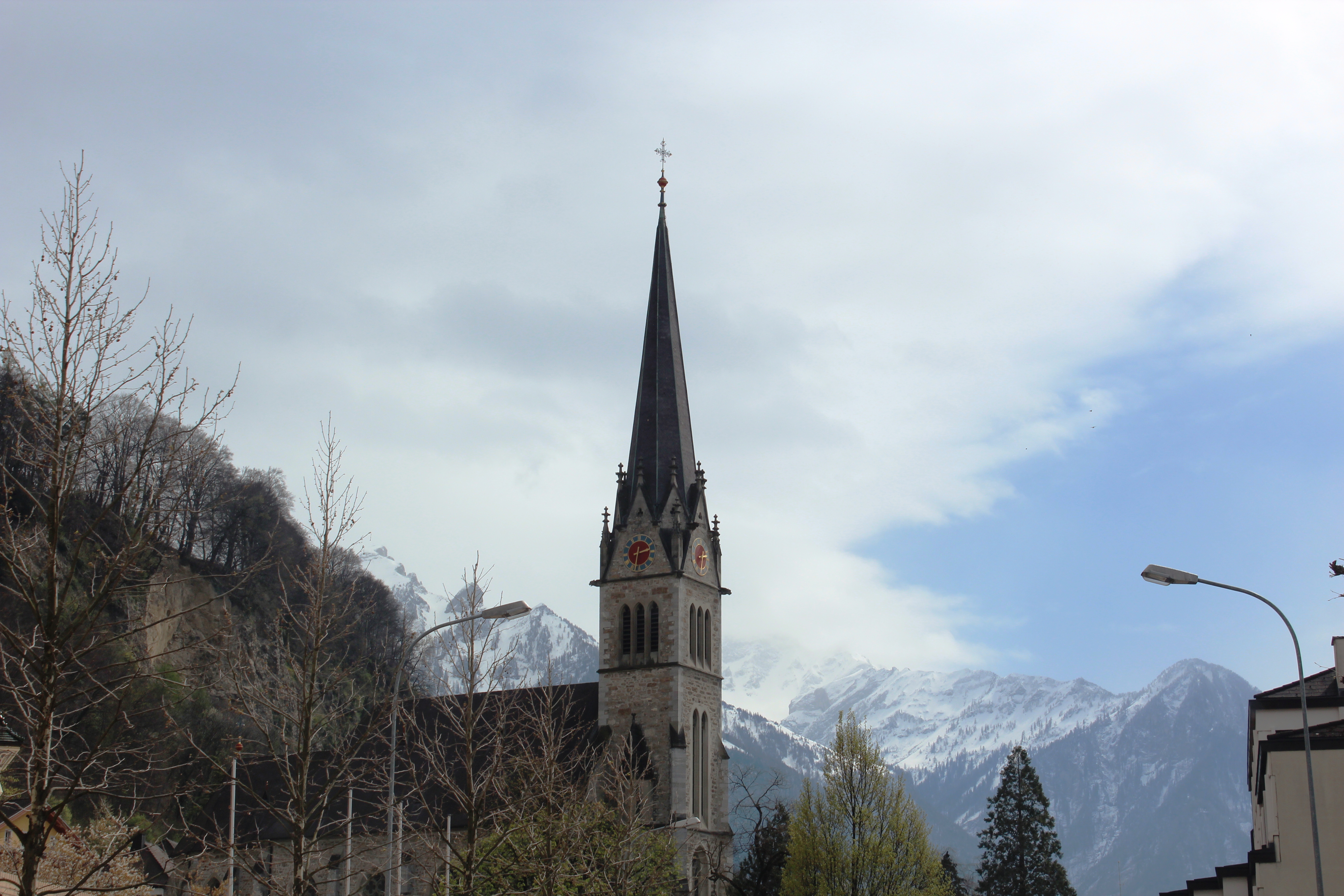
1) CATHEDRAL of ST. FLORIN or VADUZ CATHEDRAL: This is a neo-Gothic church which was built in 1874. It is beautifully situated at the beginning of the city center Stadtle and right beside the Vaduz Music School. Although it is not as impressive inside as out, it is well worth a visit. There is a set of very beautiful bronze sculptures outside the church below the steps. One of the sculptures depicts Mary holding new-born baby Jesus and other one Mary holding the body of Jesus after his crucifixion.
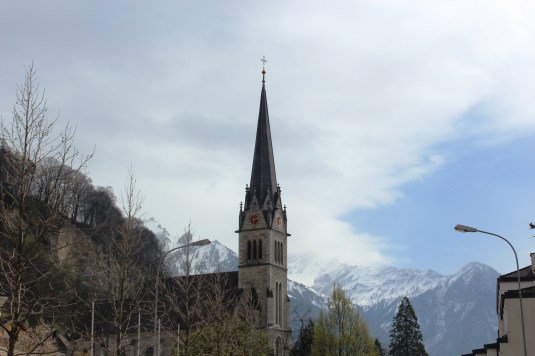
- Tower of Vaduz Cathedral or St. Florian Cathedral
2) STADTLE: This is the main city center and a very beautiful pedestrian street. It has Liechtenstein Parliament (the triangular building) at one end of the street, Government House (right beside the parliament) and Vaduz City Hall (with 2 horse statues in the front) at the other end. You will also see few museums on this street, like Stamp Museum and Land Museum (Kuntmuseum). Tourist information center is also located here. Enjoy the beautiful and interesting sculptures on this street. You can see Vaduz Castle up on the mountain from here. Cathedral of St. Florin is very close too, may be 5 minutes of walk. This is the center of town’s most shops, restaurants, and a popular gathering point.
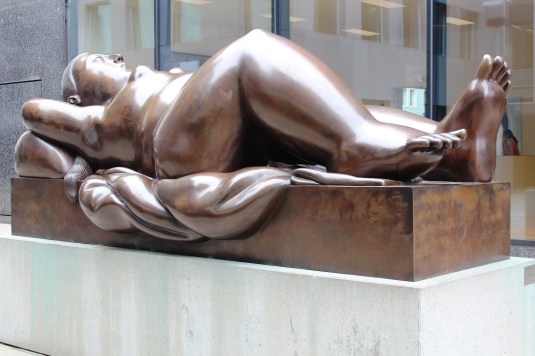
- A bronze statue on Stadtle
3) VADUZ CASTLE: The castle is over 700 years old and underwent major restorations between 1905 and 1920. Currently it is the palace and official residence of the Prince of Liechtenstein. It is not open to the public and cannot be visited.
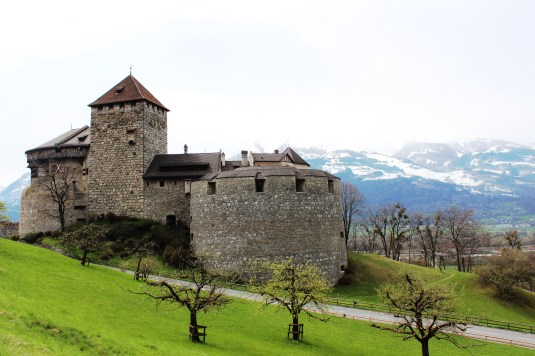
- The magnificent Vaduz Castle
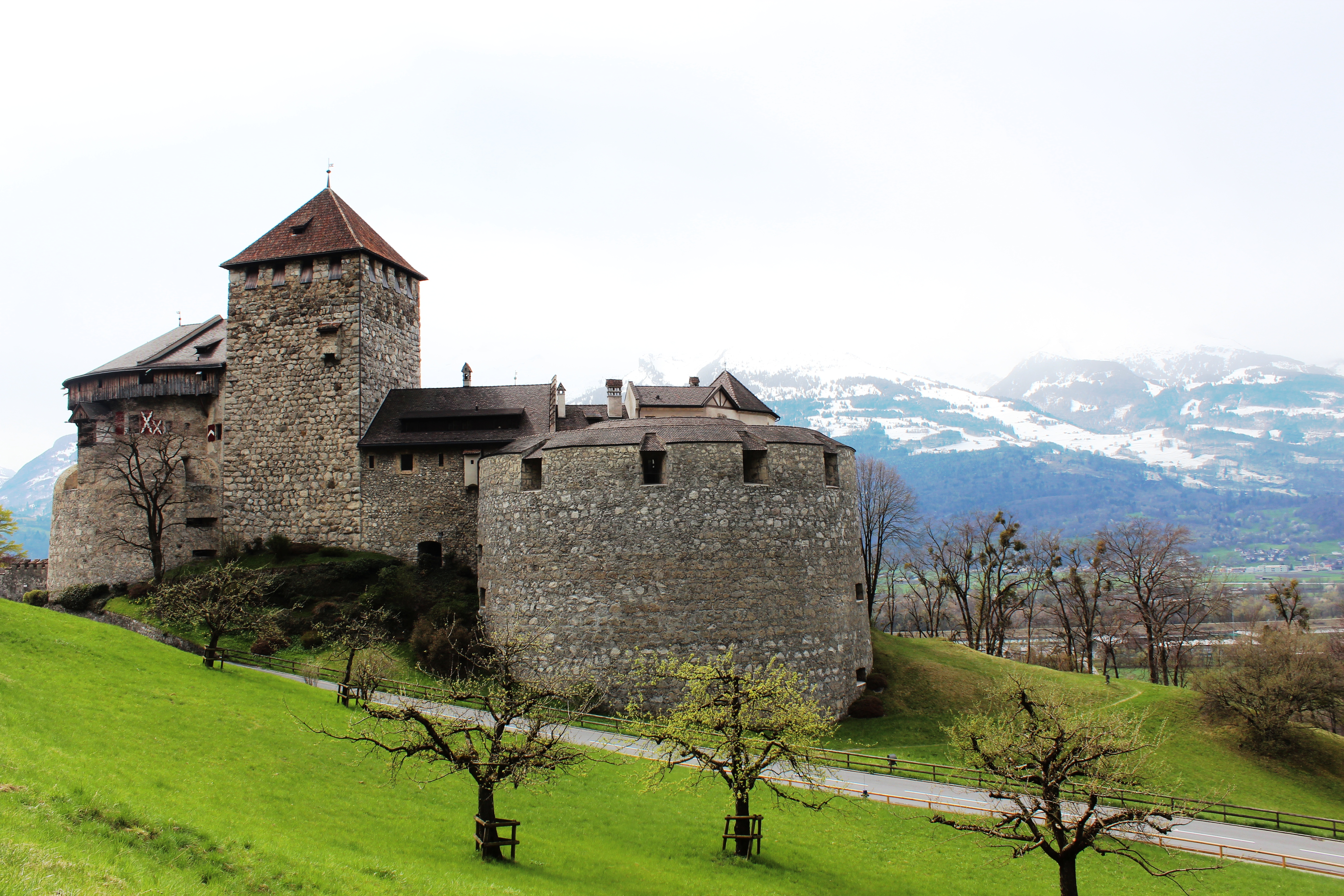
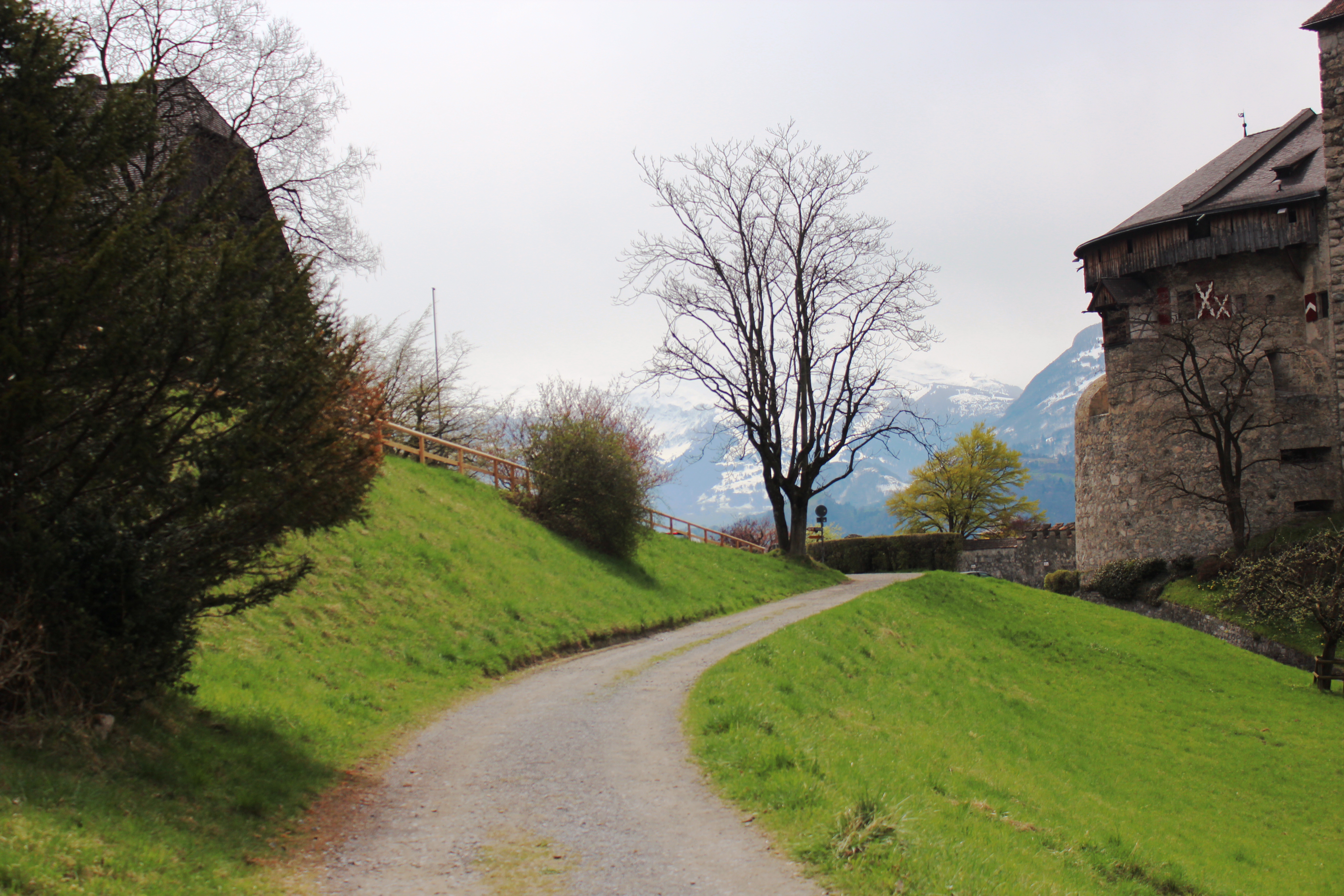
This is a must see in Liechtenstein. The castle is located on the hill high above the town of Vaduz surrounded by snow-capped mountains. It overlooks the adjacent villages at the bottom. You can take your car up there and park in the free parking area. Then go for a walk/hike and enjoy the fresh mountain air, green meadows, and white snowy mountains. You will get a breathtaking fantastic view of the Alps.
;
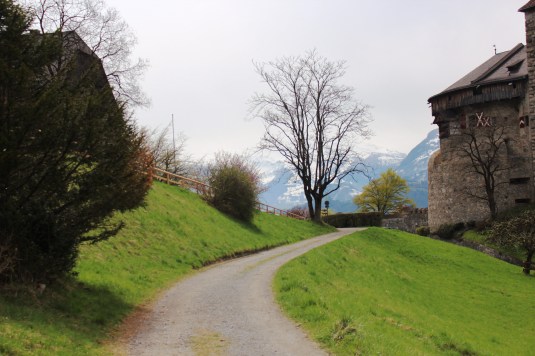
- Hiking trail by the castle
;
Related articles
- A day in Liechtenstein (happyheartofeurope.wordpress.com)
Related articles
- A day in Liechtenstein (happyheartofeurope.wordpress.com)
Share this:

Business Excellence Award 2020 from AI Global Media for The Most Entertaining Personal Travel Blog – Pacific Northwest USA

Top Posts & Pages


Authors
 Globe Runner
Business Excellence Award 2020 for The Most Entertaining Personal Travel Blog – Pacific Northwest USA

Business Excellence Award 2020 from AI Global Media


