Journey Around The Globe
ready for the next destination
Dusseldorf, Germany
DUSSELDORF, GERMANY: Düsseldorf is another Rhenish city of Germany situated by River Rhine. This is a Mecca for arts, culture, and shopping. Just enjoy, relax, and go for a stroll by the river or get lost in the windy streets of old town. Promenade is the trendy place to look over the pretty water body. Visit Gehry buildings in Media Harbor to see some masterpiece transparent architectures with bold curves and cubes.
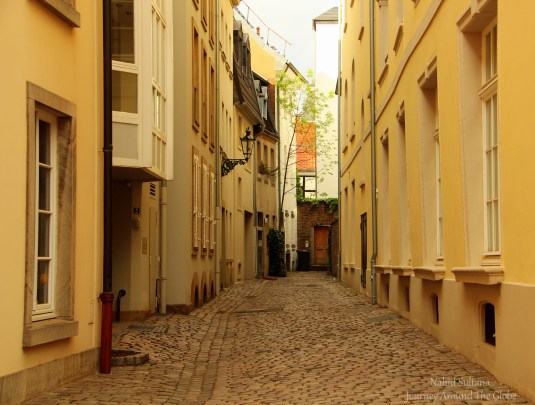
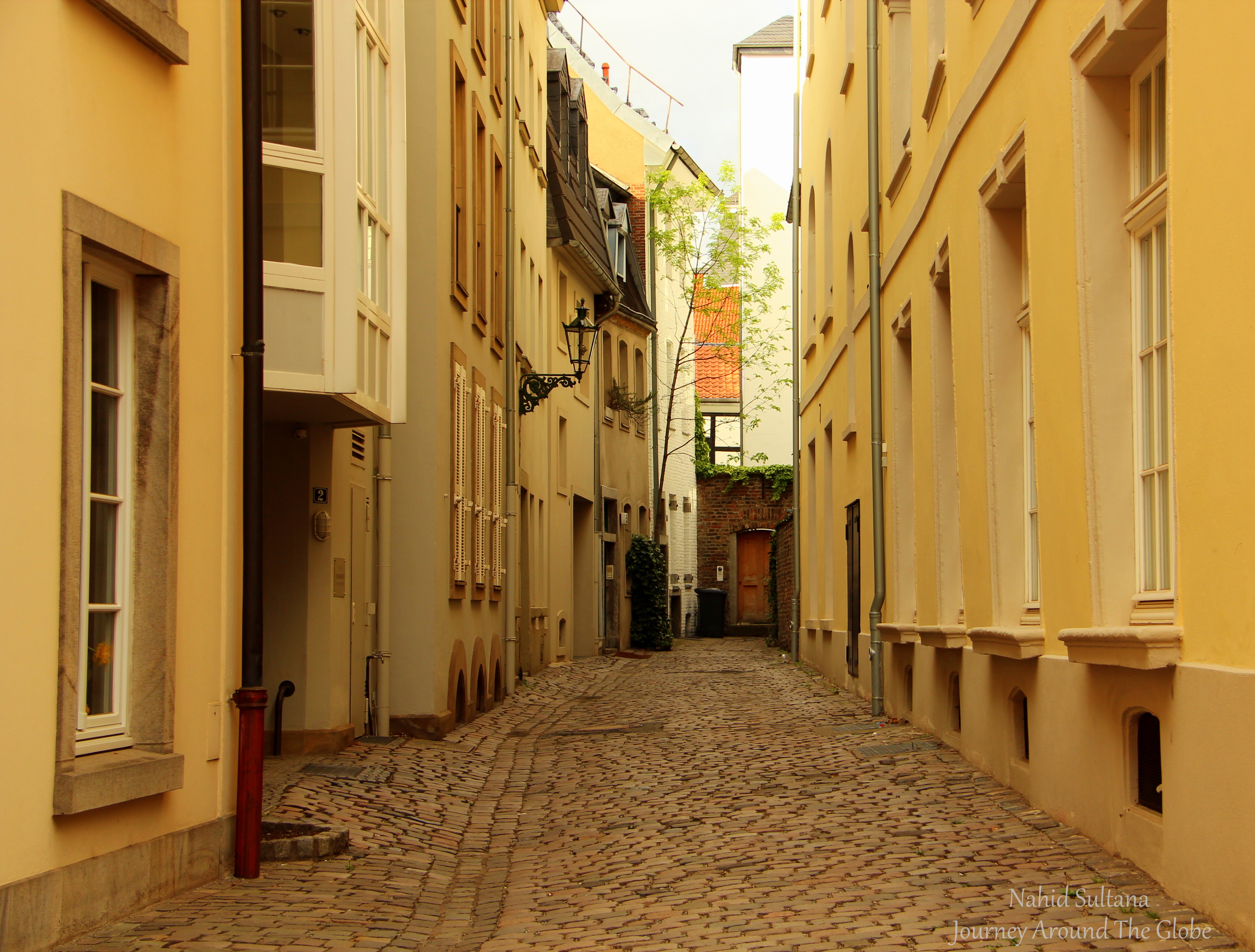
- Old town of Düsseldorf, Germany
This makes a great day trip from cities like Cologne, Bonn, or Frankfurt. The city is known for its bustling night life, many events/fairs, and fine shopping experiences.
TIME of TRAVELING: We took a mini-Germany trip in a long-weekend of May, 2013. My aunt was here with us from Baltimore, MD. Düsseldorf was our first city to visit in this trip, later we visited Bonn, Frankfurt, and Heidelberg. Luckily that day turned out to be a nice one with some sun shine and without black clouds. Düsseldorf is only a little more than 2 hours of drive from Tervuren, Belgium…so close, but never made it there in the last 2 years of our stay in Europe.
OUR HOTEL: We stayed about 15 minutes walking distance from the old town. It was called A&O Hotel/Hostel. It was like a in between a hotel and a hostel. But the setting was really except my aunt complained that she had hard time sleeping for too much outside noise. It didn’t have breakfast or free Wi-Fi in the room, nor a restaurant in the building. It looked like a place for the young travelers with pool table and some other activities in the lobby. Our room was nice and clean with moderate space.
EATING and SHOPPING: Old town is definitely a great place for meals or drinks, especially area around Schneider-Wibbel-Gasse. We didn’t sit down for anything here, was only drooling by looking at those . Same with shopping, old town had many boutiques and unique stores. Koningsallee is another perfect place for shopping if you have few hundreds of euros to spare in your pockets…it’s the fashion district of Düsseldorf with many upper-class exclusive shops.
PLACES WE’VE VISITED: I wouldn’t stay all the attractions in Düsseldorf are within walking distance. If you are into just old town, like us, then it’s all good. But other sites are scattered all around the city. We only had a day to spend here. It wasn’t enough but we only concentrated on the old town this time which was a fantastic experience.
- Walking towards the old town of Düsseldorf, Germany
1) OLD TOWN: The old town of Düsseldorf was heavily destroyed during WWII and was later rebuilt according to the original plan. Therefore, the old district looks historic but with a hint of new attitude. For the tourists, don’t forget to look around and check every corner for beautiful buildings, statues, and street performers. This place has many small alleys which are loaded with tons of shops, cafes, restaurants, and pubs. Düsseldorf old town is very big compared to many other old towns in Europe. You can spend hours just wandering around in its cobblestone alleys eating, shopping, or just getting lost.
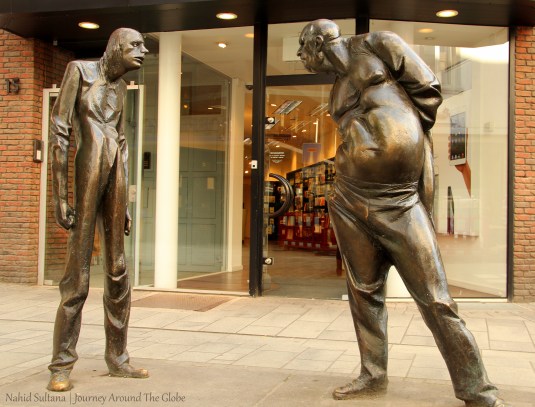
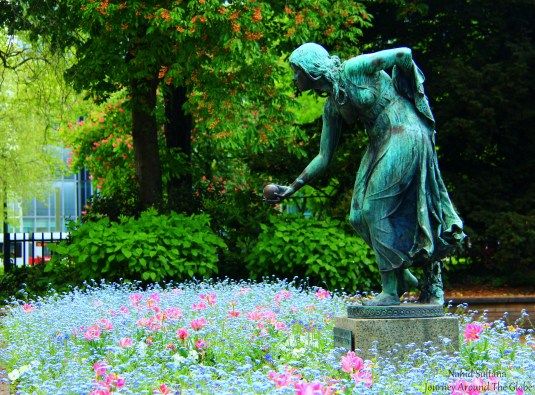
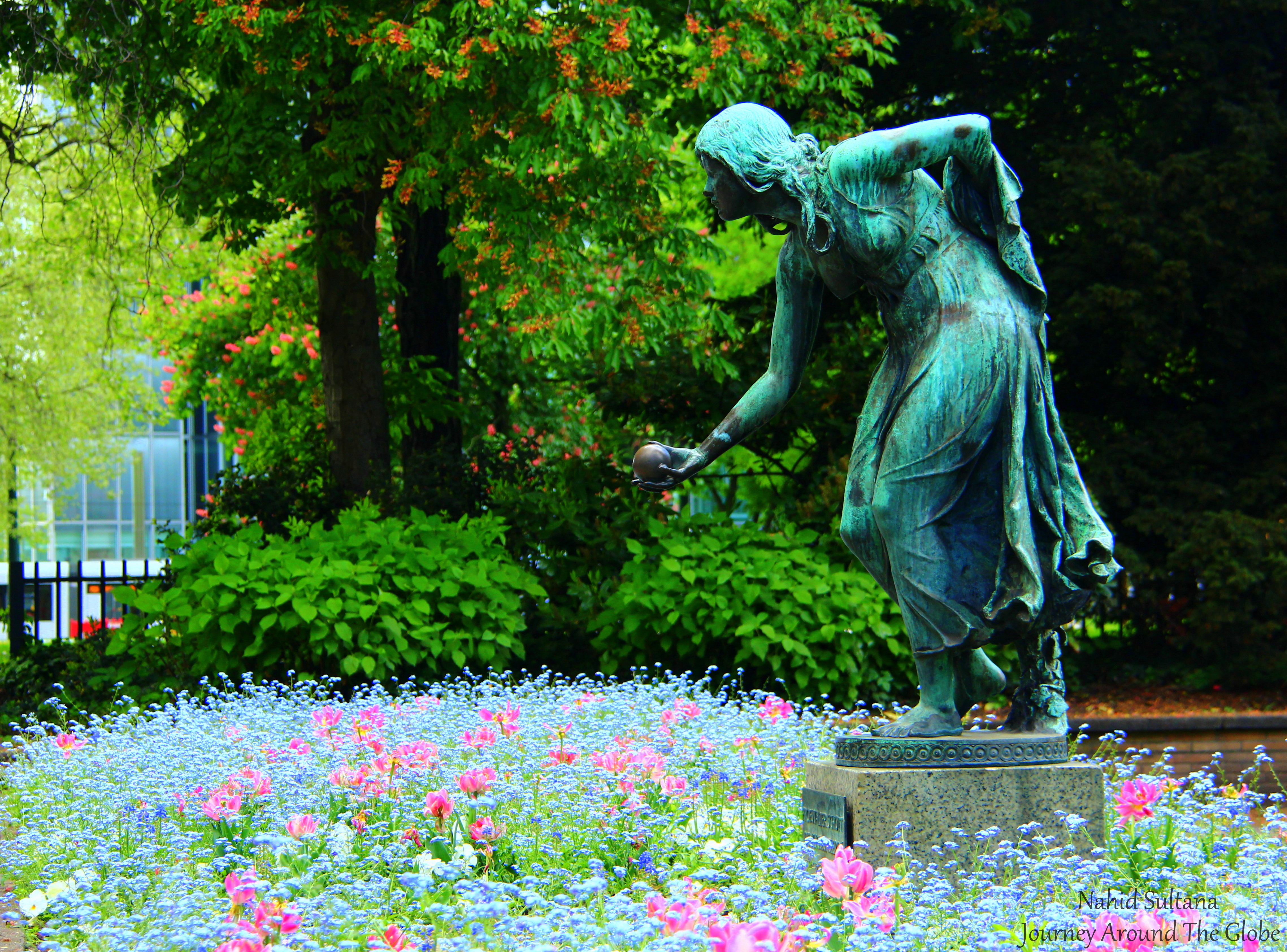
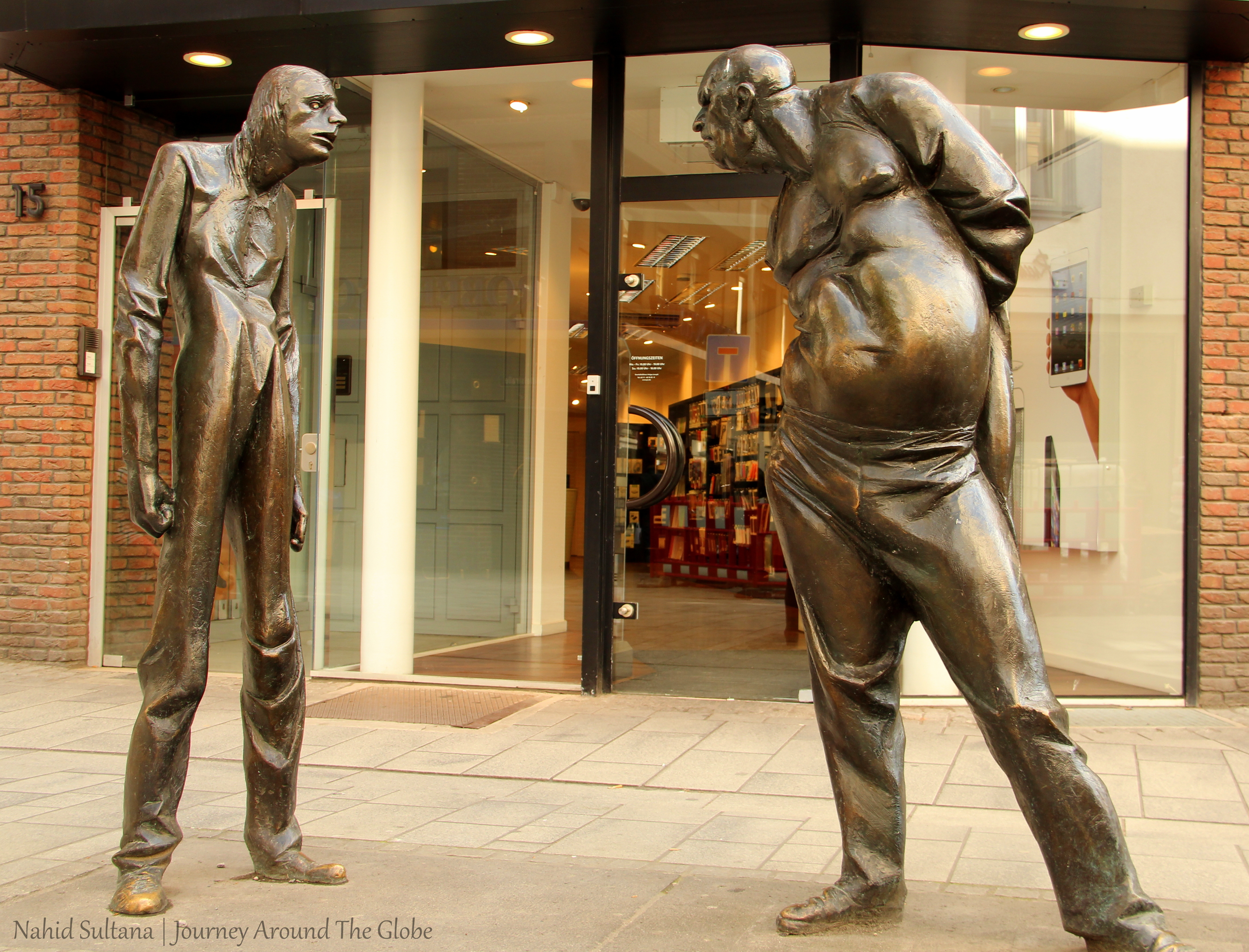
- A statue, known as “Conflict”, in the old town of Düsseldorf, Germany
2) ST. ANDREAS CHURCH: This was our first stop in the old town. It wasn’t in our to-see list. It was free to enter, so we just took a chance of going inside. This Renaissance style church was founded in 1629. Interior is pleasantly decorated with all whites.
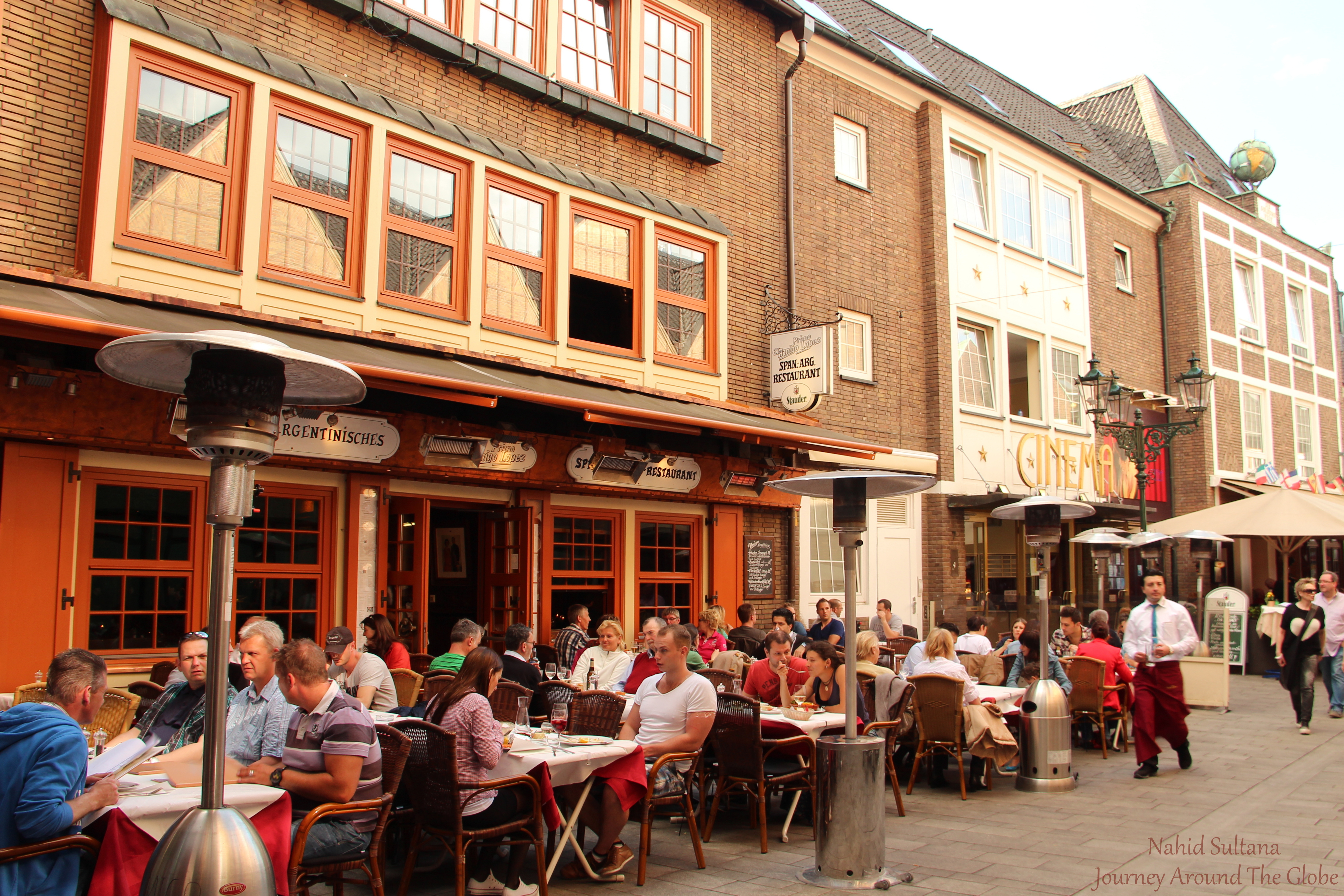
3) SCHNEIDER-WIBBEL-GASSE: This is a small lane in the old town which is packed with restaurants and bars. All the old buildings here were turned into restaurants, most of which offer Spanish or Latino food. Looks like the cool crowd of Düsseldorf love to gather here for fun…absolutely the best place for meal.
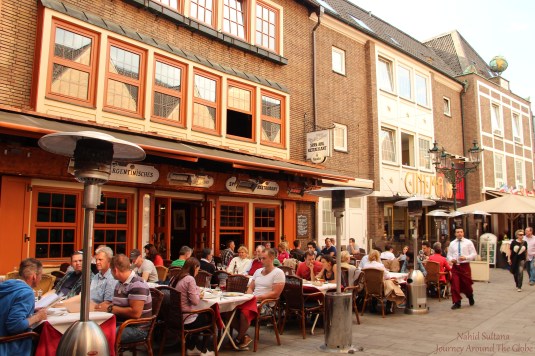
- Schneider-Wibbel-Gasse in Düsseldorf, Germany
4) CASTLE TOWER in BURGPLATZ , CARTWHEELERS’ FOUNTAIN, and CITY MONUMENT: Burgplatz or Castle Square is a big and lively square near St. Lambertus Basilica in the old town next to River Rhine. Once there stood a Baroque castle which was burned down in the late 19th century leaving a tower behind intact. Castle Tower or Schlossturm, now a navigation museum, is located in one side of the square.
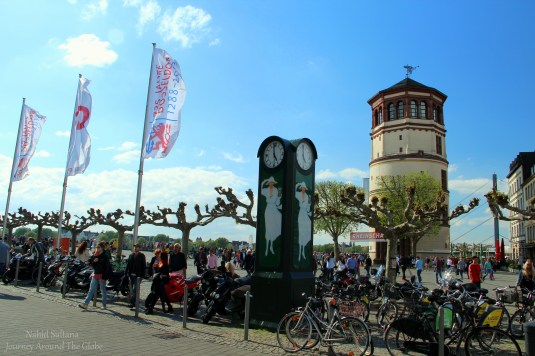
- Castle Tower or Schlossturm in Burgplatz of Düsseldorf, Germany
Cartwheeling is a popular activity among the young crowds here…they even have annual competitions of this “sport” in Düsseldorf. There is a Cartwheeler’s Fountain in Burgplatz which is about a little boy cartwheeling while another one watching him.
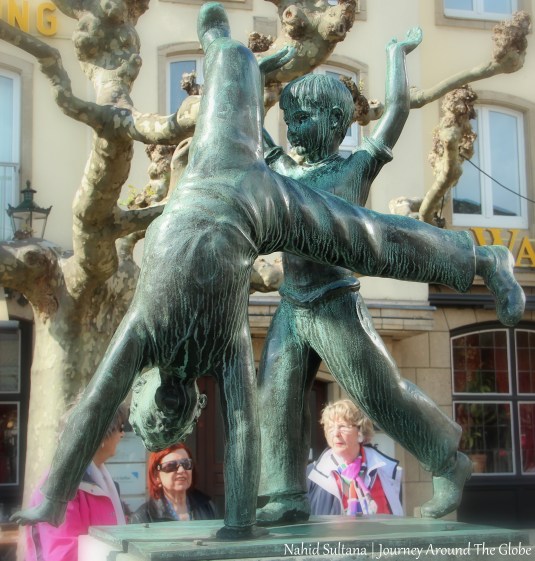
- Cartwheeling statue in Burgplatz of Düsseldorf, Germany
City Monument at Burgplatz, near St. Lambertus Basilica, was a donation on the occasion of the 700th anniversary of town foundation. The monument is full of symbols and depicts some important histories of the city. Right beside the monument is a small river, Northern Dussel, which gave the city its name.
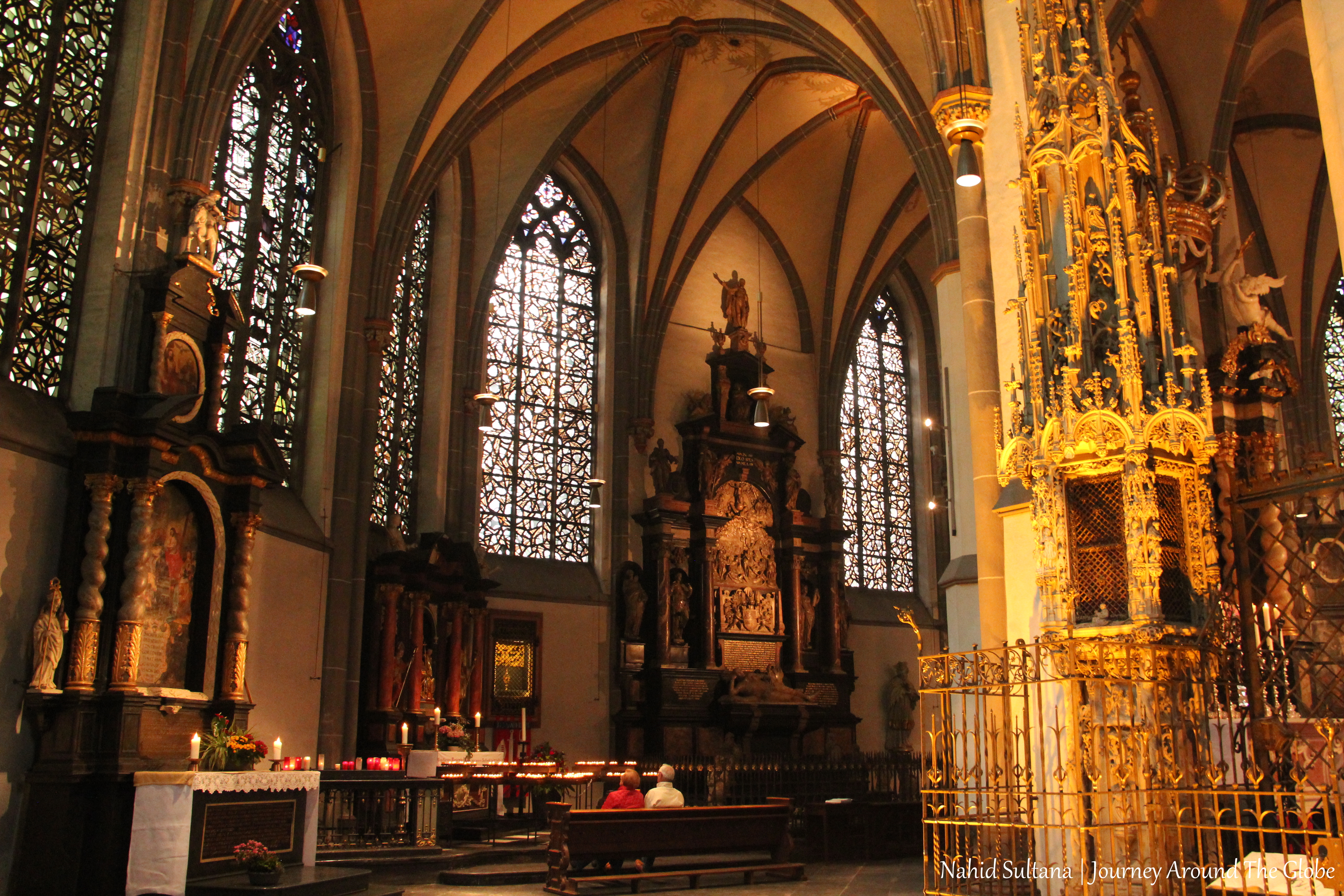
5) ST. LAMBERTUS BASILICA in STIFTSPLATZ: Stiftplatz is a calm and warm square that houses some nice old buildings and couple of cafes. Walk a bit further and you will see the Lower Rhine Gothic style St. Lambertus Basilica with its brick exterior and soaring tower. The basilica has some uniquely pattered stained-glass windows with elegant interior decorations. This is probably the oldest building in Düsseldorf, dating back to 1159 or even further back.
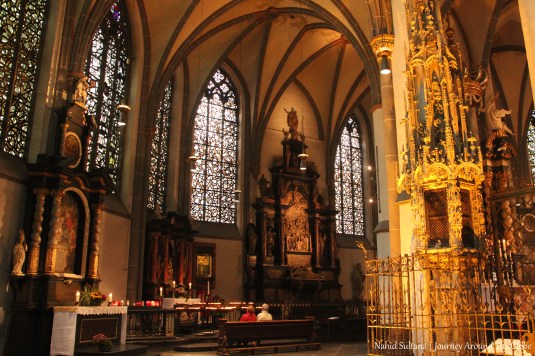
- St. Lambertus Basilica in Stiftsplatz in Düsseldorf, Germany
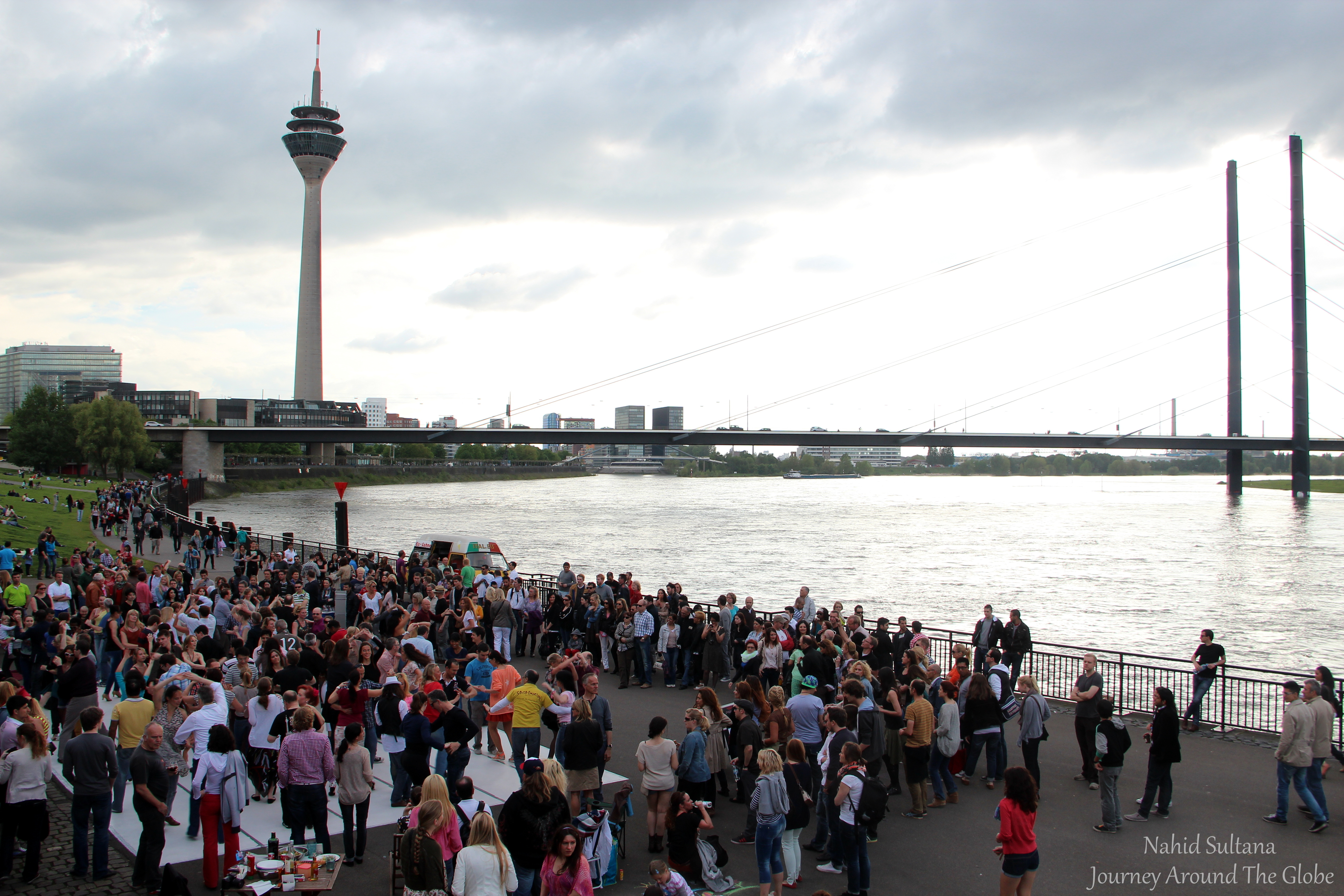
6) PROMENADE by RIVER RHINE: Promenade by River Rhine near old town is one of the most beautiful promenades in whole of Germany and a wonderful place to spend late afternoon. This is a long stretch of pathway…nice for a short walk. It offers an amazing view of the river, bridges, and Rhine Tower. This was our last spot in Düsseldorf. Sitting on the green grass by the river bank watching local crowds was a perfect way to end the day.
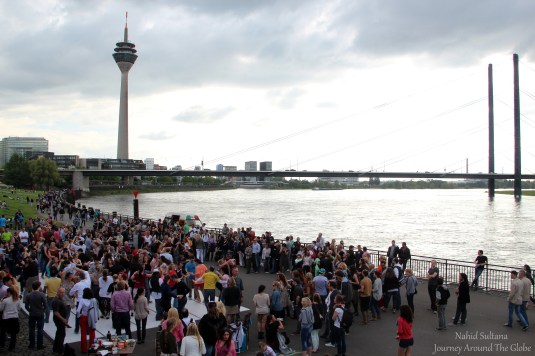
- Rhine Tower and Promenade by River Rhine in Düsseldorf, Germany
7) MARKTPLATZ, CITY HALL (RATHAUS), and STATUE of JOHANN WILHELMS II: Marktplatz is located next to Burgplatz in the old town but not as lively as Burgplatz. The square houses the historic city hall of Düsseldorf from the 16th century. There is a guided tour available few times a week which we didn’t take.
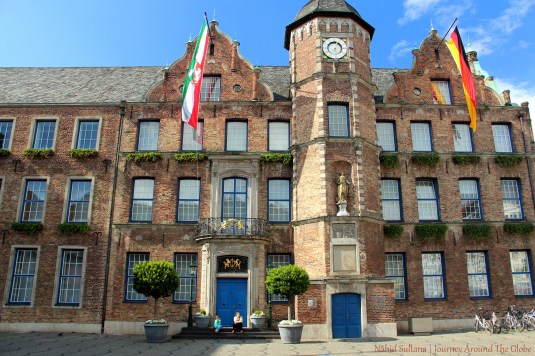
- Düsseldorf City Hall (Rathaus) in Marktplatz
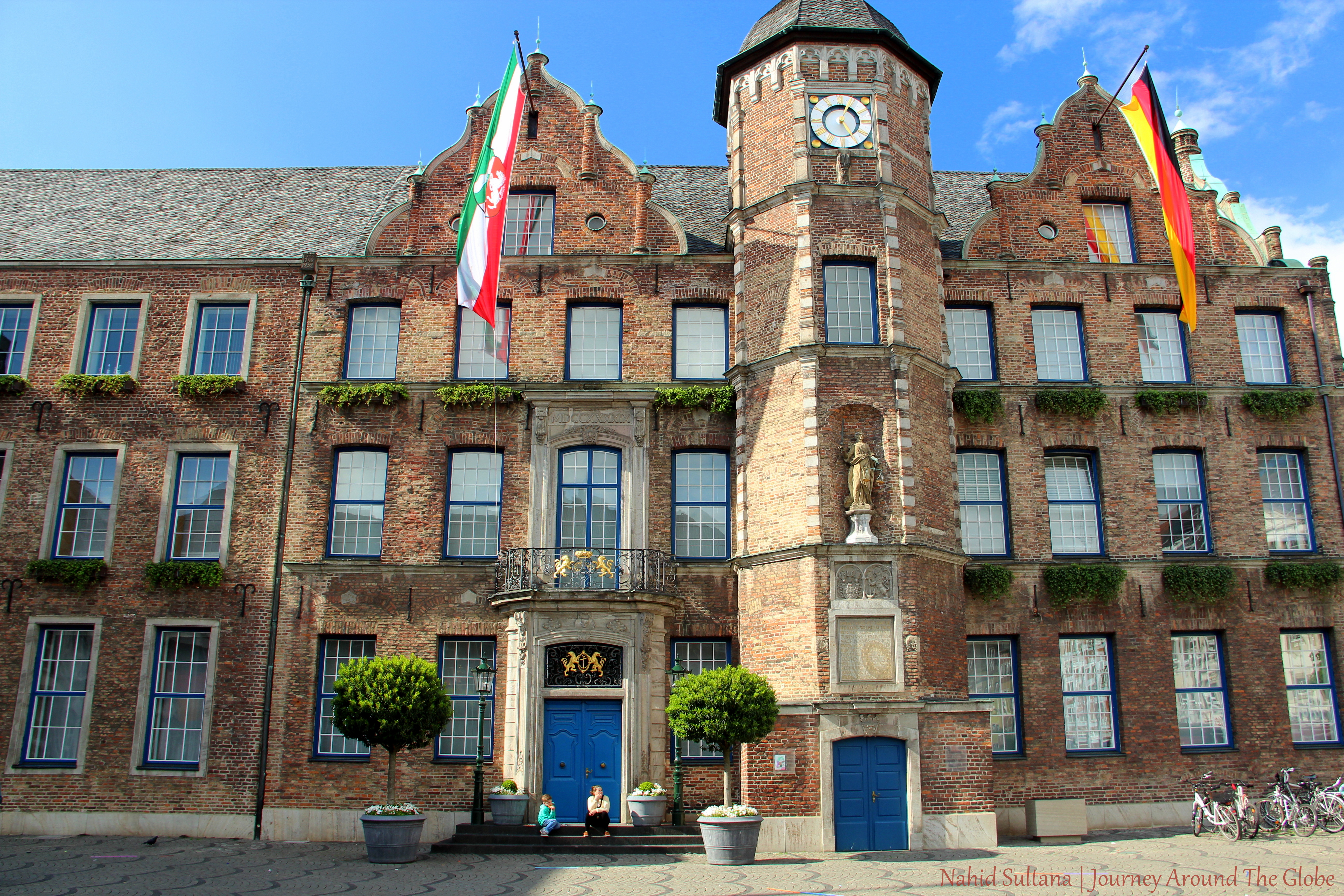
Marktplatz is dominated by a monument of Johann Wilhems II (1658 – 1716) on horseback in front of the city hall. He is a beloved son of Düsseldorf who boosted the development of the city. The monument was raised in 1711.
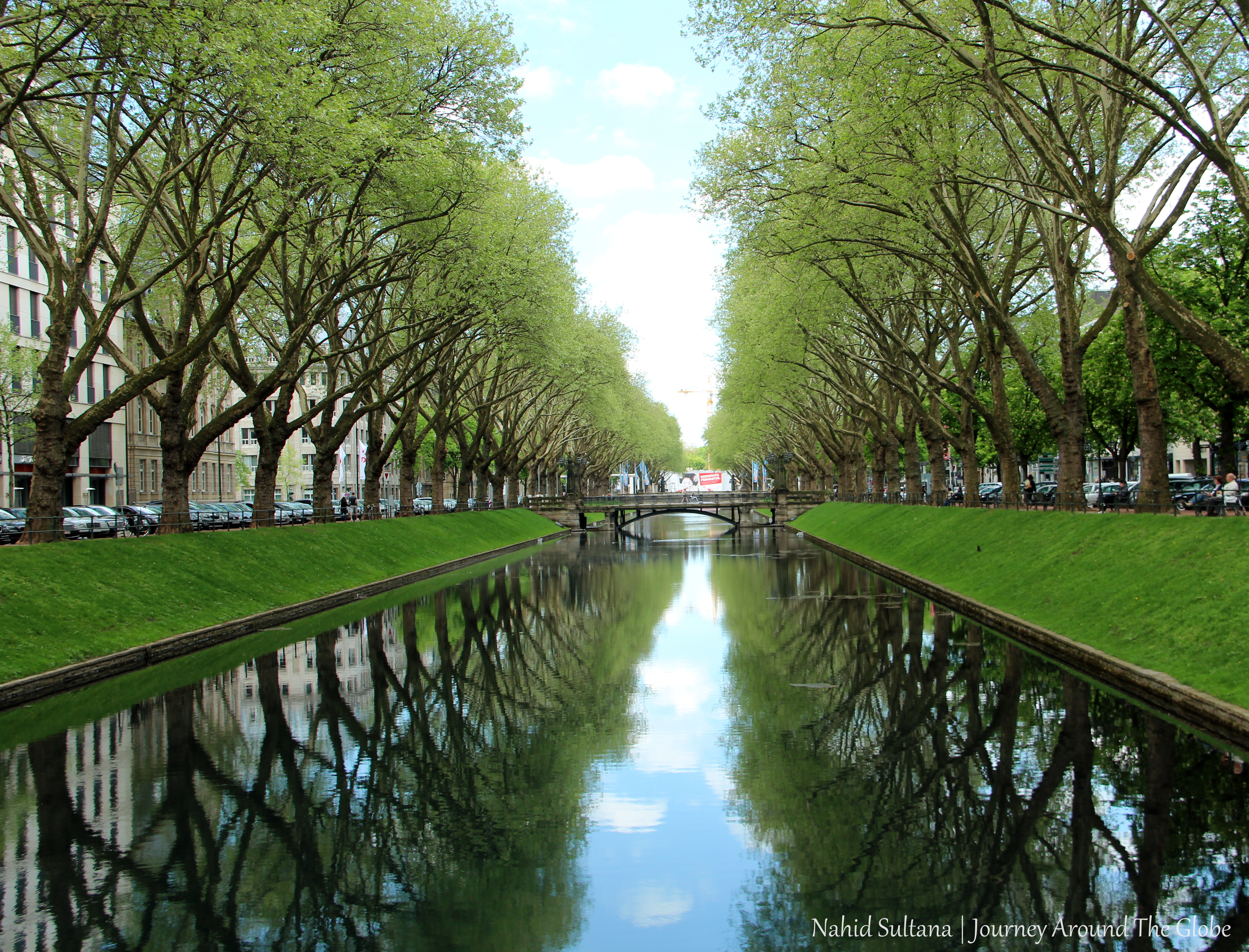
8) KONINGSALLEE: This is the “Champs-Elysees of Germany” as some people refer this street to which is the shopping district of the city with high-end fashion stores (like Burberry, Armani, Tiffany, and Louis Vuitton etc.), many brand names shops, and few mid-range places… I am sure you can find something within your budget. Even if you don’t buy anything this street is a very nice one for taking a stroll by a small river. At one end of it has an entrance to the old town.
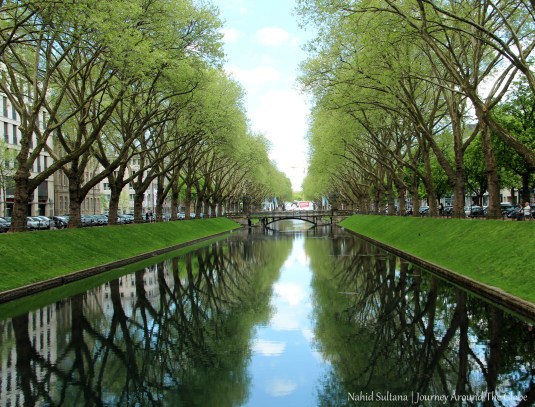
- A small river by Koningsallee in Düsseldorf, Germany
Related articles
- Beethoven’s birth place – Bonn, Germany (journeyaroundtheglobe.com)
- A truly charming German town – Heidelberg, Germany (journeyaroundtheglobe.com)
Share this:

A truly charming German town – Heidelberg, Germany
HEIDELBERG, GERMANY: Heidelberg is one of the most charming German towns I’ve visited as of yet. Situated by River Necker, it makes a great getaway from Frankfurt or Bonn. It’s a neat little organized city with warm beauty everywhere you look. This would be in my top-10 “picture-perfect” cities of Europe so far…loved it so much. Enjoyed its beautiful atmosphere with old-time settings and would love to go back there again and again with every chance I get.
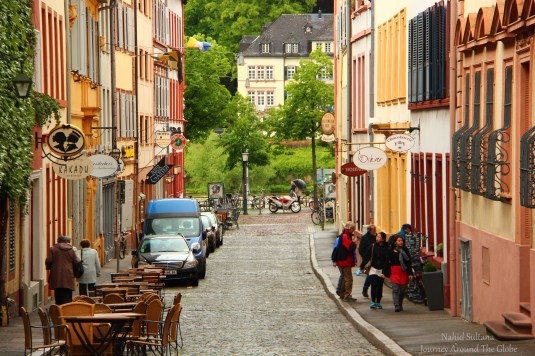
- Old town of Heidelberg, Germany
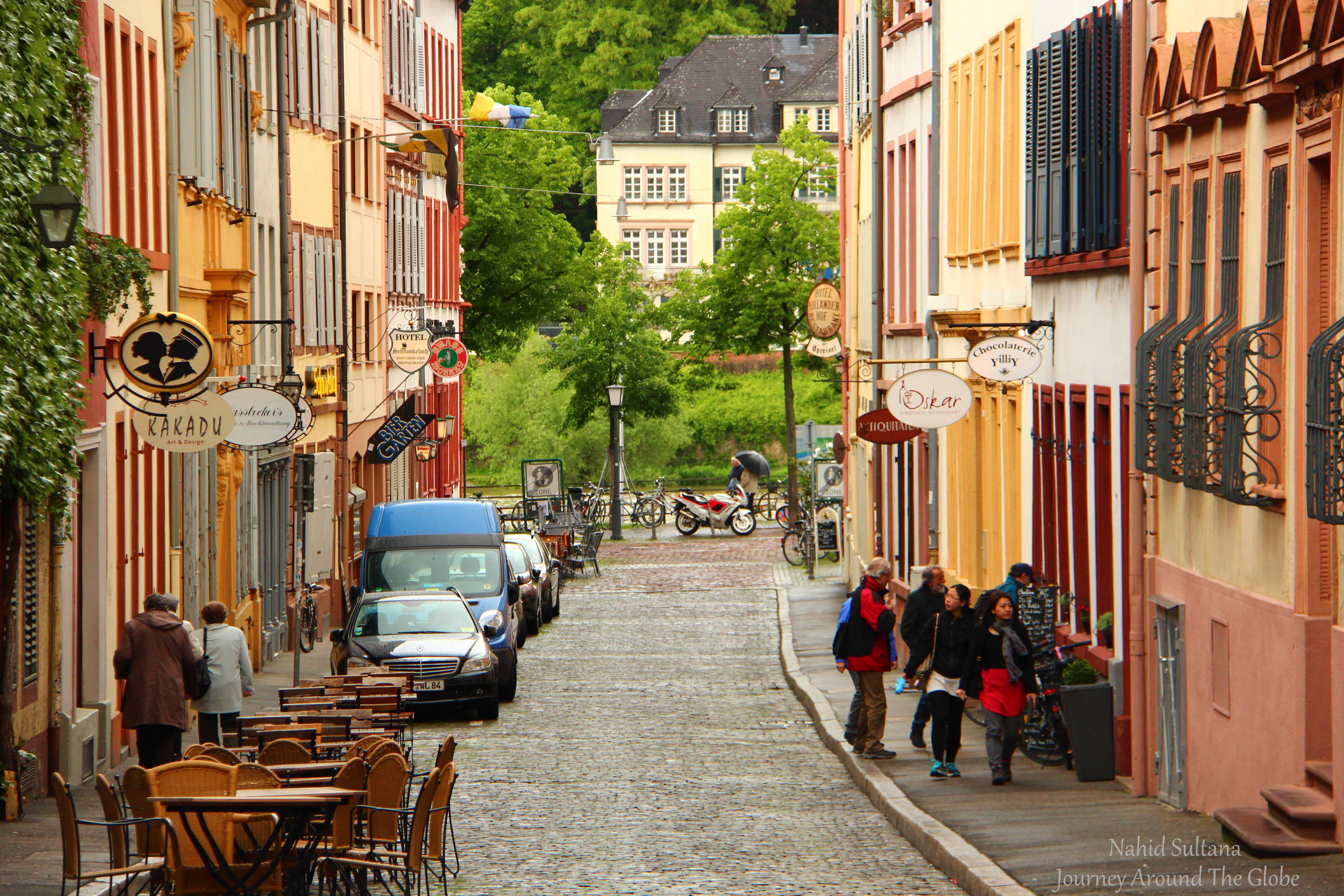
Old town of Heidelberg kept its charming medieval look and feel all throughout the city. Cobblestone streets, narrow alleys lined with many designs of colorful buildings, flower pots on the windows, small cozy cafes make this little town a fun place to spend a day or two. I can guarantee that this place won’t disappoint anyone who is into small town beauty and looking for a fun getaway from the chaos of big cities.
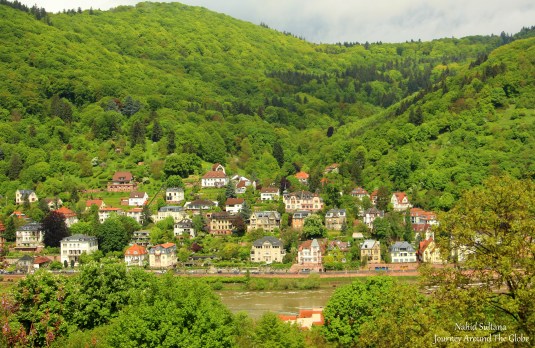
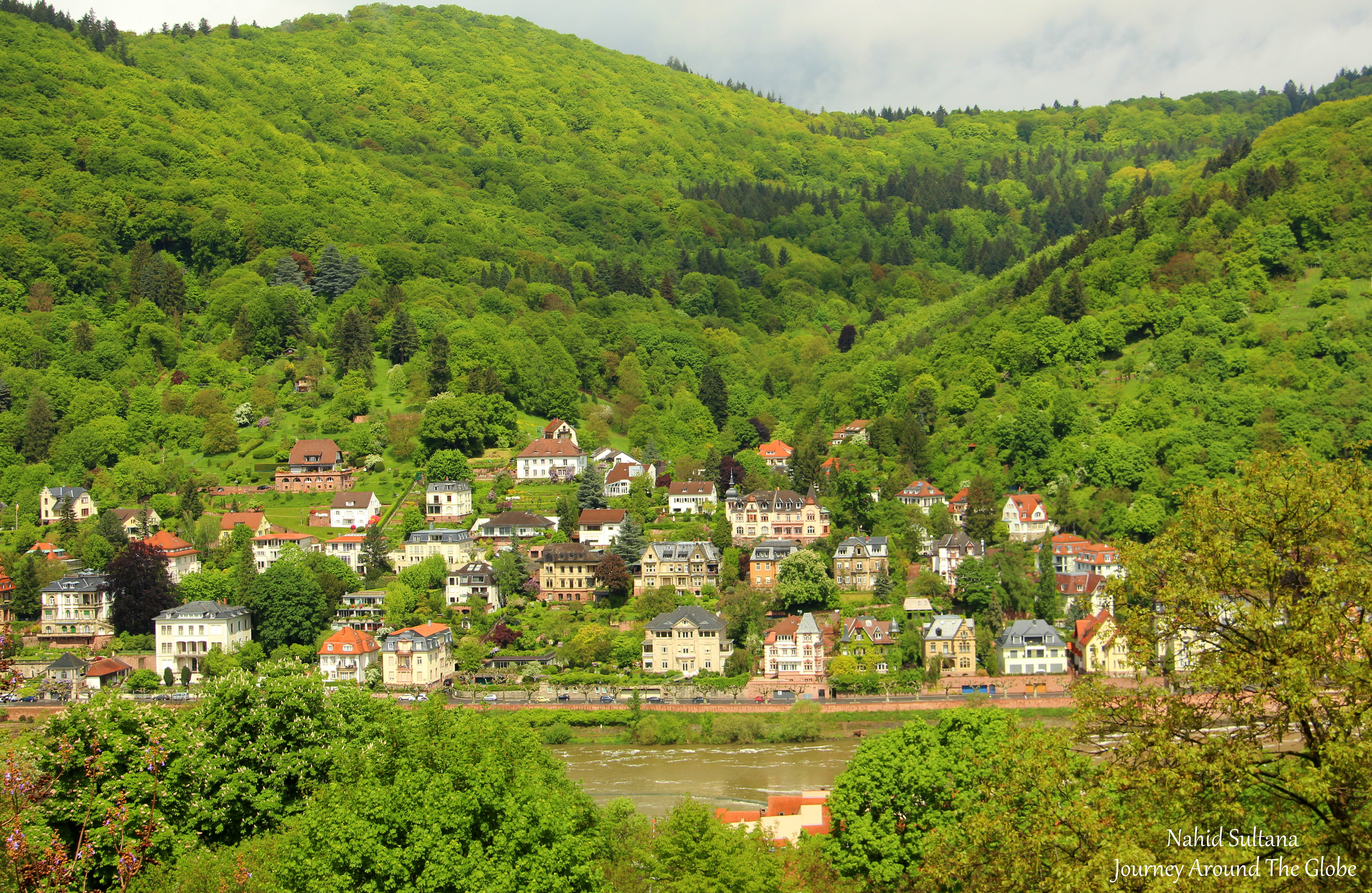
- View from Heidelberg Castle hill in Germany
TIME of TRAVEL: We were out with my aunt, visiting us from the USA, on a long weekend of May 2013. This was our last stop of our mini-Germany trip that included Düsseldorf, Bonn, and Frankfurt. It was not in our itinerary but one of my husband’s colleagues had suggested Heidelberg and I was truly thankful to him for recommending this place. If I can remember correctly, it took us about little more than hour to reach here from Frankfurt. It was cloudy and was raining a bit when we arrived. The weather continued to be like this throughout the whole day surprising us with little bit of sun shine once in a while.
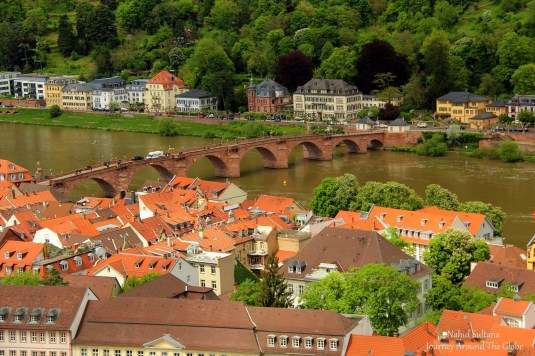
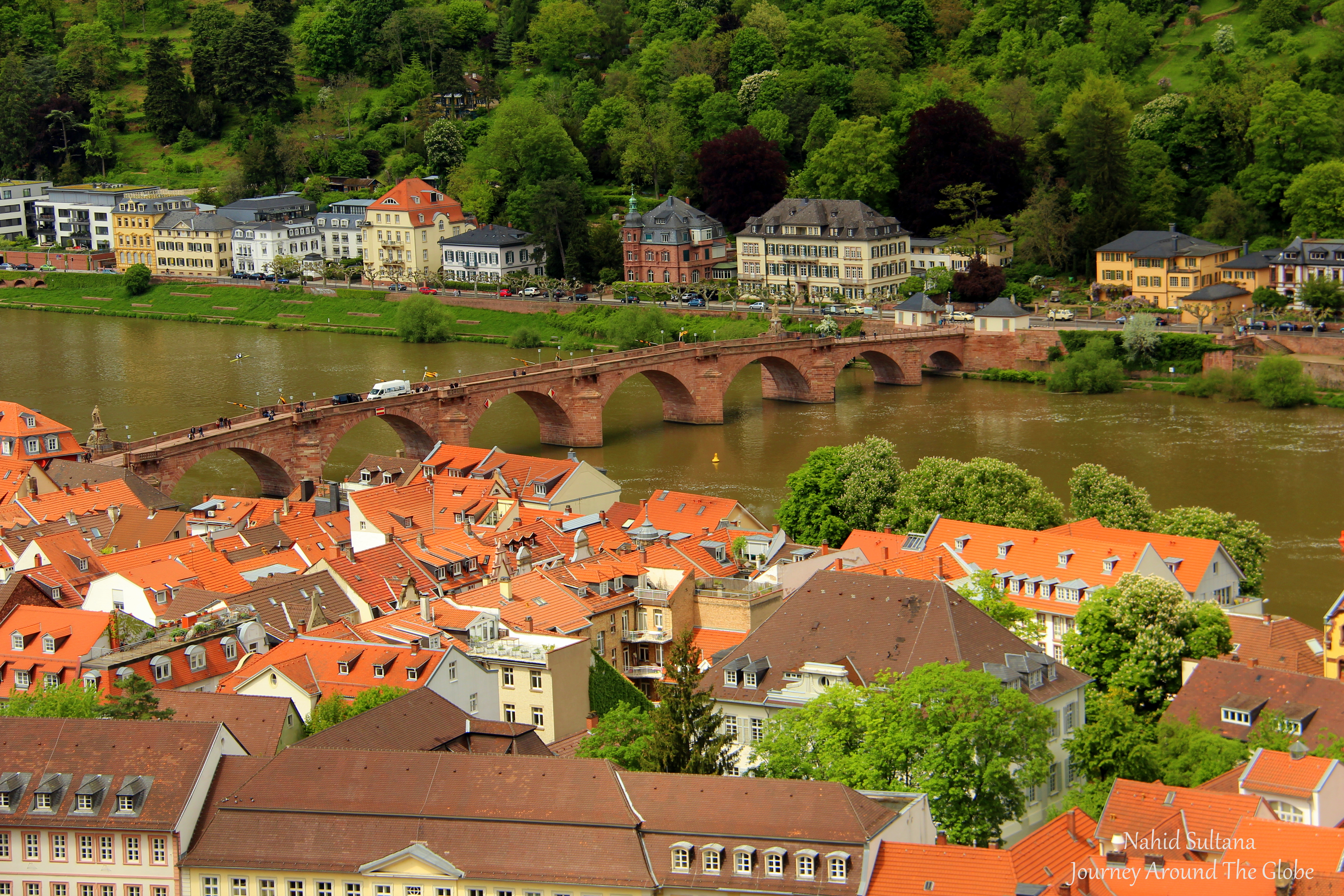
- Alte Brucke – a pedestrian bridge on River Necker in Heidelberg, Germany
OUR HOTEL: We didn’t stay in Heidelberg. We stayed at Novotel in Frankfurt. After checking out in the morning, we headed straight towards Heidelberg before heading back home to Tervuren, Belgium.
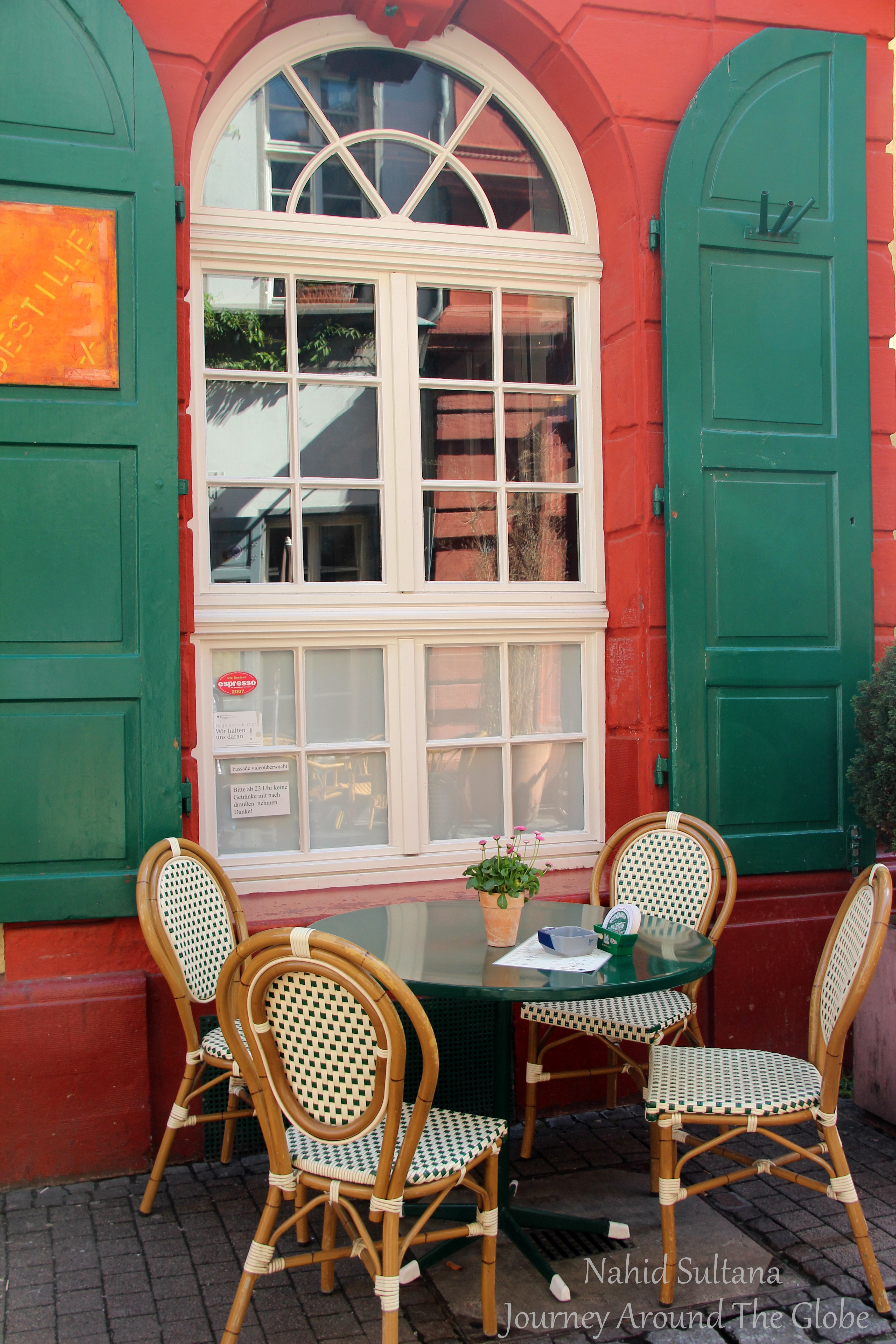
EATING and SHOPPING: Heidelberg is overloaded with tons of nice cafes and restaurants. We had lunch in a kebab and pizza place in Marktplatz opposite to Heiliggeistkirche. Every café or restaurant I saw, looked so welcoming and warm. Outdoor sitting arrangements with cute designs and lovely decorations make them very cozy.
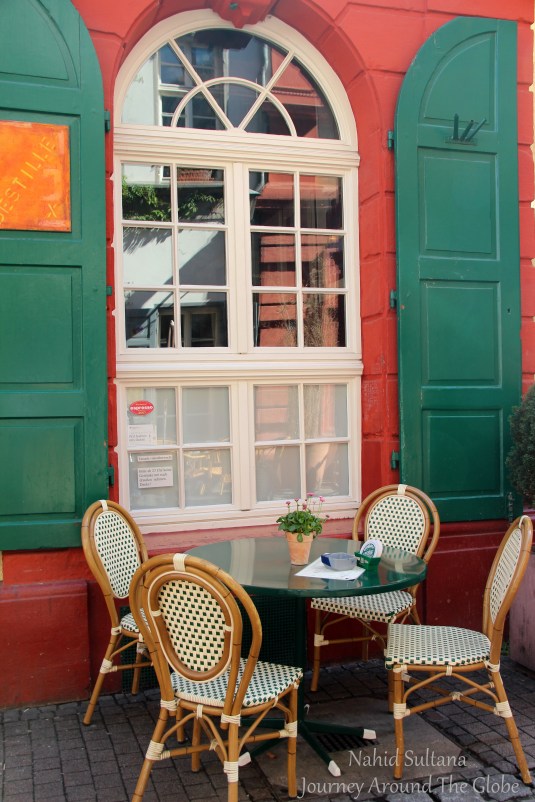
- One of many cozy cafes of Heidelberg, Germany
Many souvenir shops can be found in Marktplatz of Heidelberg. Sketches, beer mugs, and cuckoo clocks are just few things to name you can find in these shops along with many other gift items. Old district of Heidelberg has many boutique and locally owned shops where you can find unique things.
PLACES WE’VE VISITED: Walking around the old town of Heidelberg is the main attraction of this city. We spent about a whole day here before heading back home, about 4 hours of drive. All the main sites here can be seen on foot and I highly recommend doing it on foot…otherwise you will miss out the main beauty of Heidelberg. Walk on Haspeigasse (takes you to the river) or Steingasse for nice charming surroundings.
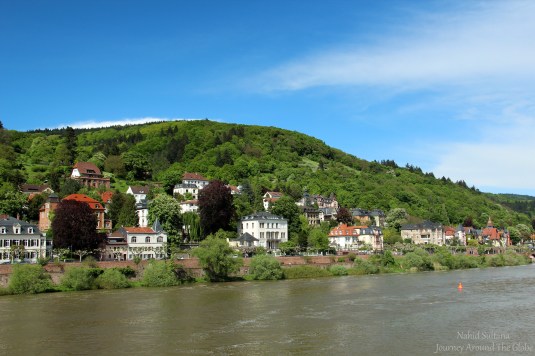
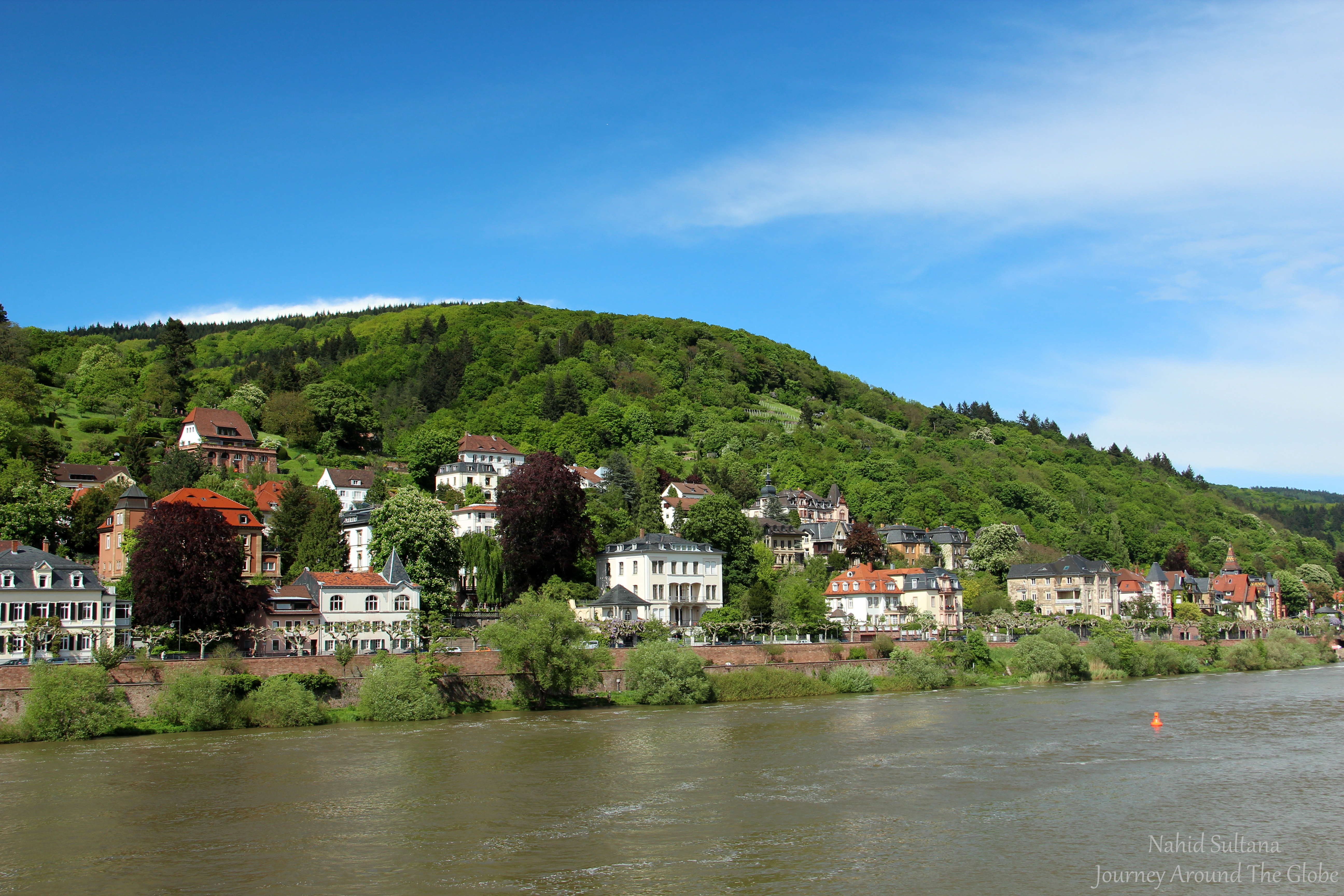
- River Necker and its bank in Heidelberg, Germany
1) HEIDELBERG CASTLE/SCHLOSS and GARDEN: The ruins of Heidelberg Castle is a famous landmark of Germany and number one spot to visit in Heidelberg. Located 260 feet up on the hillside, the castle dominates the view of old town of the city. The original structure of this castle was built before 1214 A.D. Heidelberg Castle gives a fabulous view of River Necker and the small town at the foothill. Go to the terrace beyond the courtyard to enjoy the view from different angles and sides. The surroundings couldn’t get any better…it was simply outstanding.
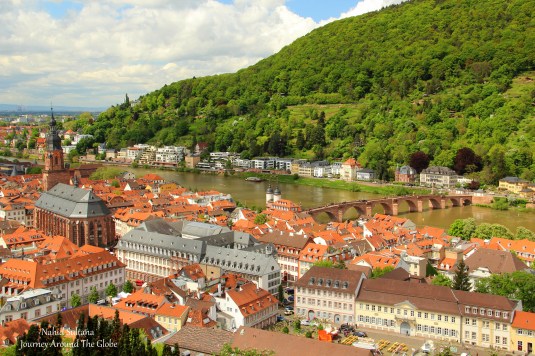
- View from the hill of Heidelberg Castle in Germany
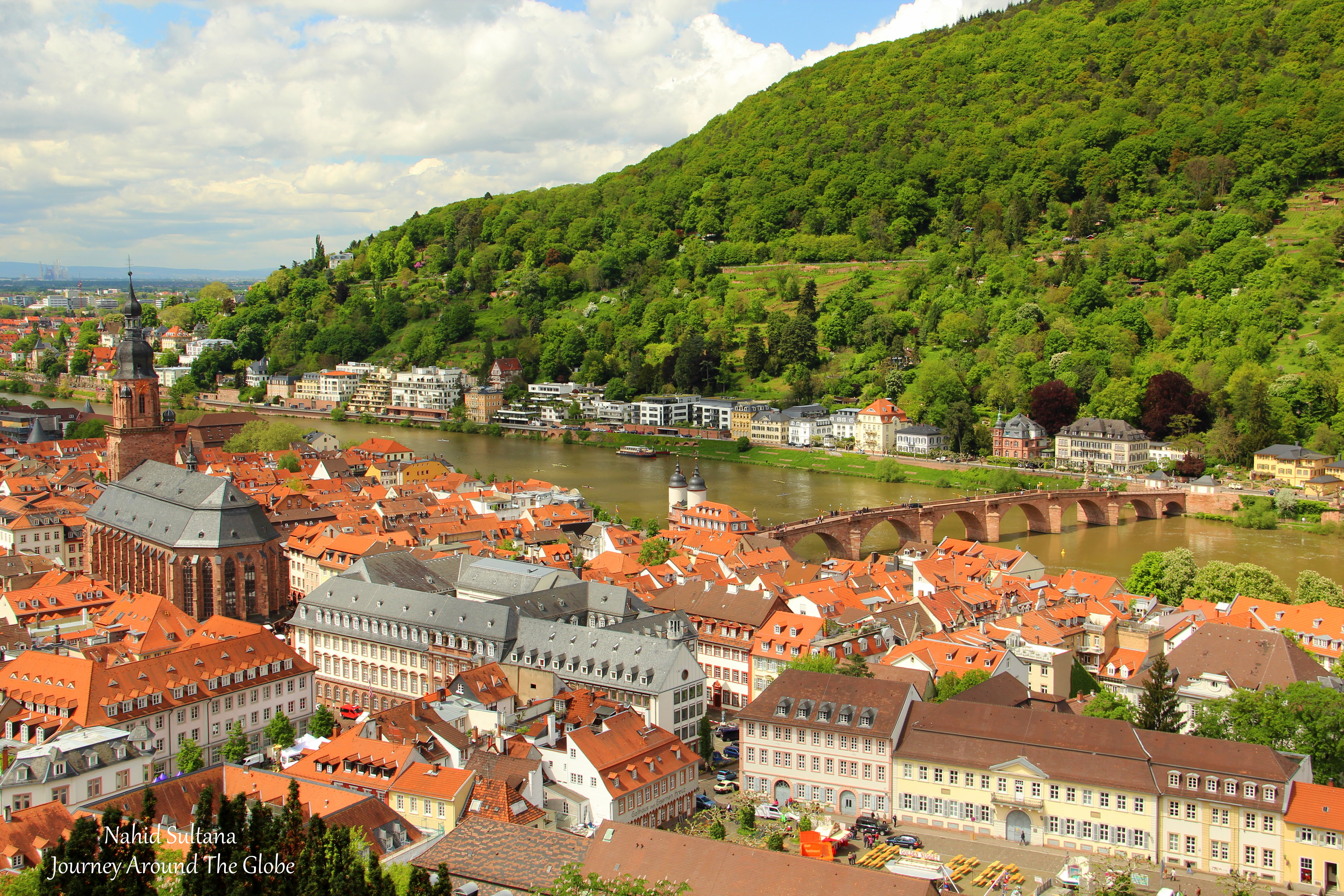
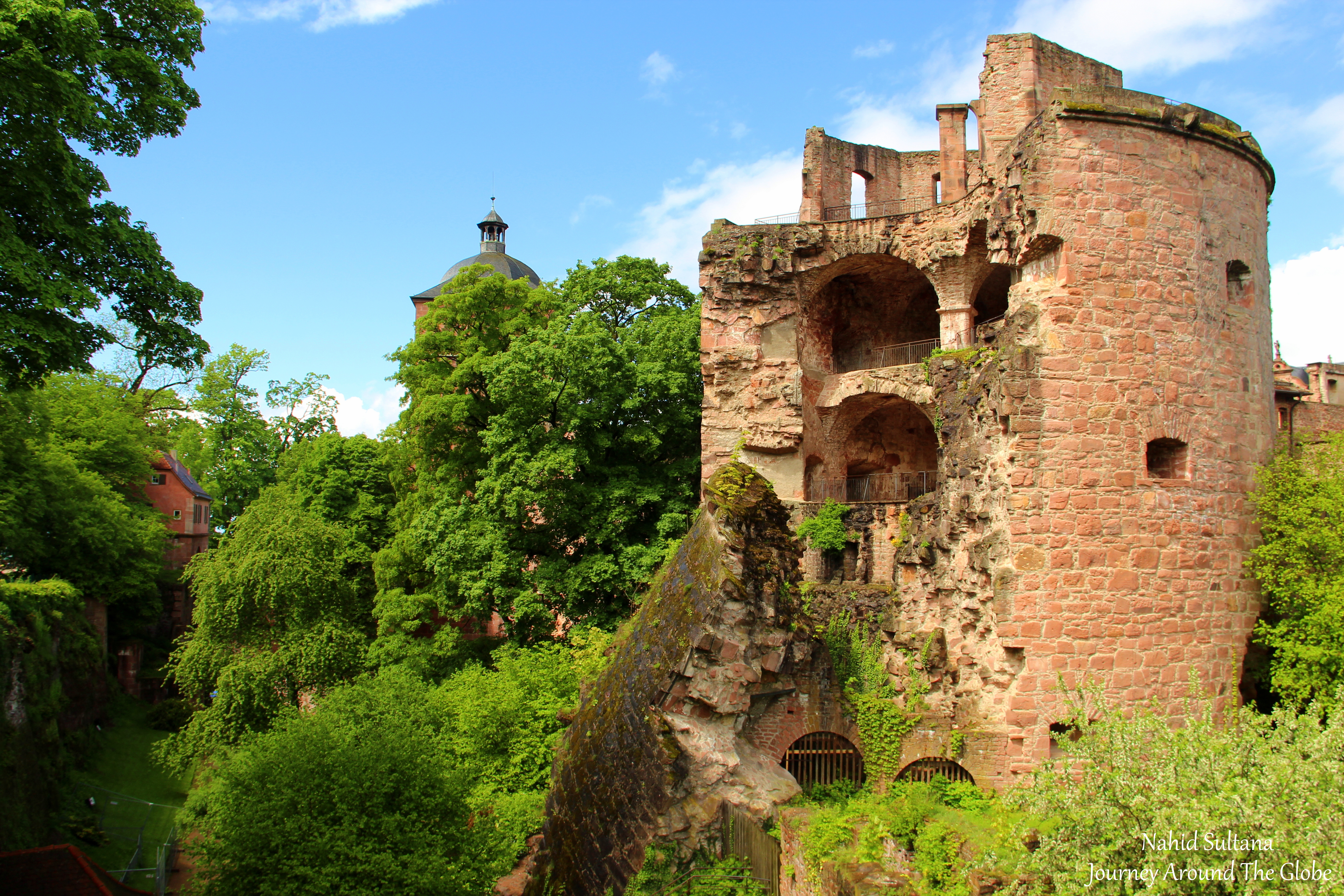
The park of the castle is very calm and green with a fantastic overview of the whole town and small hills. Old ruins of a tower in one side of the park looks like telling stories from the past. Statue “Father Rhine” at one end of this park is an added dimension to the castle garden.
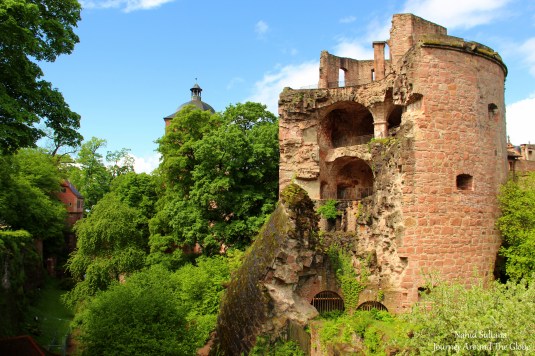
- Ruins of Heidelberg Castle from its park in Germany
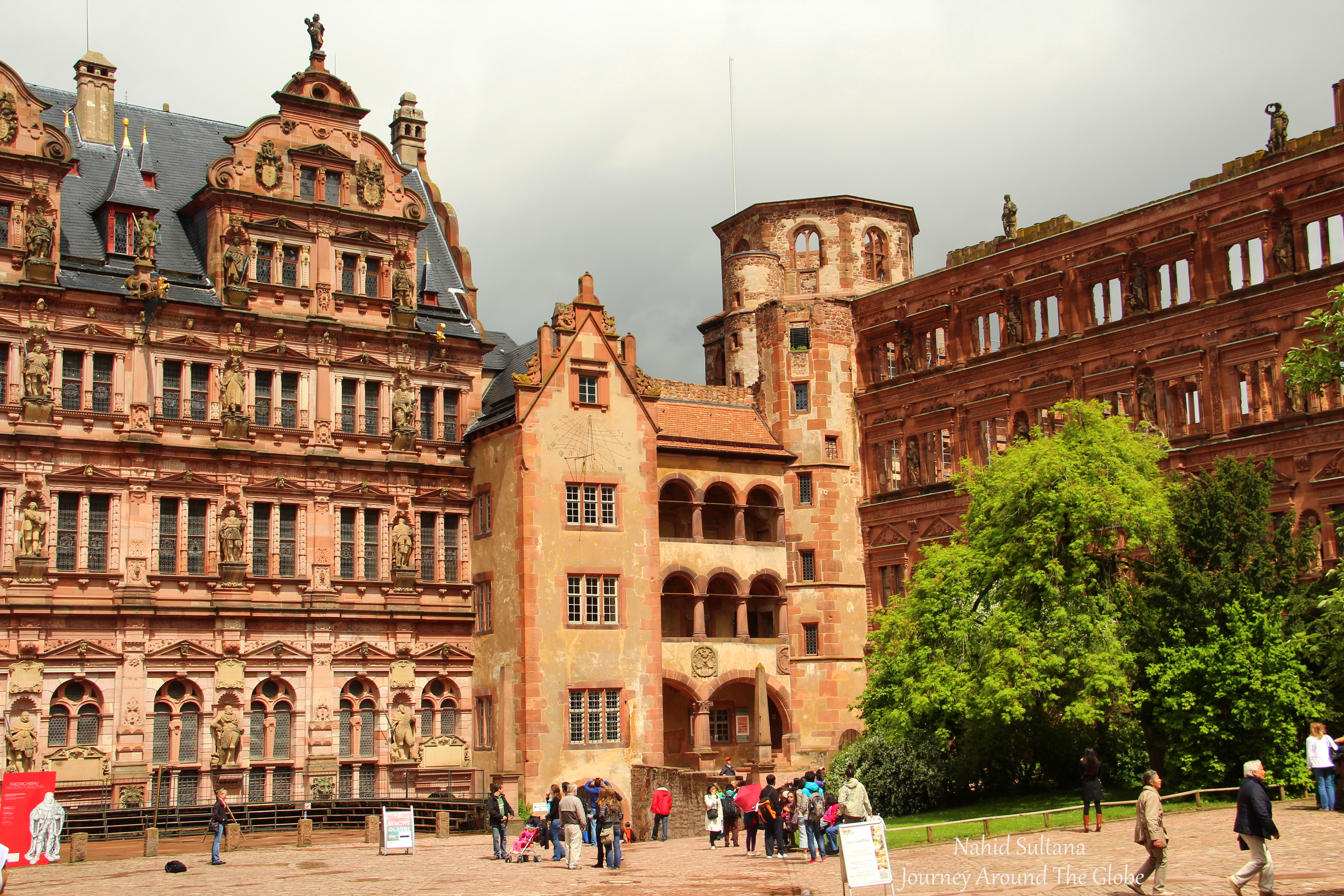
The courtyard is truly enchanting and takes you few centuries back. Statues and detailed work on buildings are something to appreciate. Magnificent façade of Frederick building with 16 sculptures on it looks very decorative.
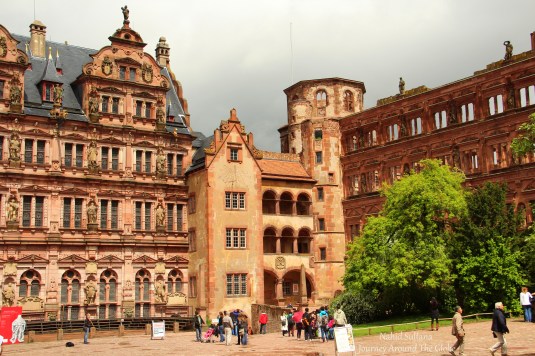
- Courtyard of Heidelberg Castle in Germany
German Pharmacy Museum is a small museum that the castle houses giving history of medicines in Germany and some other parts of the world. You can see herb processing tools and laboratories from an early age.
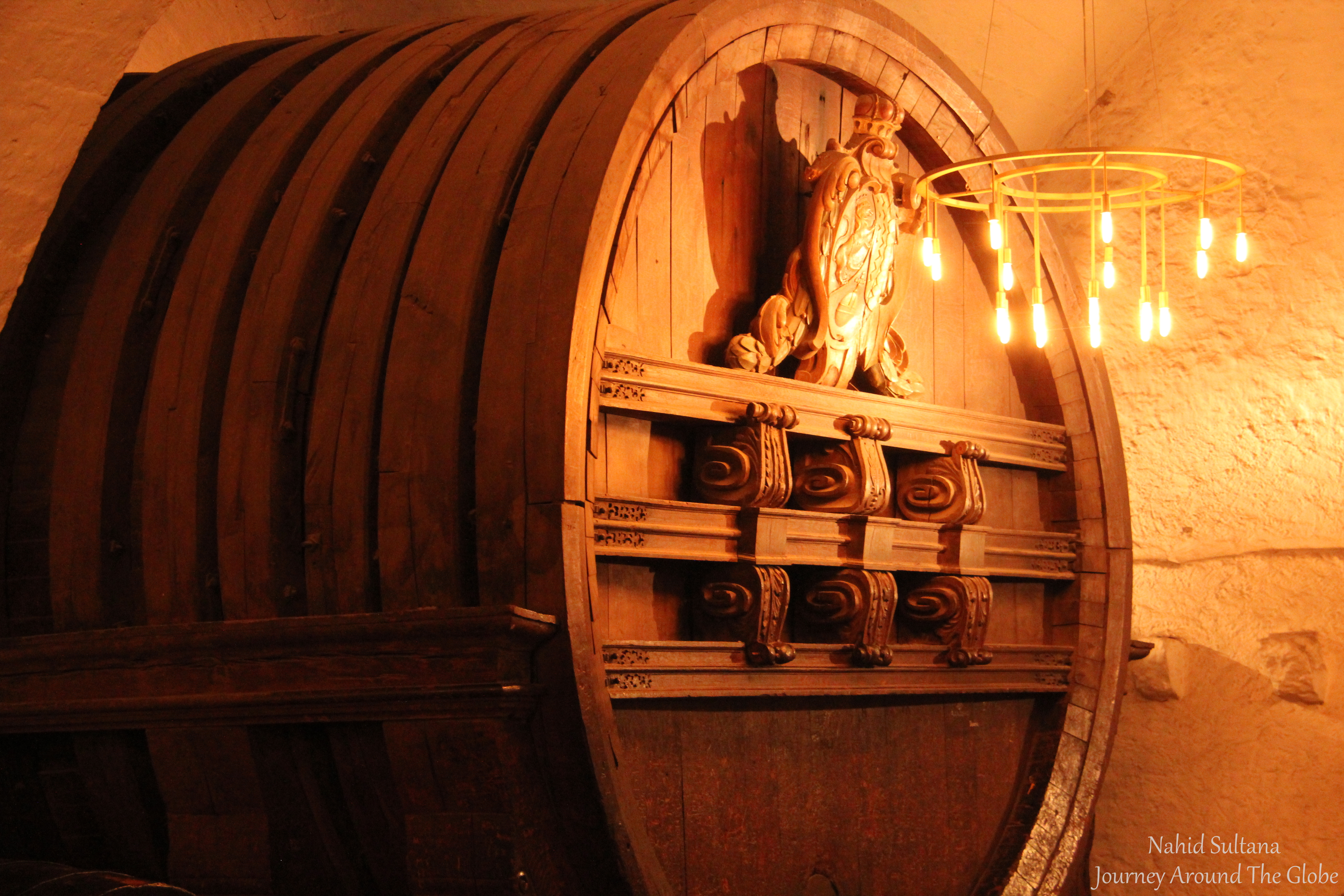
The “Great Barrel” at Heidelberg Castle dates back to 1750. It was made with oak wood and the wine deliveries from various communities were stored in the barrel. By 1767 it showed large damages caused by decay and was kept as an object of interest for visitors of the castle. This is located in an underground wine-cellar display.
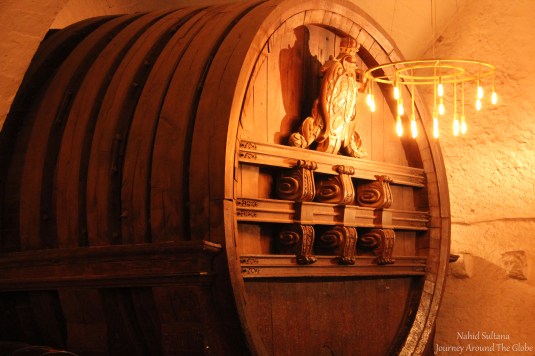
- Great Barrel of Heidelberg Castle in Germany
There are three ways to go down to the old district from the castle. Tourists can either walk for 10 minutes or take 315 steps or take a short funicular ride to altstadt (old town). The ticket we bought for 6 euros covered German Pharmacy Museum, Great Barrel, and funicular ride down to altstadt (old town).
2) KORNMARKT: This is a small square at the foothill of Heidelberg Castle just beside Marktplatz. There was a nice setup with many activates for the kids during our visit.
3) MARKTPLATZ: This is the main square of Heidelberg that houses Town Hall (Rathaus in German) at one side and many old buildings on other sides. There was a big farewell party for the US Military who were stationed here for a long time. Loud music, dance, food, lot of people made that place very lively during our visit.
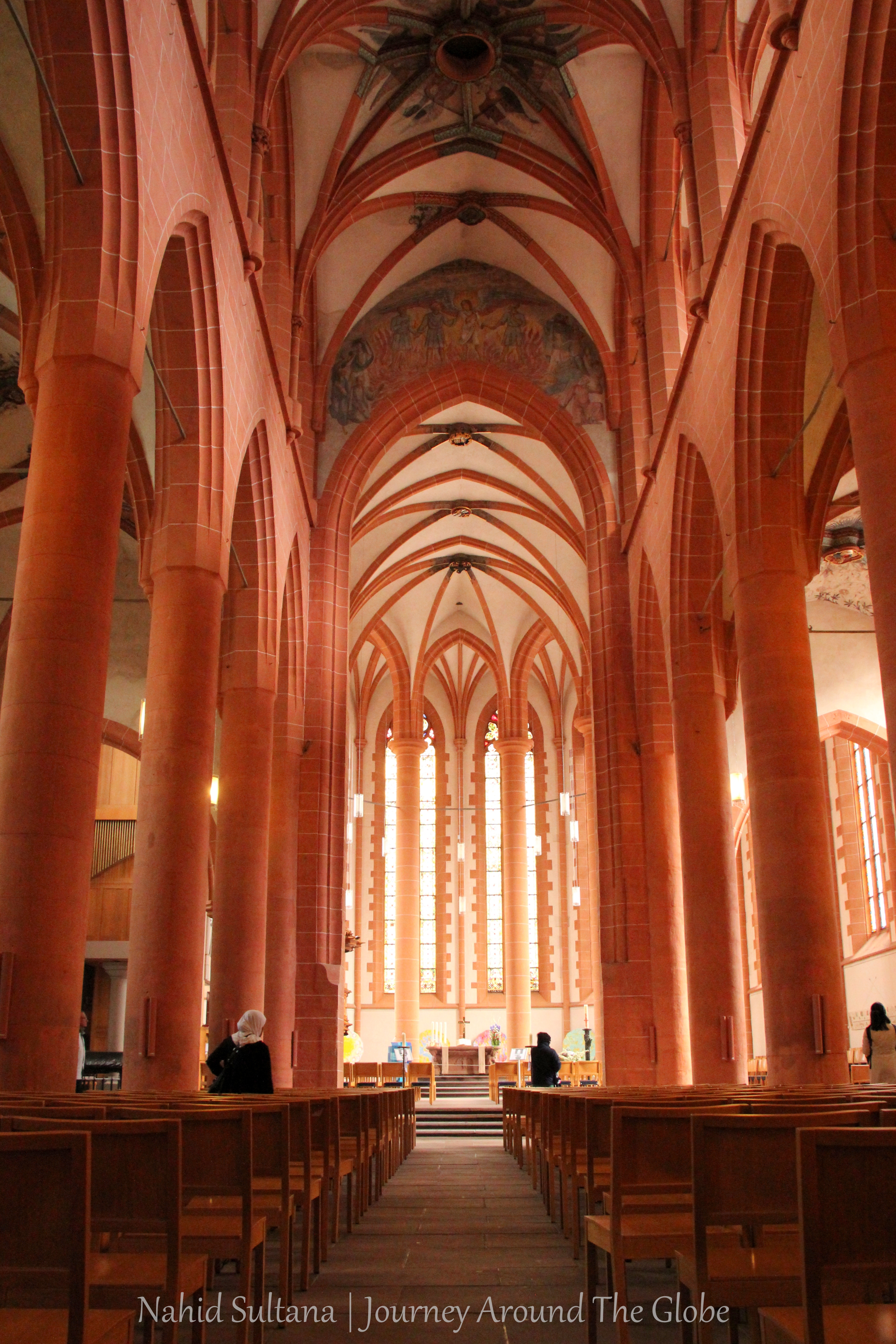
4) HEILIGGEISTKIRCHE (CHURCH of the HOLY SPIRIT): This is a beautiful late Gothic church and the most famous one of Heidelberg. Built in 1563, the steeple of this church dominates the township. Salmon color interior of it with tall columns, high ceiling, and pretty patterned windows make this church a nice place to spend some time in. it’s located in Marktplatz and there is no fee to go inside.
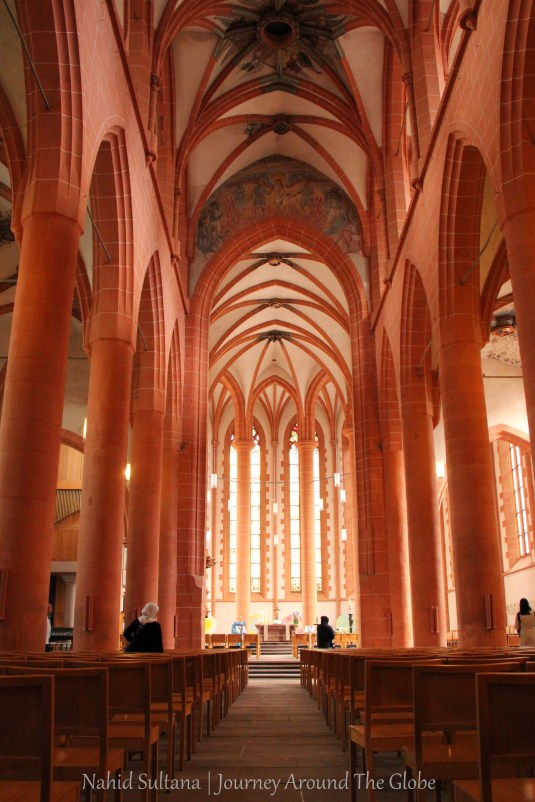
- Inside HEILIGGEISTKIRCHE (Church of the Holy Spirit) in Heidelberg, Germany
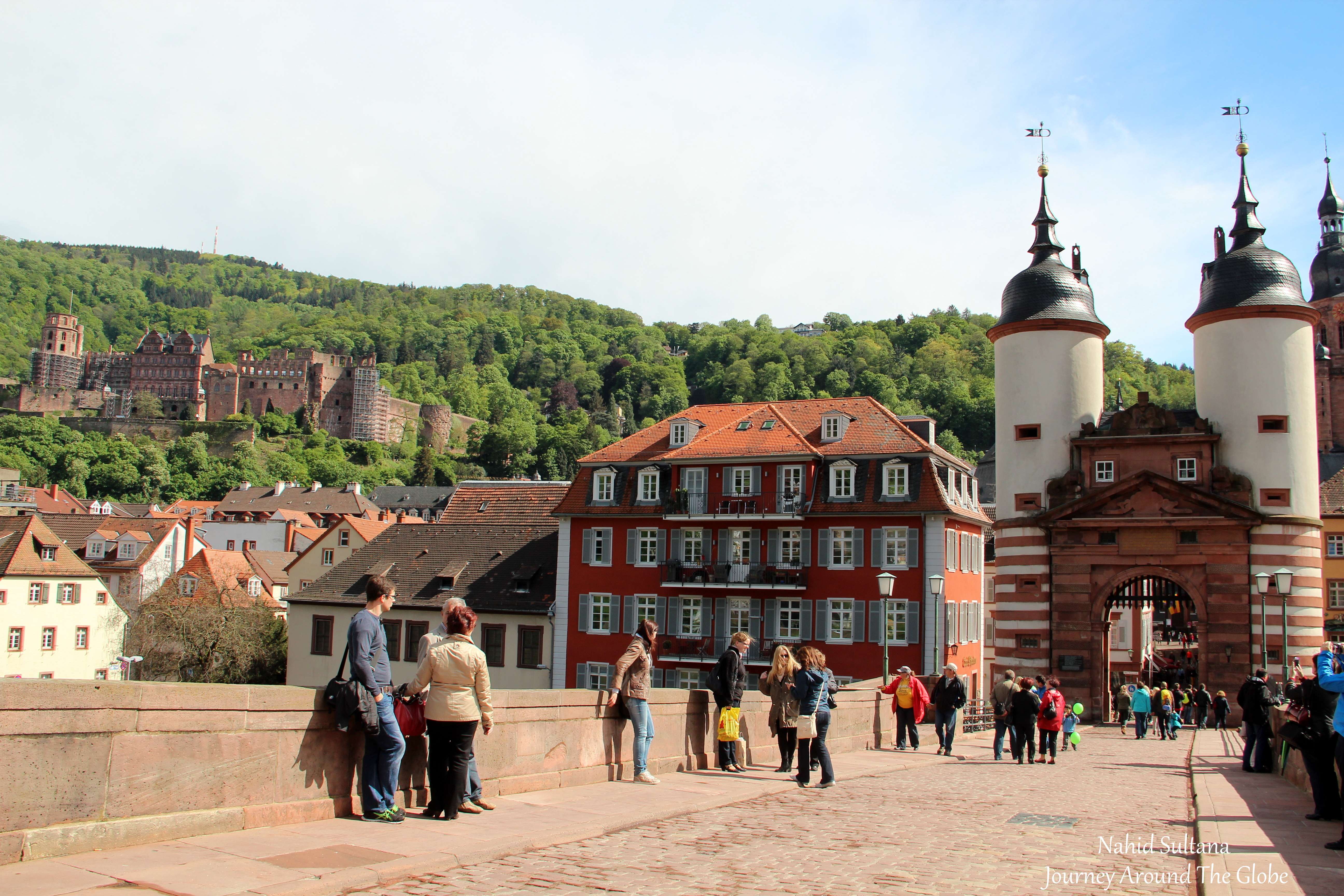
5) AM BRUCKENTOR and KARL-THEODOR BRUCKE (ALTE BRUCKE): You can see the towers of this gate, am Bruckentor, from the castle up on the hill. Crossing it will take you right to the 200 meters long pedestrian bridge, Alte Brucke, on River Necker. Don’t miss the fantastic view of the river, its beautiful banks, mountains, and castle in the distance from the bridge. We spend about half an hour enjoying the surroundings and looking at other tourists…great moments.
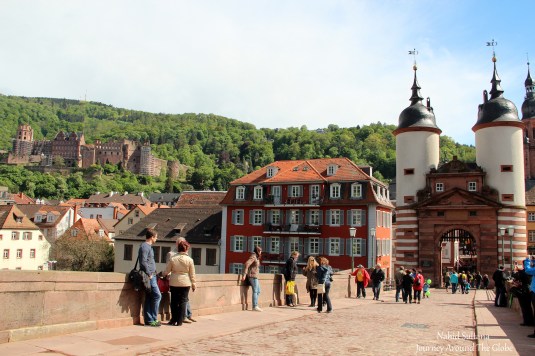
- am Bruckentor (on the right), Heidelberg Castle on the hill on left…a view from Alte Brucke on River Necker in Heidelberg, Germany
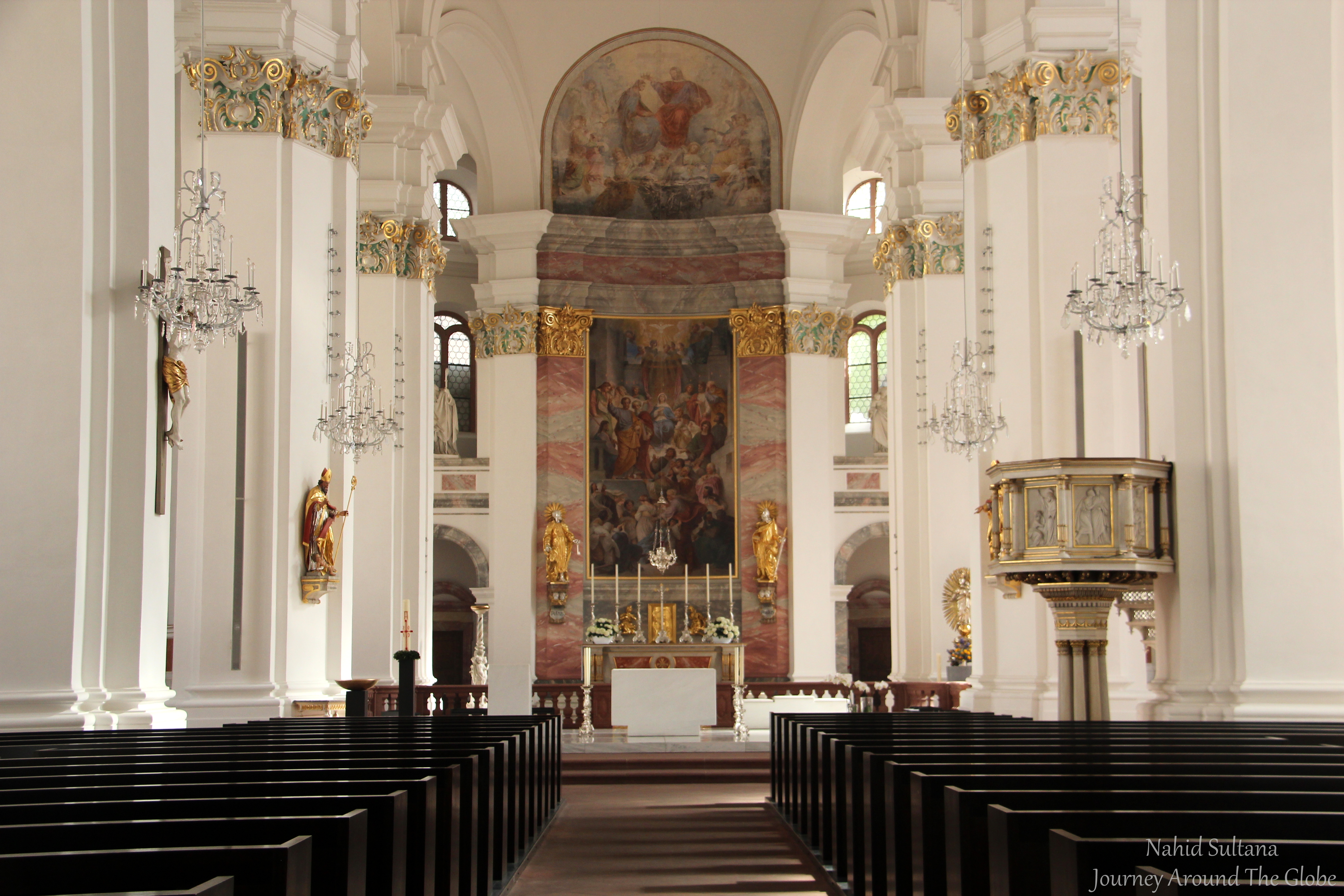
6) JESUITENKIRCHE: This was our last stop in Heidelberg but wasn’t in our list. The building looked good from outside, so we decided to check it out. This is an old church from 1711 with all-white and a very elegant looking interior. The altar is simple but very pretty. Cute chandeliers and biblical frescoes make this place worth a visit in this old city.
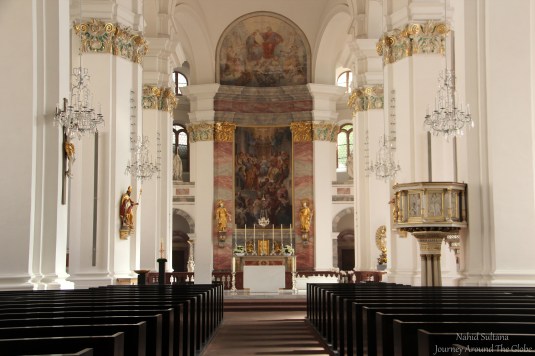
- Jesuitenkirche in Heidelberg, Germany
Related articles
- Heidelberg, Germany (wellreadbetterfed.wordpress.com)
- Heidelberg – Germany (petersadventures.wordpress.com)
- Heidelberg (weltschule.wordpress.com)
- Beethoven’s birth place – Bonn, Germany (journeyaroundtheglobe.com)
- Day 20: Heidelberg Castle and the Road to Rothenburg (featuring trains) (lukestarrenburg.wordpress.com)
- Heidelberg Castle (tourmagnet.wordpress.com)
Share this:

Finally visiting Moulin Rouge in Paris
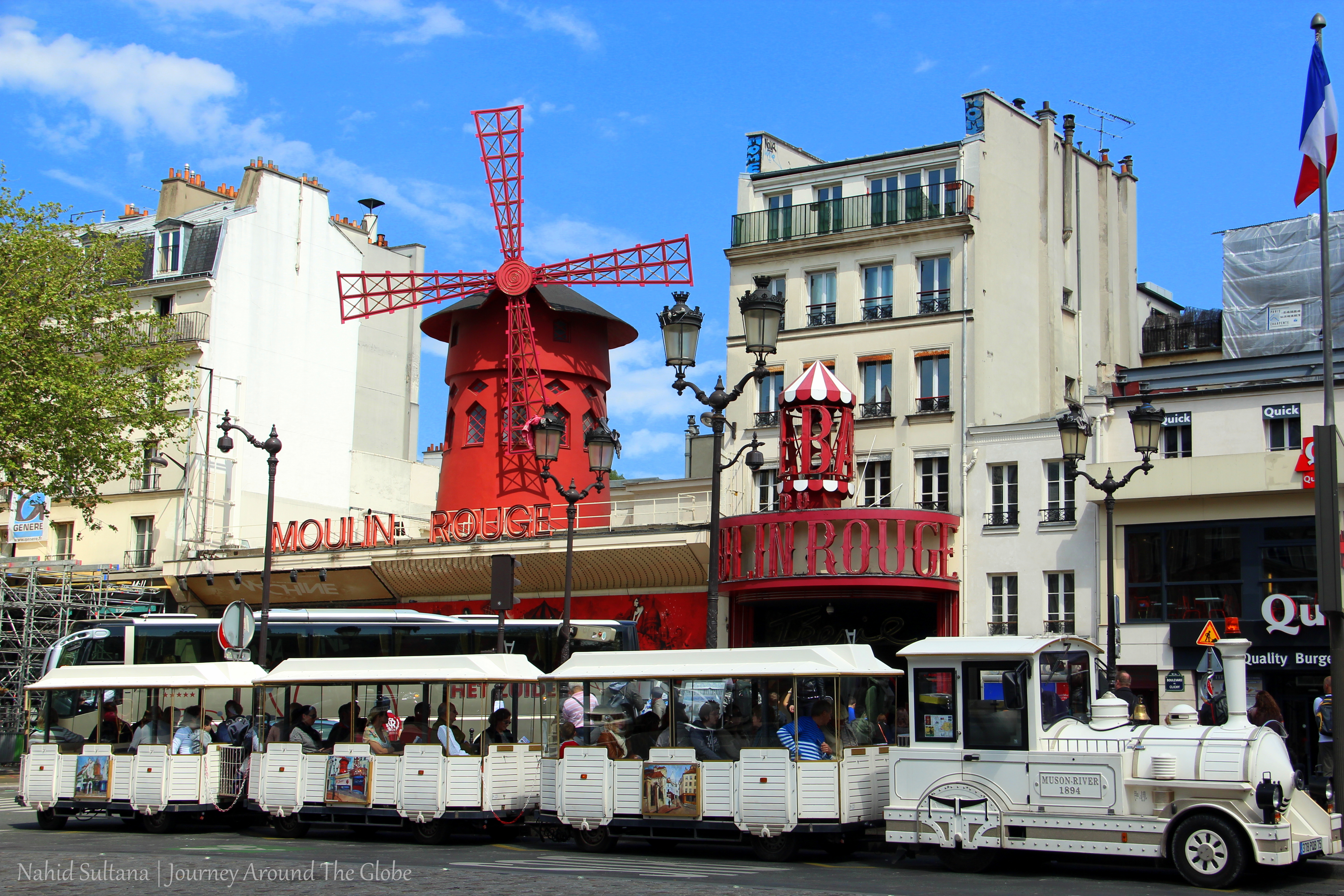
I’ve been to Paris few times now…taking guests to places. Most of the time we end up going to the same usual spots that they want to see or we think they should see in Paris, like Eiffel Tower, Notre Dame Cathedral, Louvre,….and more places depending on allowed time. Last visit to Paris was with my aunt from Baltimore, Maryland. It was her first visit to Europe and we decided to take her to Paris for a brief trip in a weekend. Although I am not a great fan of big cities, but Paris never fails to surprise me with its atmosphere and surroundings. But this time I was determined to go somewhere in that Romantic city where we never put our feet before. It was Moulin Rouge…the classic cabaret which was the birthplace of modern can-can dance.
Mouline Rouge, located in the Red-Light District, is not only a cabaret club, but also a popular tourist attraction in Paris. It was founded in 1889 and with its signature red wind-mill on the roof, soon the place became a hot spot for entertainment in whole Europe and then in the whole world. I was checking some tickets online for the shows in Moulin Rouge…they are usually more than 100 euros per person…not my cup of tea. But I did enjoy going there and finally get the chance to see this glittery place (although during the day-time…but oh well). So here is a picture of Moulin Rouge that I took during our visit…may be someday I will get to go inside and enjoy its true beauty and talented artists in a dim-lit room with hundreds of audiences. But for now, I guess I will be happy watching Nicole Kidman’s “Moulin Rouge” in my DVD player 😉
Related articles
- Moulin Rouge (anotherbonjour.wordpress.com)
- Paris – Day Three (anaveroe.wordpress.com)
- Paris Day 2, the Louvre and Moulin Rouge (eaglesineurope.wordpress.com)
- Daily Prompt: Journey (suzie81.wordpress.com)
- Eiffel, Seine and the Moulin Rouge (tasteplaytravel.wordpress.com)
- France for Christmas (meinedelweiss.wordpress.com)
- Au revoir Paris (bannonabroad.wordpress.com)
- More from Paris (bc12e.wordpress.com)
- Week One – Barcelona part 1 and Paris (anahitamahdi.wordpress.com)
- Our Fifth and final week! (sinclairfamilyholiday.wordpress.com)
Share this:

Hasselt Japanese Garden in Hasselt, Belgium
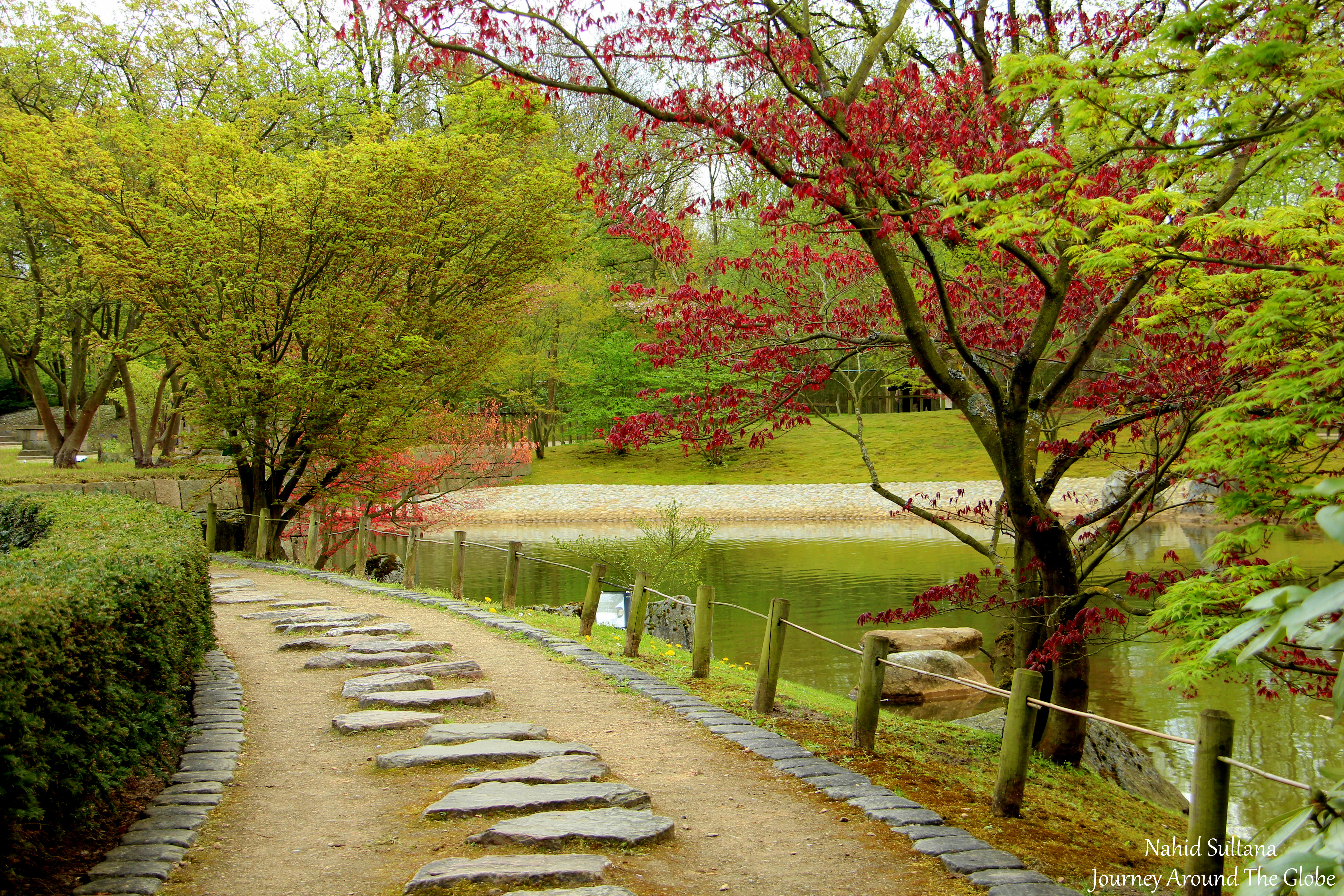
HASSELT JAPANESE GARDEN: Hasselt Japanese Garden is a little piece of Japan in Belgium. This is a miniature version of the real natural beauty reconstructed the way Japanese have been doing for centuries. This is a must-see spot in Hasselt since it’s the biggest Japanese garden in Western Europe. Built about 20 years ago, the art of landscaping of this imperial garden depicts calm mountain scenery, with soothing sound of river, and view of rocks. Japanese style house, cherry blossoms, a Shinto temple, water-falls, and clear water are just some ideal things to give its visitors some inner peace and tranquility.
Enjoy the pictures that I took during our visit and don’t forget to visit Hasselt Japanese Garden if you are ever in Belgium:
- Hasselt Japanese Garden in Hasselt, Belgium
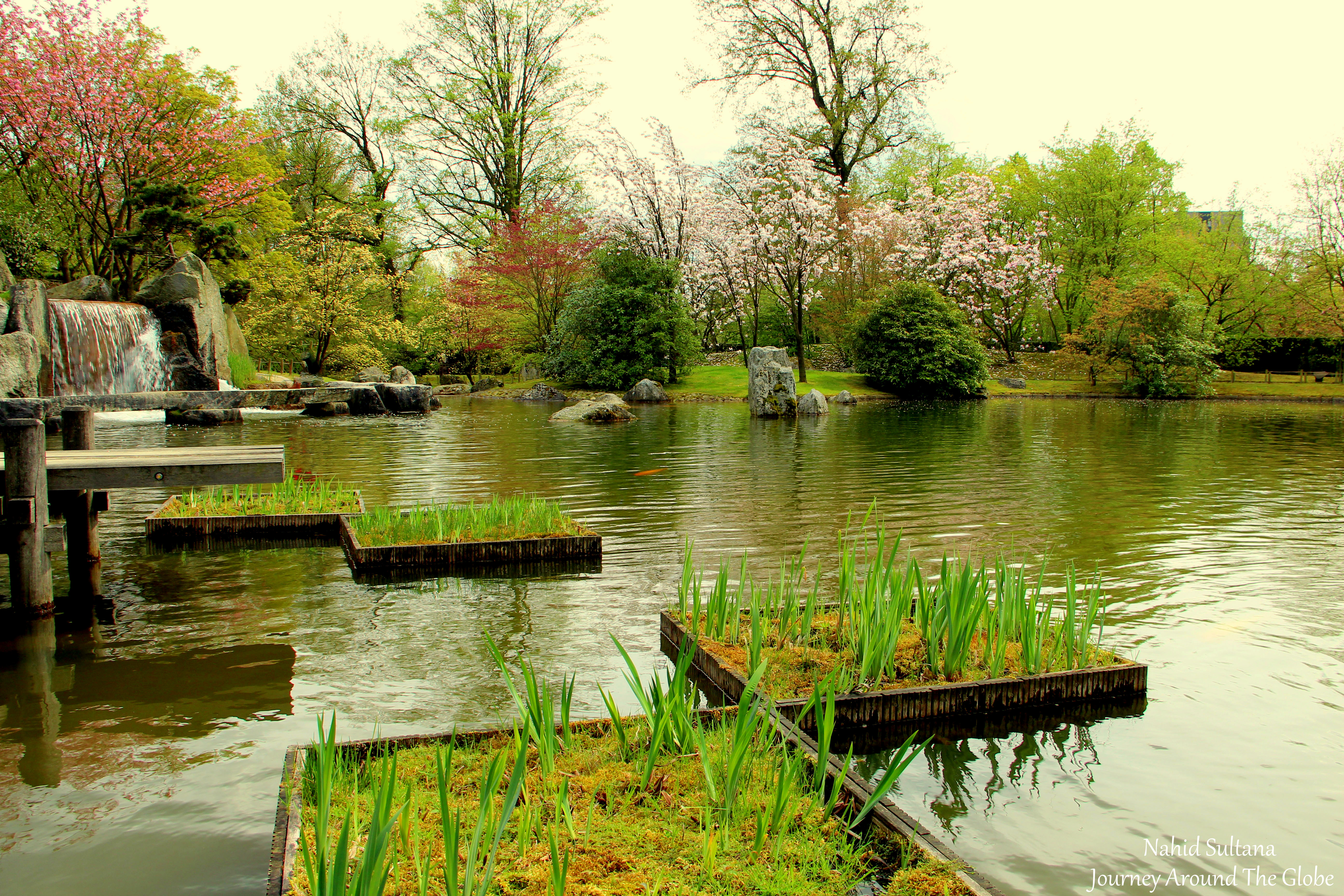
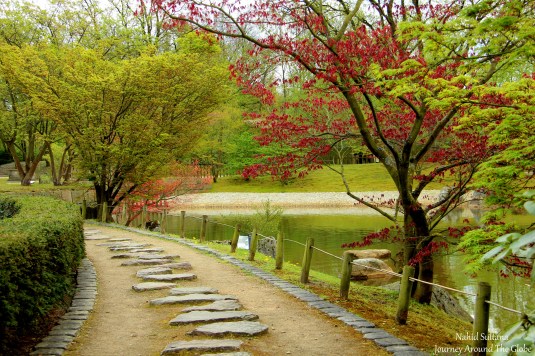
- Hasselt Japanese Garden in Hasselt, Belgium
- Hasselt Japanese Garden in Hasselt, Belgium
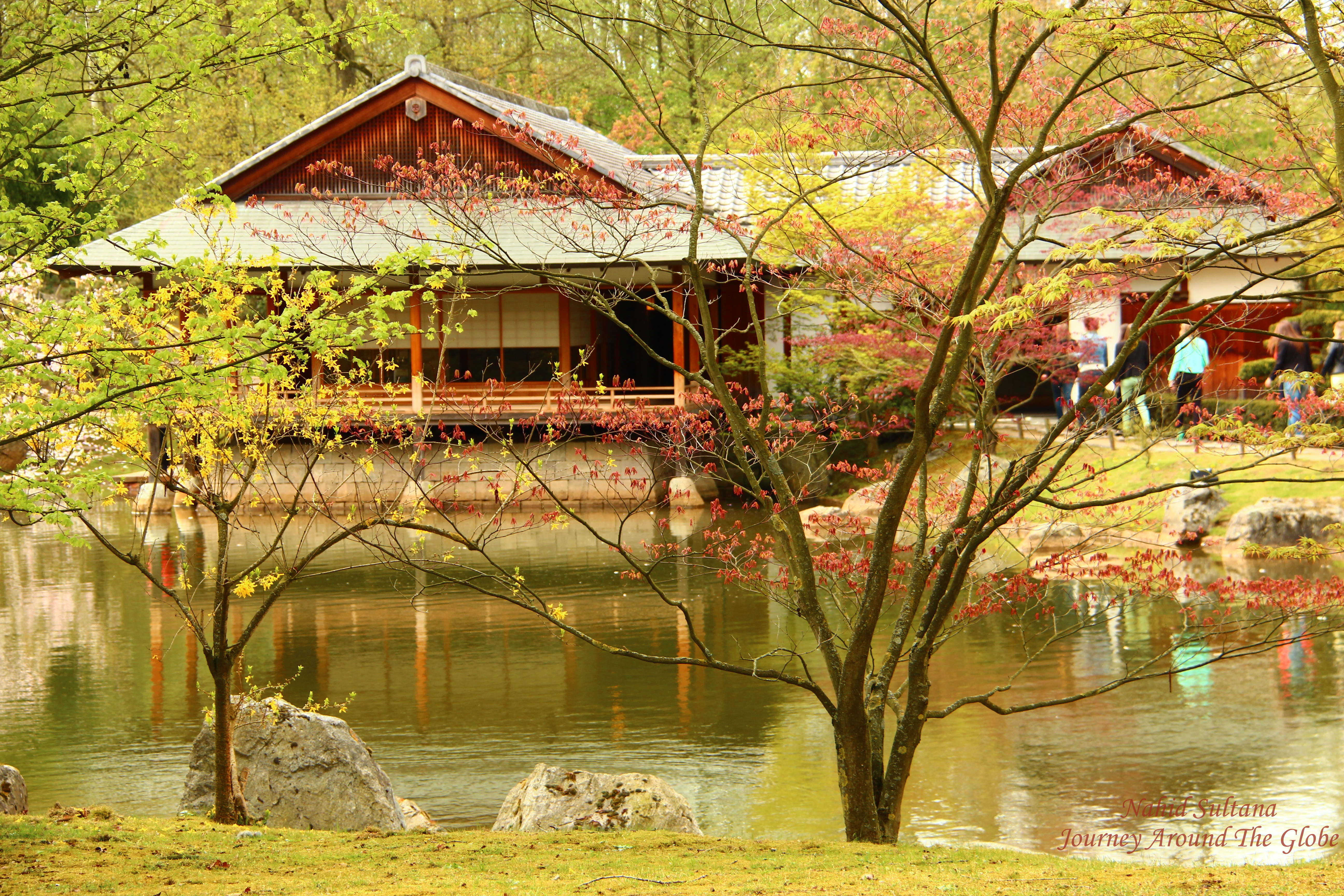
- Hasselt Japanese Garden in Hasselt, Belgium
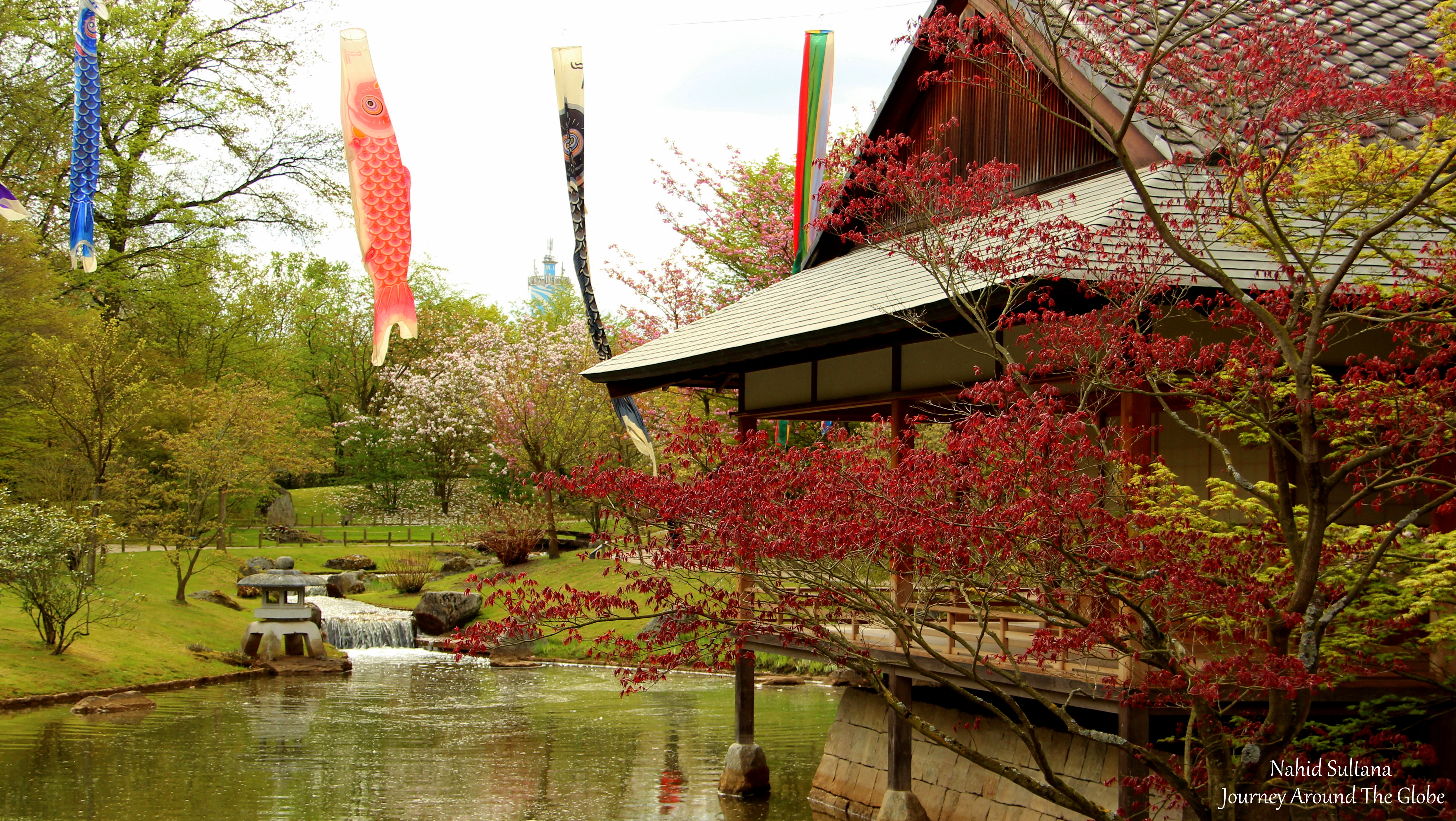
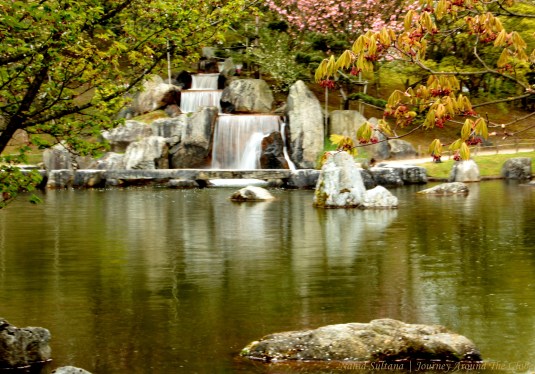
- Hasselt Japanese Garden in Hasselt, Belgium
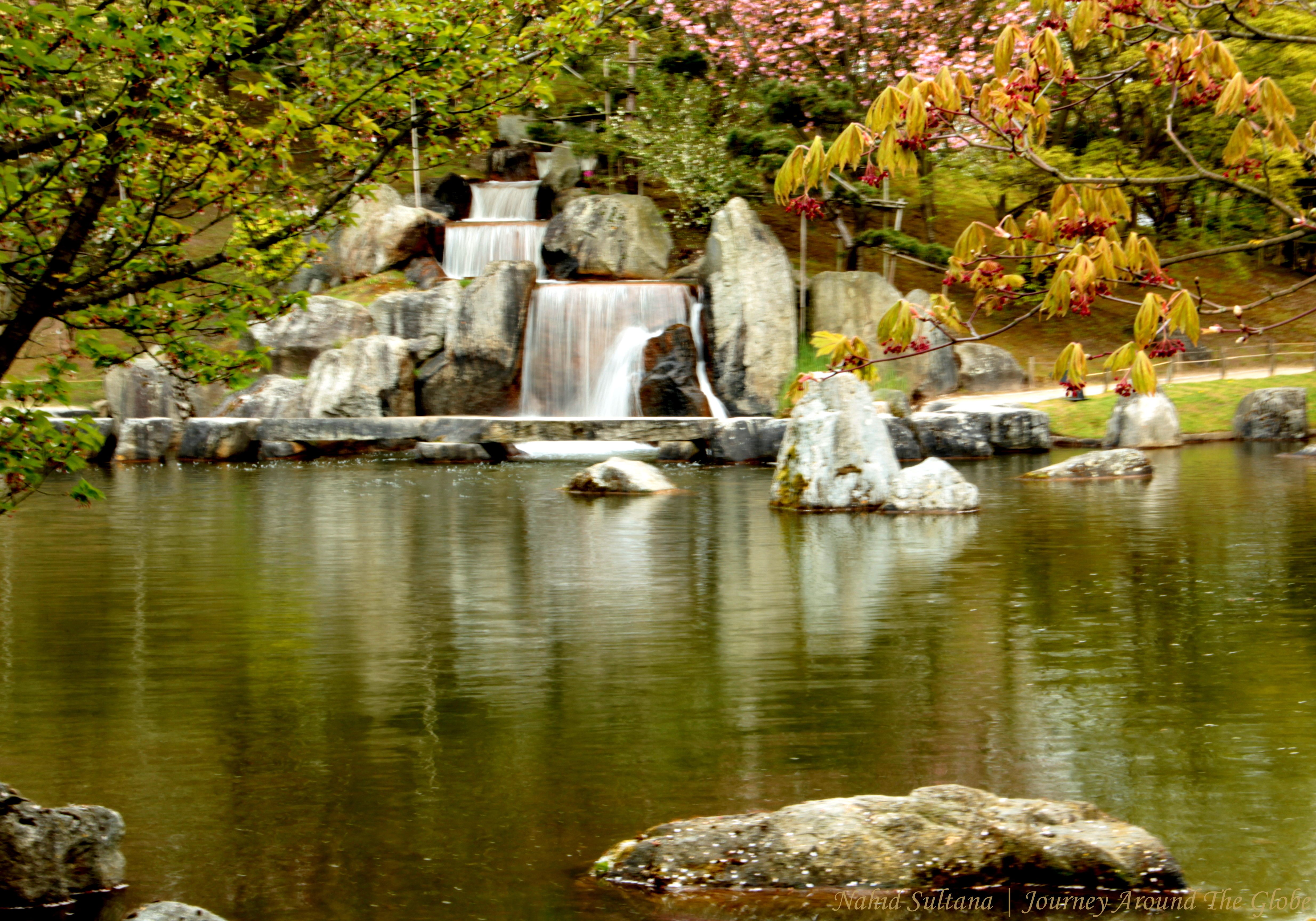
Entry fee to the garden is 5 euros per person (kids 12 years and below are free). The park is open from 2 – 6pm during the summer time. Couple hours inside the park is sufficient. We didn’t find any place to have lunch (thank god we brought sandwiches with us that day) but you can find tea and some snacks in the center of the park, just follow the sign.
Related articles
- Belgium’s Leading 10 Spring Yard Locations (fightwarm71.wordpress.com)
- Weekendtip: Blossom tour (30smagazine.wordpress.com)
- 7 Japanese aesthetic principles to change your thinking (thismomentjapan.wordpress.com)
Share this:

Frankfurt am Main
FRANKFURT, GERMANY: Frankfurt or Frankfurt am Main (Frankfurt by Main) is situated by River Main within driving distance from Bonn or Düsseldorf or Cologne. This is an ultra-modern city with color and contrast. It has lots of Sexy futuristic architectures standing next to very well-preserved old buildings, many historic churches, and number of welcoming squares. Frankfurt airport is the 3rd largest airport in Europe and draws millions of passengers each year. The city was heavily destroyed during WWII but no one can tell it by its present look.
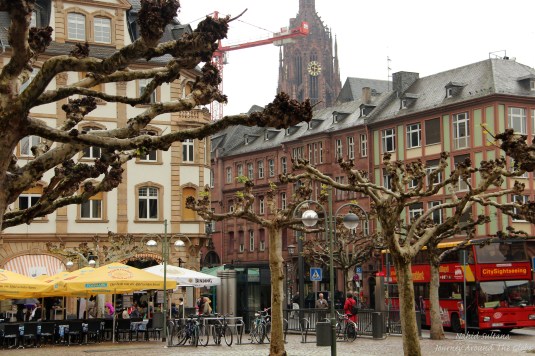
- Walking around old district of Frankfurt, Germany
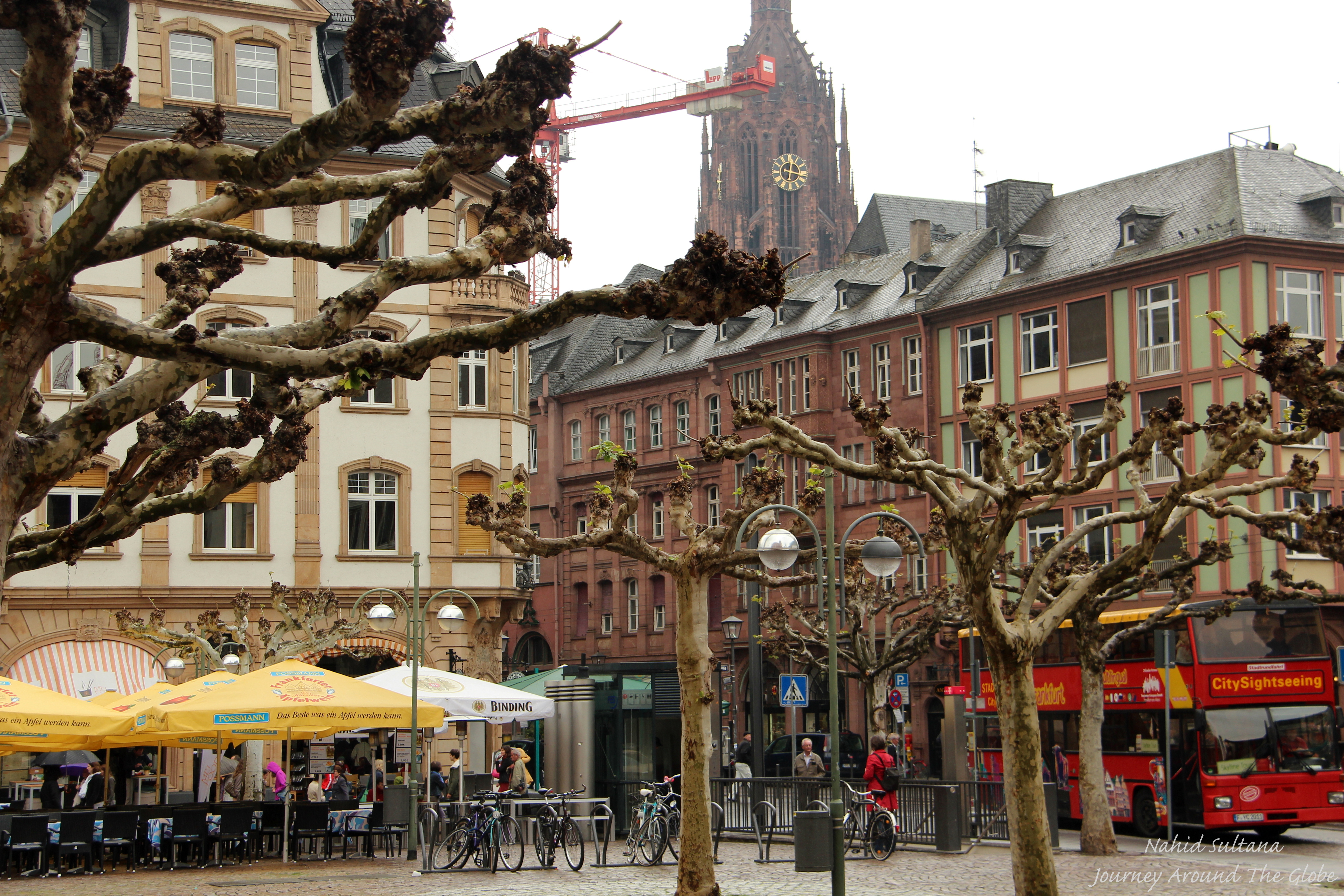
TIME of TRAVEL: We hopped 4 cities in Germany during a long weekend break in May 2013. Frankfurt was our 2nd stop after Bonn and before Heidelberg. Since this year the winter was pushed out about by couple of weeks in Europe, we ended up having some cold and rainy days during this trip. The day we were out to enjoy Frankfurt, we had clouds, rain, sun, cold, and warm weather all in one day.
OUR HOTEL: We stayed in “Novotel – Frankfurt City” in Frankfurt. It was not in the city center which we usually prefer when we travel by car. City center was only 5 stations away from our location which was next to Frankfurt West Station. We stayed in Novotel many times and usually they never fail to make us happy with their services. We had free Wi-Fi but no breakfast. This time I actually packed all sorts of snacks and drinks with us, especially for the kids. So we had good breakfast during our whole trip.
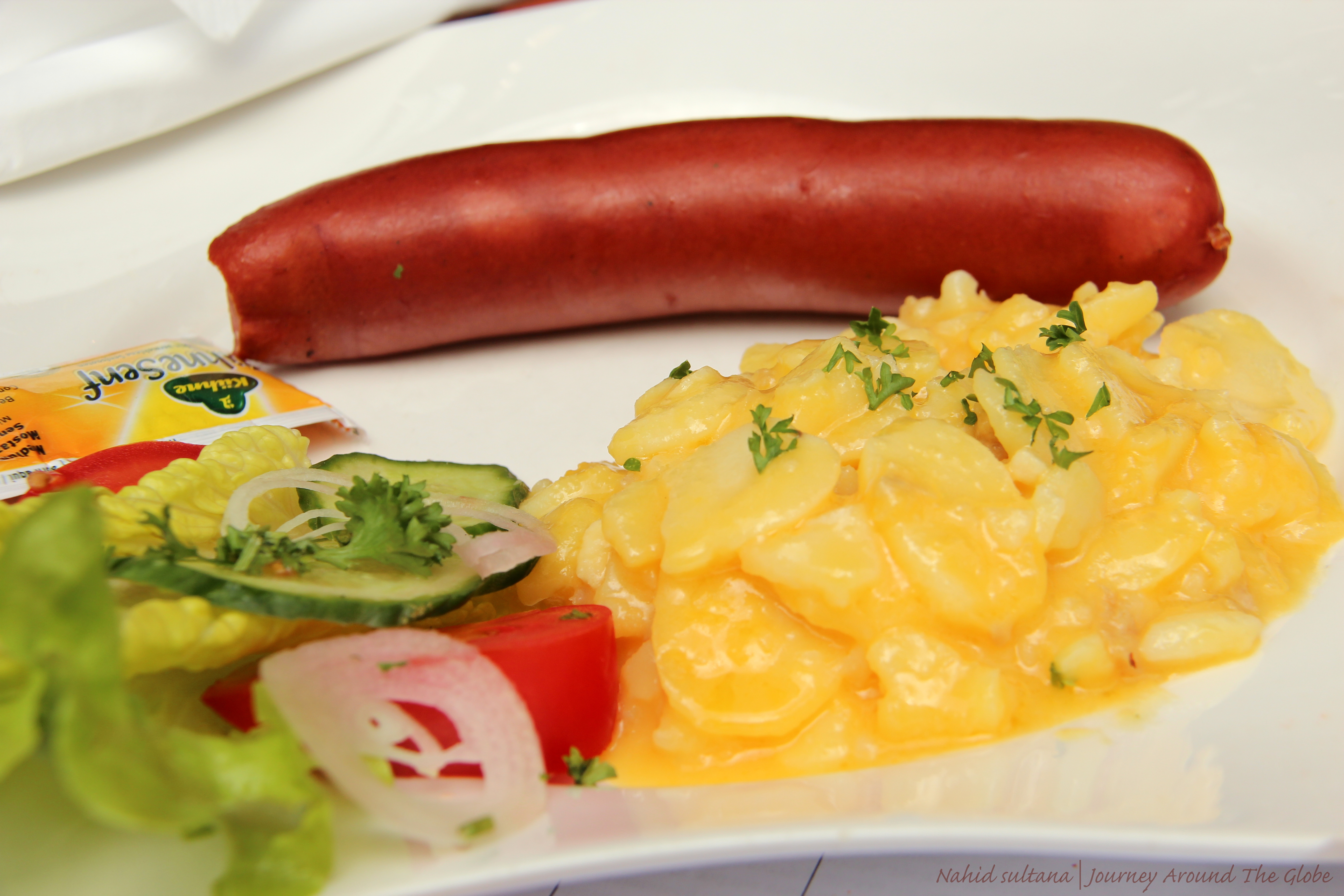
EATING and SHOPPING: Frankfurt is the place for variety of different kinds of hotdogs, frankfurters, and sausages. We had lunch in a small restaurant in Romerberg there. I had a piece of big beef frankfurter with potato salad and garden salad…no one can beat that taste of frankfurter, it was absolutely the best giant hot-dog I ever had.
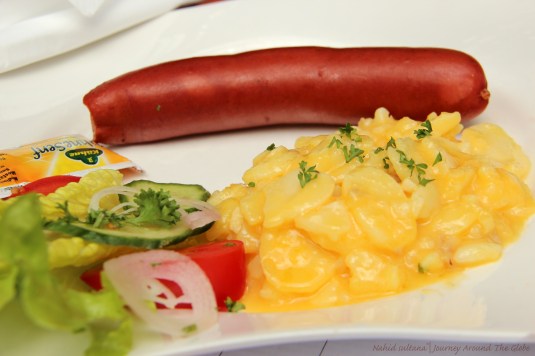
- My lunch in Frankfurt – a frankfurter with potato salad and garden salad mix
Souvenir stores in Frankfurt usually have many designs of cuckoo clocks and Bavarian style decorative beer mugs along with other typical gift items like t-shirts, key-rings, and etc. The cuckoo clocks range from 15/20 euros to few hundreds euros. Beer mugs also come in many designs and prices. Old town of Frankfurt has many souvenir shops, but Romerberg has tons of good ones. Also don’t forget to visit Zeil, which is the fashion street of this cool city. You can find stores selling cheap/reasonable priced things to high-end brand name places.
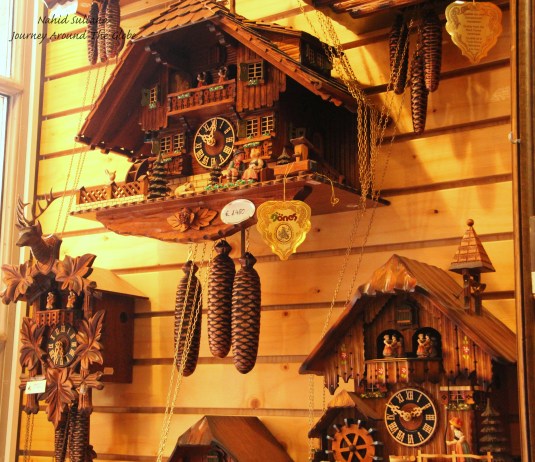
- Cuckoo clocks are everywhere in the souvenir shops of Frankfurt, Germany
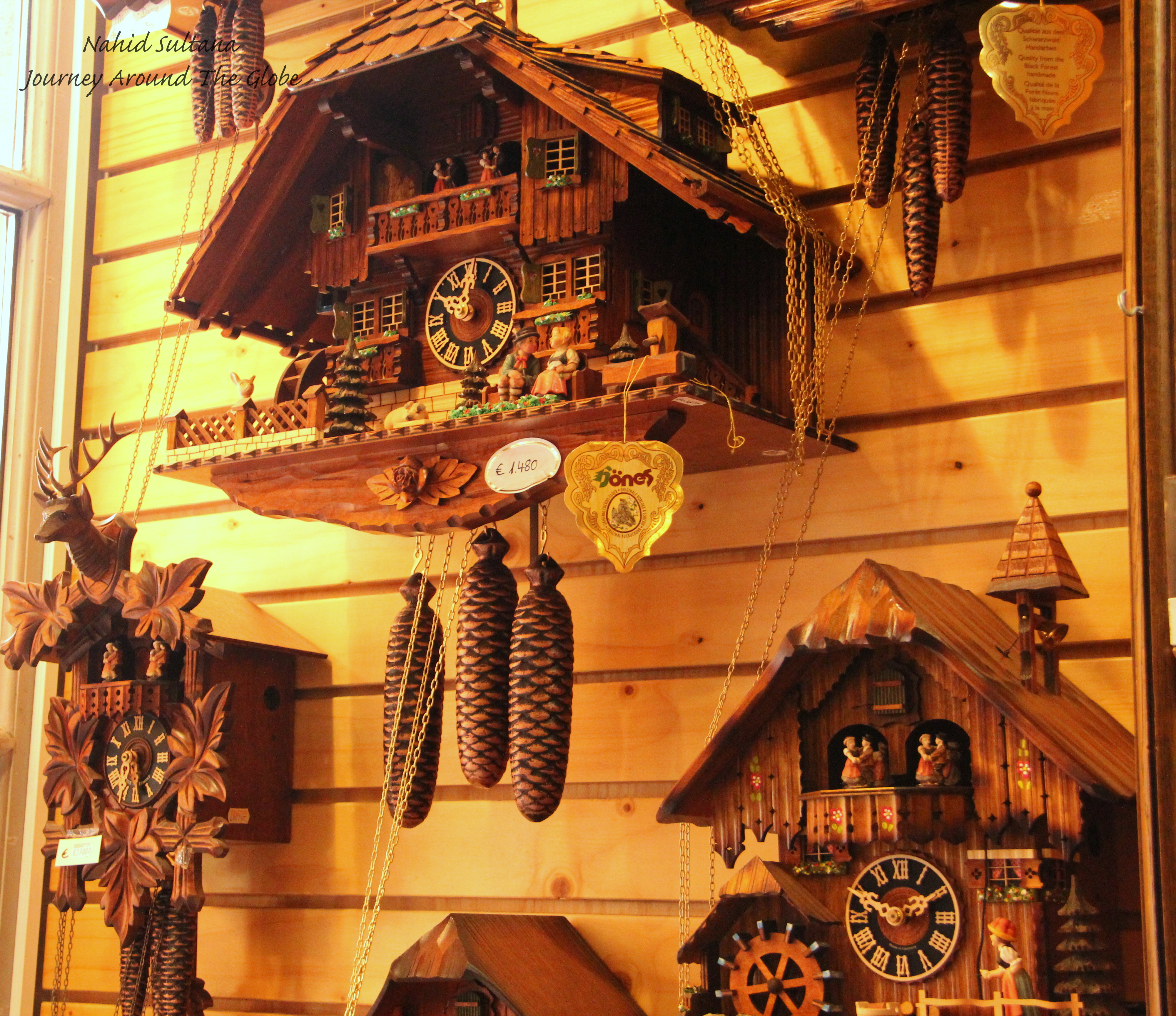
PLACES WE’VE VISITED: We spent about a whole day in Frankfurt. Our original plan was to spend 2 days here but later we decided to stay one day in Frankfurt and another day to drive to Heidelberg and spend half a day in its old town before heading home. Frankfurt has lots of good museums and tourists can easily spend days exploring those as well as other modern and historic sites.
1) SANKT KATHARINENKIRCHE (ST. KATHERINE CHURCH): This Gothic style church with flanking tower, artistic windows, and Baroque columnar portals was built in 1681. This was city’s main Protestant church. It was heavy destroyed during WWII in 1944 and was rebuilt in 1954. Beautiful Late-Gothic Katherine figure and some gallery pictures are from the 17th century but the glass windows are from recent time in 1954.
The church is open Monday – Friday 2 – 5 pm and there is no entry fee.
2) LIEBFRAUENKIRCHE: This is another old Gothic church of Frankfurt, standing there since 1344. Originally it was a chapel of the Virgin Mary. The belfry was erected in 1478. Later in the 18th century the tower was heightened in Baroque style with Rococo decoration. This was also destroyed in 1944 and was rebuilt in 1954. Some figures from Baroque altars were destroyed in war along with many other historical items. The church is very elegantly decorated with nice pattered stained-glass windows and some large paintings.
It’s free to enter the church and is open daily from 5:30 to 9 pm. The church is very close to Zeil and Hauptwache.
3) PAULSKIRCHE (ST. PAUL’S CHURCH): The early church was built in 1790 replacing a Gothic church. In 1848, this was the venue of the first German National Assembly where First German Constitution was resolved. During heavy air raids in Frankfurt during WWII in 1944, the Paulskirche was one of the many buildings that were hit. As no water was available to extinguish the fire hence it burnt out completely. But the church was rebuilt immediately after the war. As a symbol of democratic freedom and national unity, the “House of All Germans”, it was finished in time for the 100th anniversary of the first German National Assembly in May 1948.
Currently, the building is a memorial site. First level is more like museum of this church and all the important events that took place here in the history of Germany. Upper level has a prayer hall with a contemporary high-ceiling, simple altar with only a stone podium, and a not-so traditional nave.
Paulskiche is located in Paulsplatz separating from Romerberg by a small street. There is no fee to go inside and visit the museum or prayer hall.
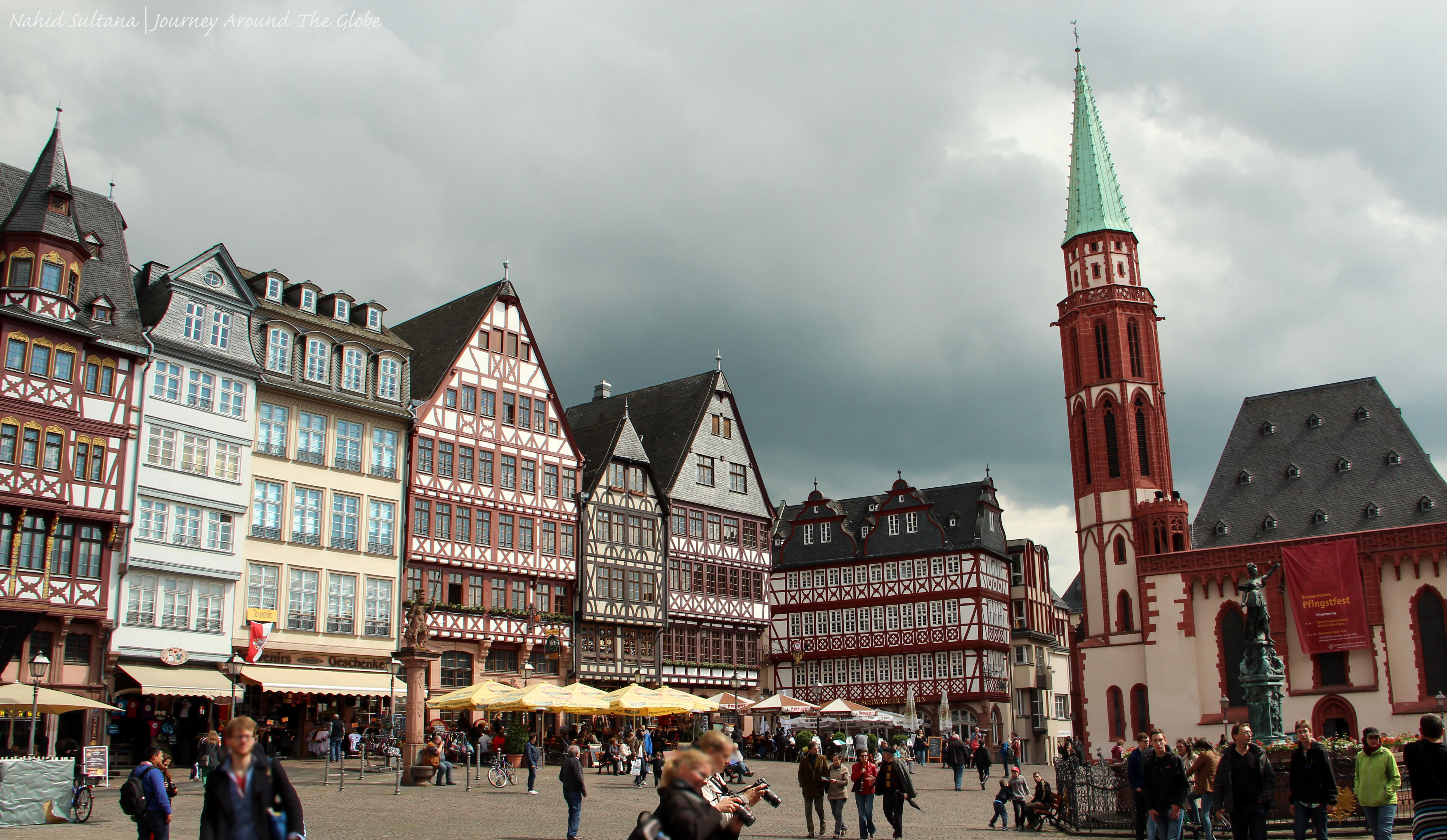
4) ROMERBERG, RATHAUS (TOWN HALL), and ALTE NIKOLAIKIRCH (ST. NICOLAI CHURCH): Romerberg or Romerplatz is probably the most famous spot of the old center of Frankfurt. Many of its historic buildings from the 14th or 15th century were destroyed during WWII and were later rebuilt. On one of sides of Romerberg is the town hall, one side is occupied with Alte Nikolaikirche, and one side of it has magnificent old German-style half-timber houses with souvenir shops and some cafes. A small metal circle in the ground can be seen in front of Alte Nikolaikirche that commemorates fall of communism which is believed to be the spot where many books on communism were burnt.
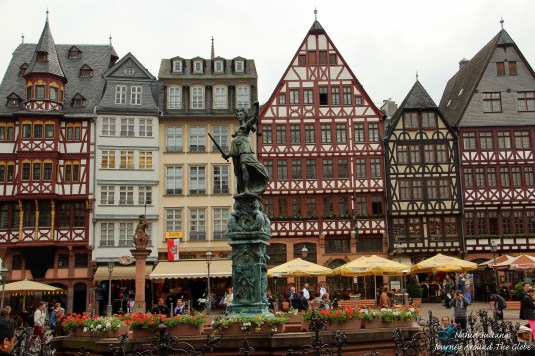
- Romerberg, the main square of Frankfurt, Germany
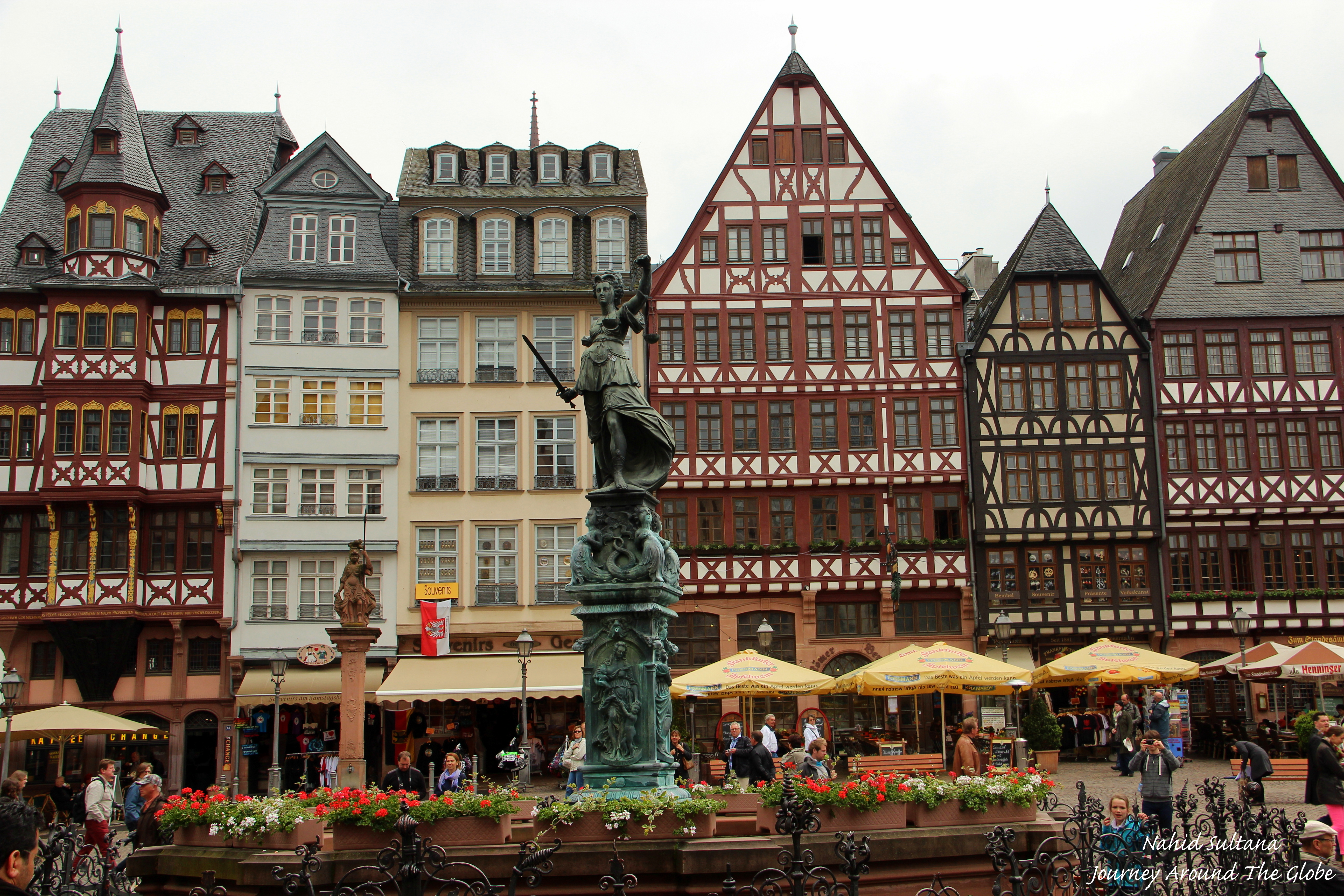
The Late Gothic structure town hall at one side of Romerberg was built in 1408 in and was one of the first buildings to be reconstructed in 1952 after war-time destruction.
Alte Nikolaikirche is the red and white designed building in another side of Romerberg which has been boldly standing in this spot since 1150. In 1951 the church went through reconstruction for being destructed during WWII. At that time the portal structure of from the 13th century was preserved and still can be seen on one of the walls there. The church also houses some medieval gravestones from 1370. It’s a very small church with a simple altar but beautifully designed stained-glass windows are nice.
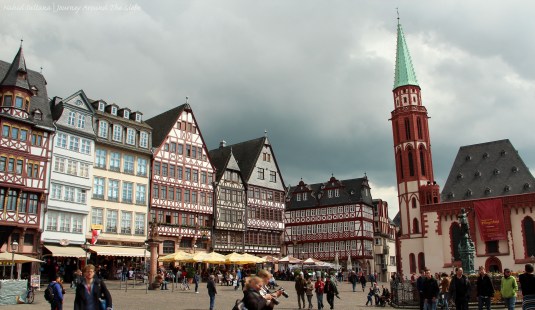
- Buildings of Romerberg and Alte Nikolaikirche (on the right) in Frankfurt, Germany
The church is open daily from 10 to 8 pm (April – September) and from 10 to 6 pm (October – March).
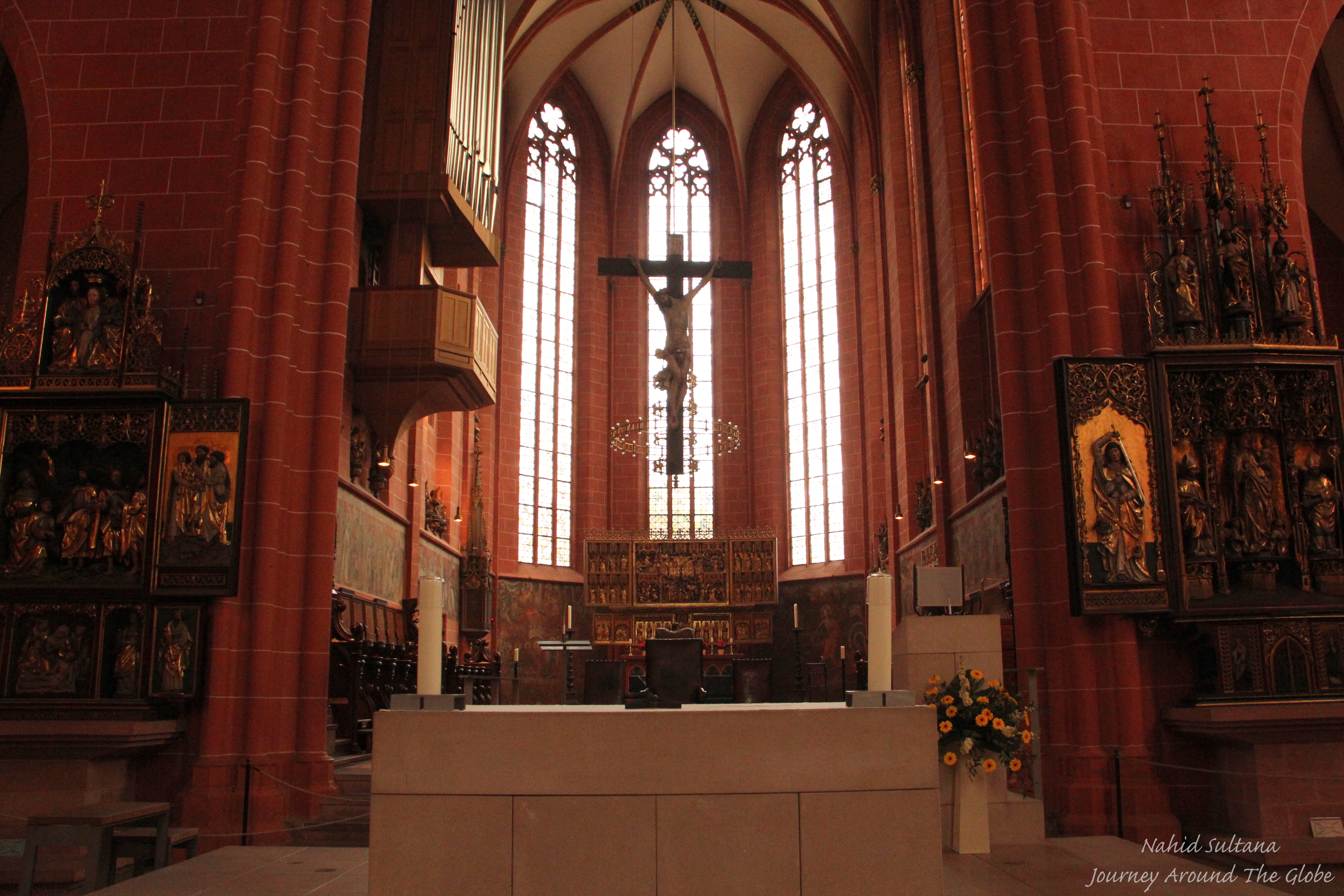
5) DOM ST. BARTHOLOMAUS: This once used to be the Coronation church of German Emperors from the 16th to 18th century. The Gothic construction of it started in 1315 and took until 1514 to finish. This was also damaged during the war in 1944 and was again built in 1953. The Gothic portals with bronze doors and relief are from the recent time in mid-20th century. But gorgeous Gothic altars and some gravestones are from the 15th century. The grand organ and choir stalls add immense beauty to this place, everything in this Dom is truly very beautiful.
- Inside Dom St. Bartholomaus in Frankfurt, Germany
The church is open Monday – Thursday and Saturday 9 am – 12 pm and 2:30 pm – 6 pm. Friday –Sunday it’s open from 2:30 pm to 6 pm. It’s located right next to Romerberg and no fees to go inside.
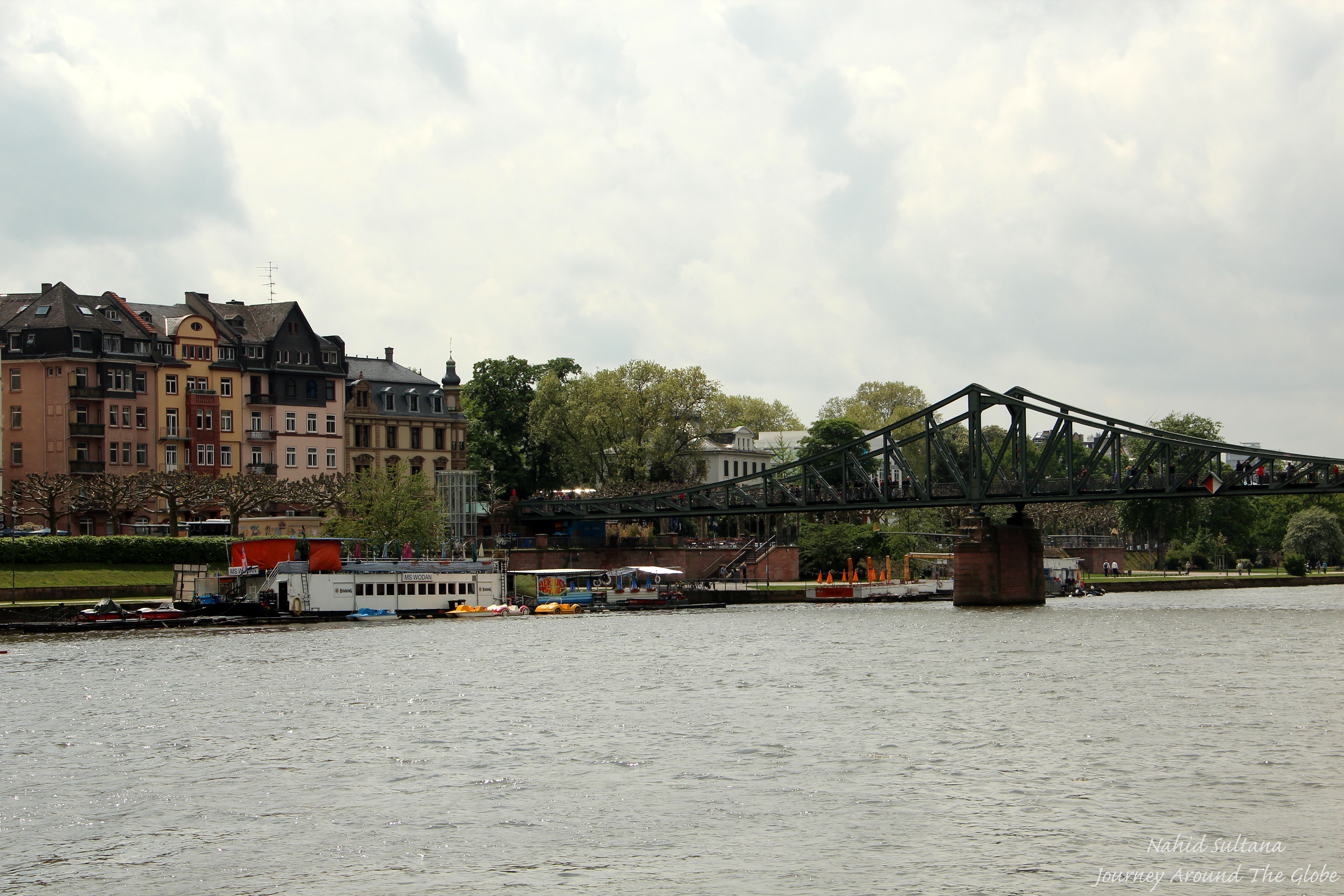
6) EISERNER STEG (IRON BRIDGE) and River MAIN: We didn’t have to go too far to see River Main…probably took us 2-3 minutes from the Dom to reach the promenade.
Eiserner Steg is the most well-known pedestrian bridge on River Main from 1869. Both the river and the bridge offer great view of the city and its famous skyline. We didn’t cross the bridge and go to the other side, but that’s where all the museums are.
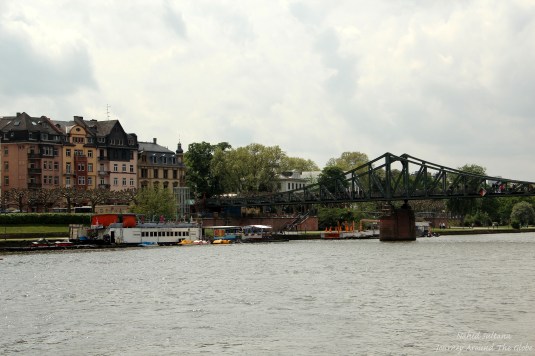
- River Main and pedestrian Iron Bridge in Frankfurt, Germany
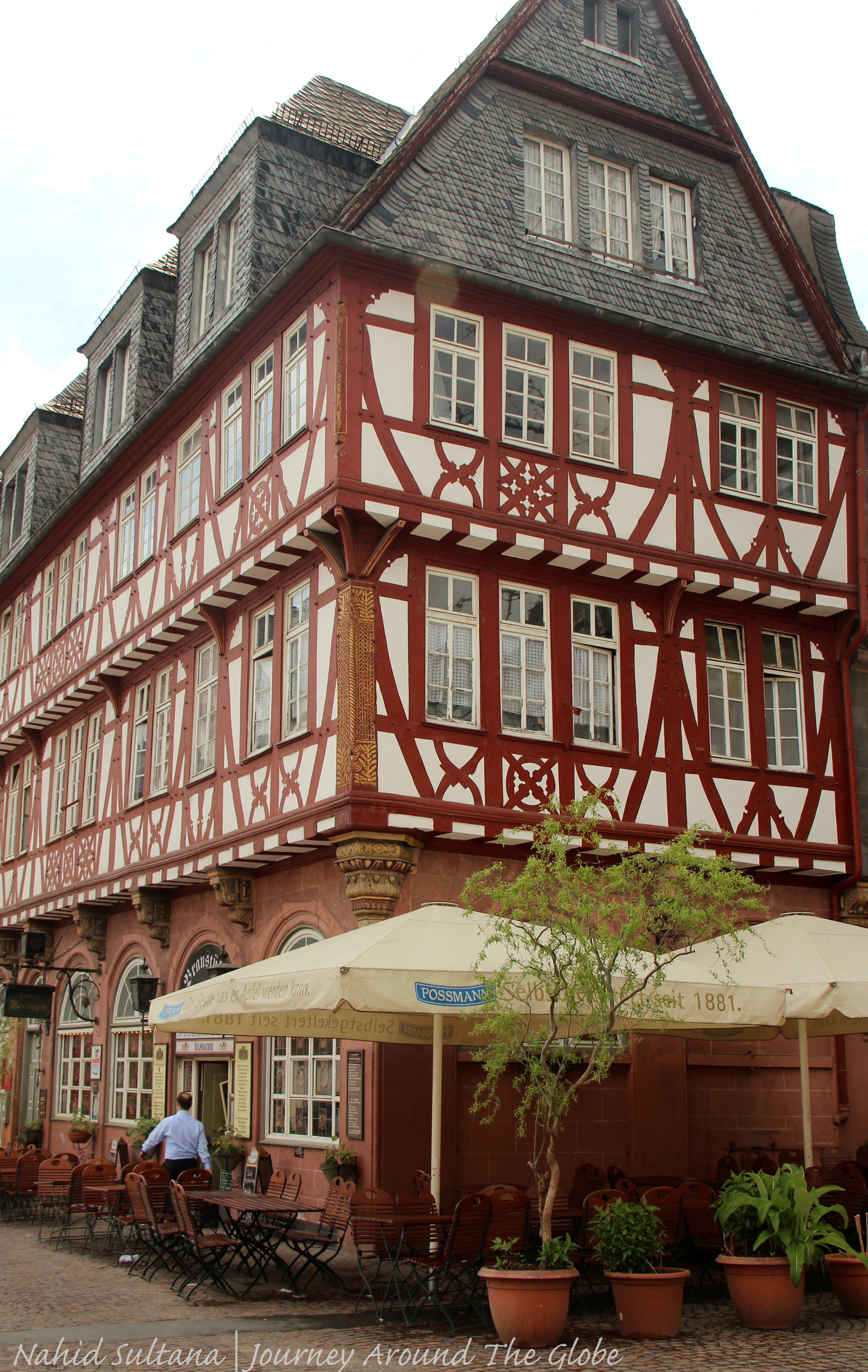
7) HAUS WERTHEIM: This Late Renaissance style house is from 1600. This is the only original half-timber house to have survived war-time destruction of the old town. It is now a café/restaurant in the old town which adds colors and patterns to the surroundings.
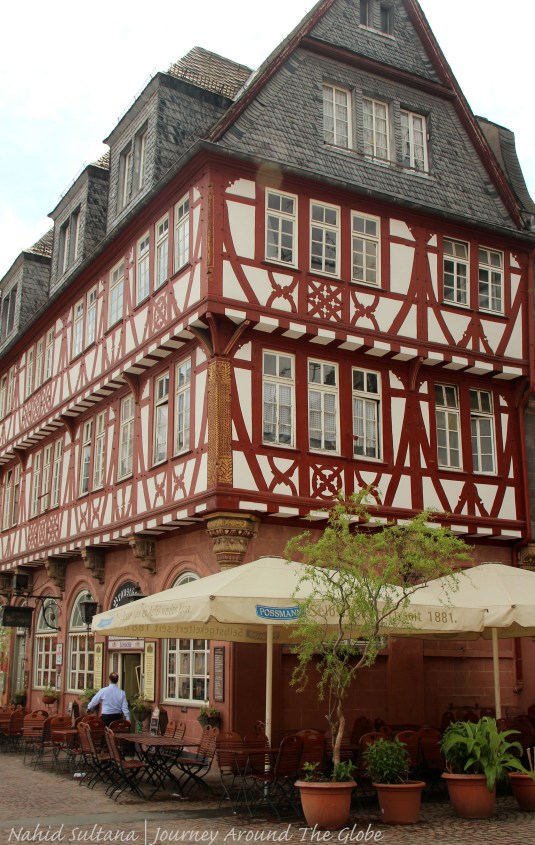
- Haus Wertheim from the 16th century in Frankfurt, Germany
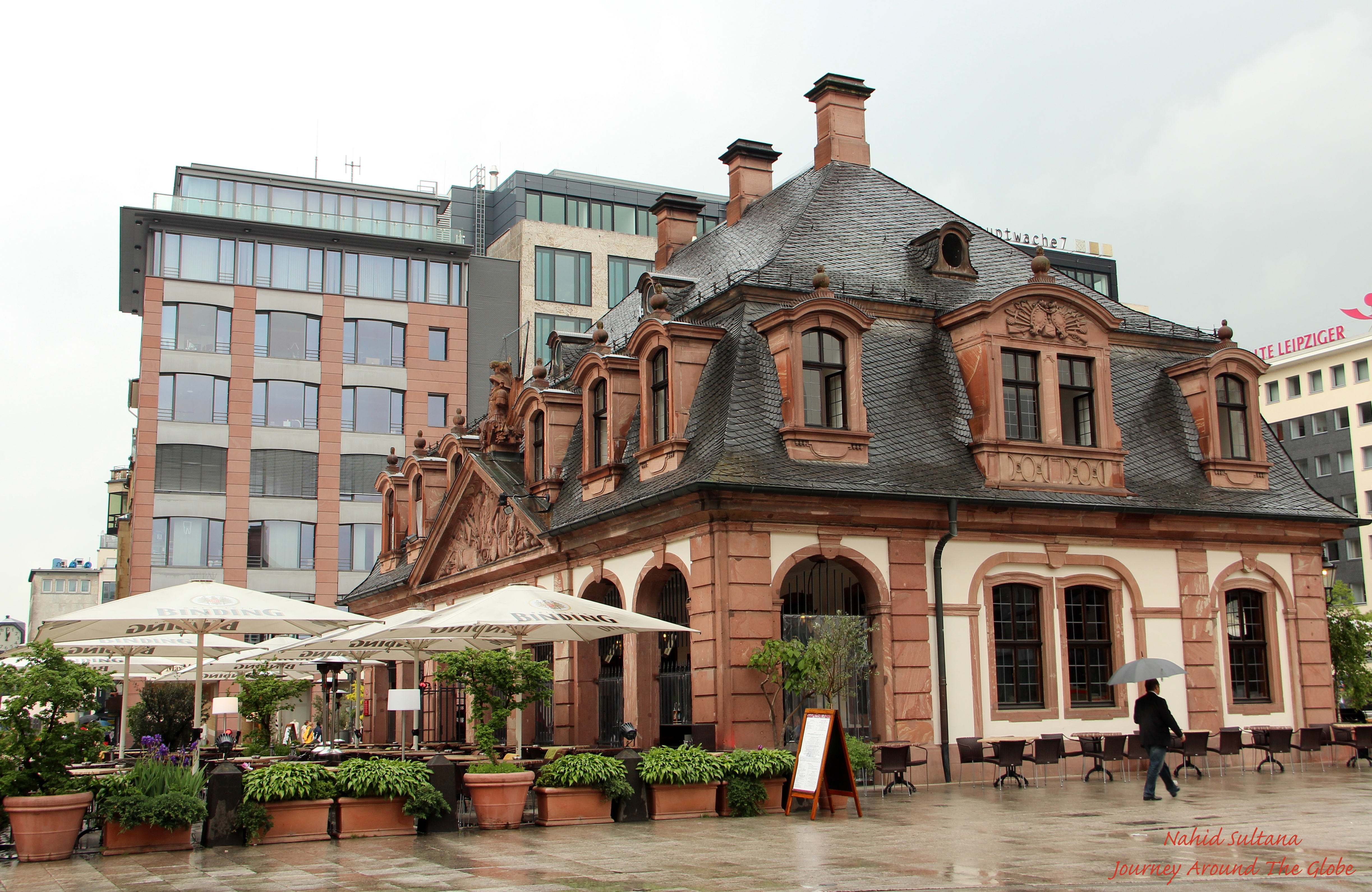
8) HAUPTWACHE and ZEIL: This is the heart of modern Frankfurt. The place got its name from a building from the early 18th century that is presently a café now, Café Hauptwache. This is the station we took to explore the modern and historic Frankfurt. Katharinenkirche is also located here.
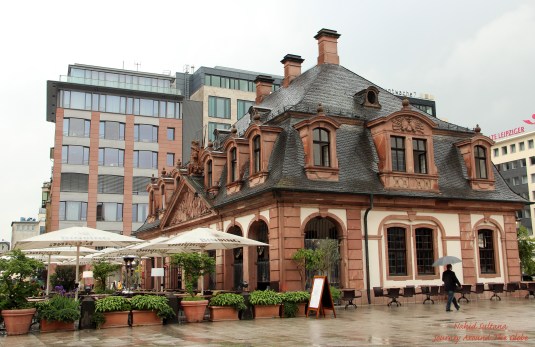
- The cafe after which this place was named Hauptwache in Frankfurt, Germany
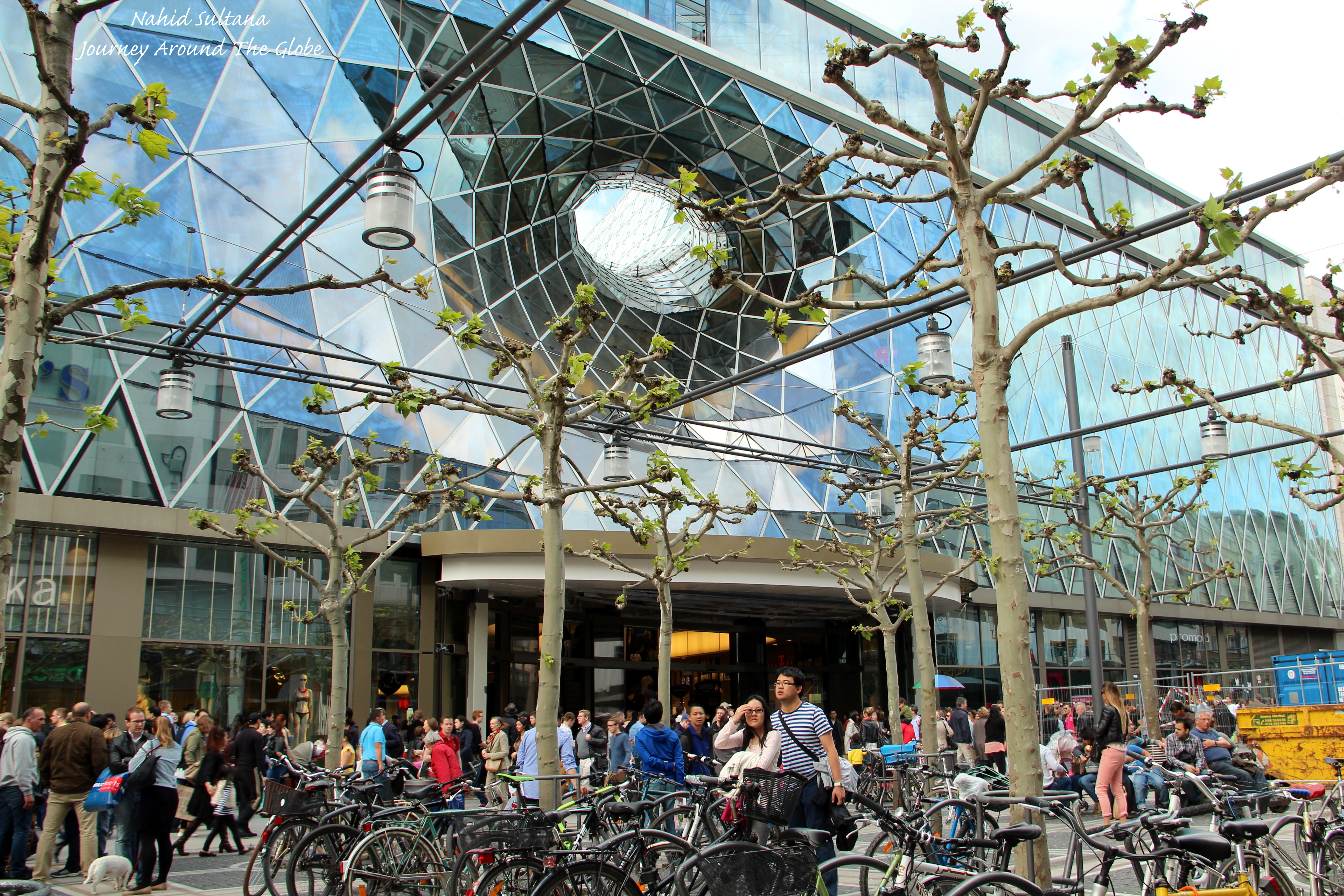
Zeil is the shopping district of Frankfurt and a paradise for people who like top-notch shopping experiences. Located very close to Hauptwache, Zeil has some outstanding architectures to gaze upon and many charming street performers to entertain every second of your time here.
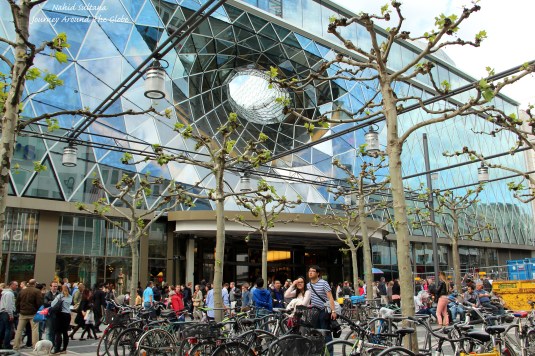
- A futuristic building in Zeil – Frankfurt, Germany
Related articles
- Frankfurt am Main (confuzzledom.wordpress.com)
- Views from Frankfurt (fdufour.wordpress.com)
- Travelblog Helsinki – Frankfurt (8englishclub.wordpress.com)
- Gibson Music Room in Frankfurt am Main (adithyaentertainment.wordpress.com)
- May 19th (dewerd1.wordpress.com)
- Vacation Day 4 – Dreichenhain, Frankfurt and Berlin (gameusall.wordpress.com)
- Frankfurt Sehenswürdigkeiten, Tourist attractions in a glance. (yilinghe.wordpress.com)
Share this:

Business Excellence Award 2020 from AI Global Media for The Most Entertaining Personal Travel Blog – Pacific Northwest USA

Top Posts & Pages


Business Excellence Award 2020 for The Most Entertaining Personal Travel Blog – Pacific Northwest USA

 Globe Runner

